Peptide research, explained.
Detailed guides to peptide identity, biological pathways, analytical methods and clinical evidence. Search the reading room or follow a research topic.
Browse 13 research topics
All guides & articles
 Peptide Fundamentals
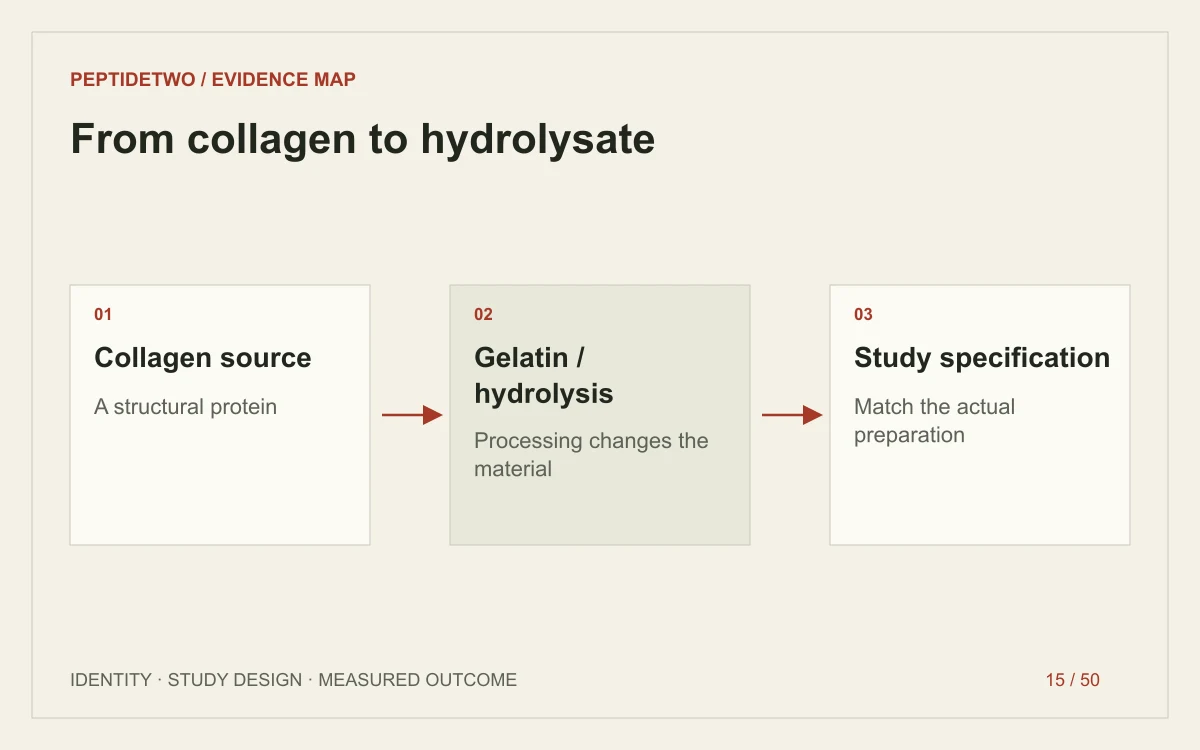
Collagen Peptides vs Gelatin: Processing, Blood Markers and Clinical Claims
Collagen peptides vs gelatin is mainly a question of processing and material specification. Both terms relate to collagen-derived material, but they do not identify identical preparations.
Updated 2026-11-06 ↗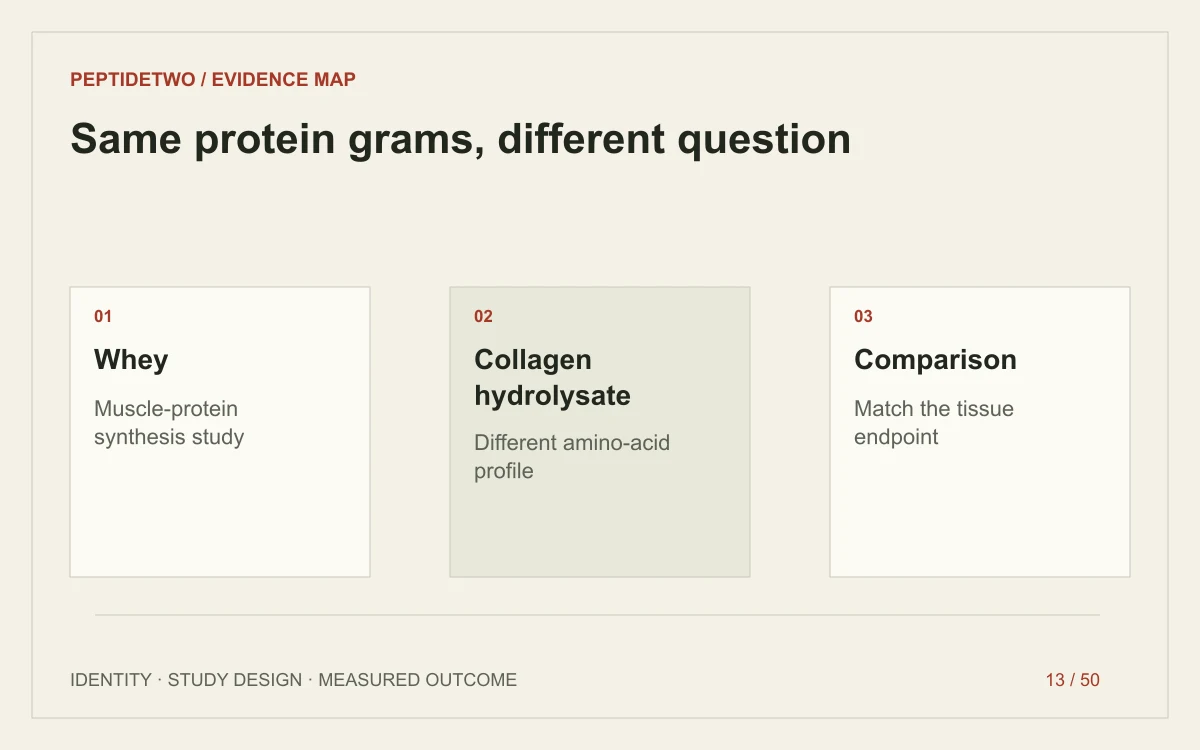 Peptide Fundamentals
Collagen Peptides vs Whey Protein: Muscle Synthesis and Different Research Goals
Collagen peptides vs whey protein is not settled by counting grams of powder. Protein sources differ in amino-acid composition, and a study of muscle-protein synthesis answers a different question from a study of skin elasticity or tendon-related biomarkers.
Updated 2026-11-06 ↗ Research Practice
Collagen Peptides for Weight Loss: Appetite Markers and Long-Term Outcomes
Collagen for weight loss is a broader claim than the small appetite experiments usually cited. A change in a gut hormone, a laboratory meal or a short-term appetite rating does not by itself demonstrate sustained weight loss.
Updated 2026-11-06 ↗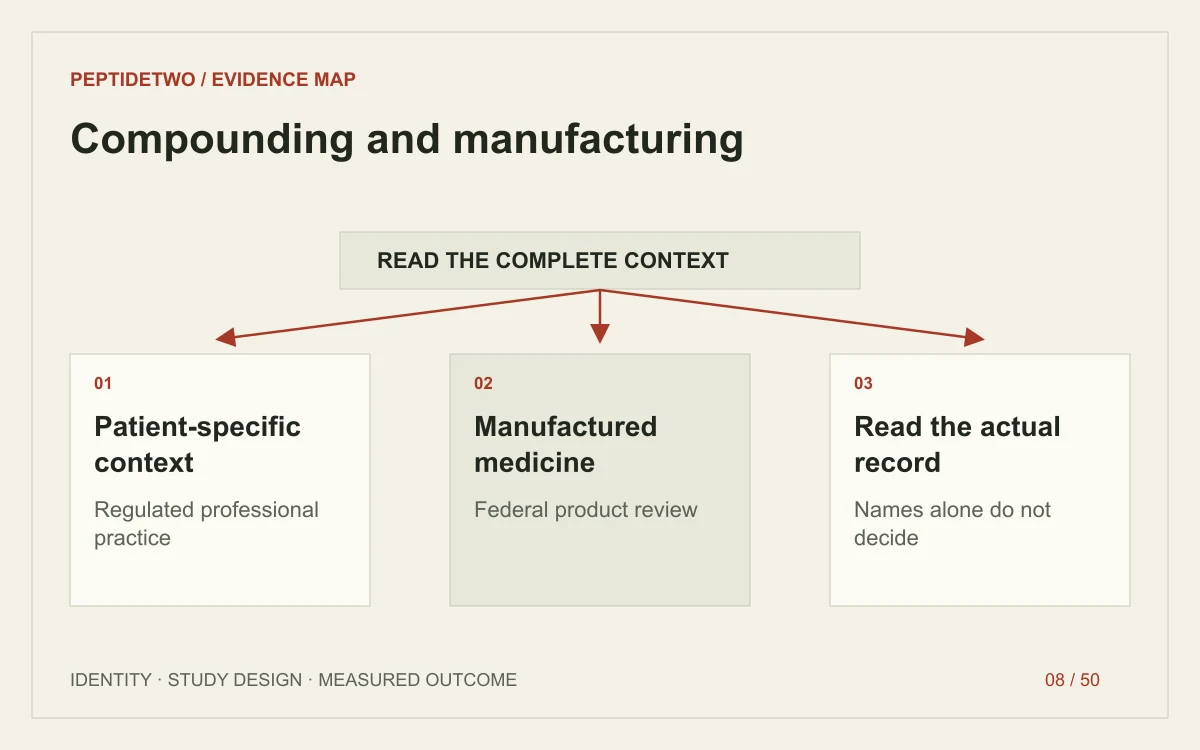 Research Practice
Compounded Semaglutide in Canada: How It Differs from an Authorized Generic
Compounded semaglutide in Canada should not be described as an authorized generic simply because it contains the same named ingredient. Compounding and commercial manufacturing have different regulatory contexts.
Updated 2026-11-06 ↗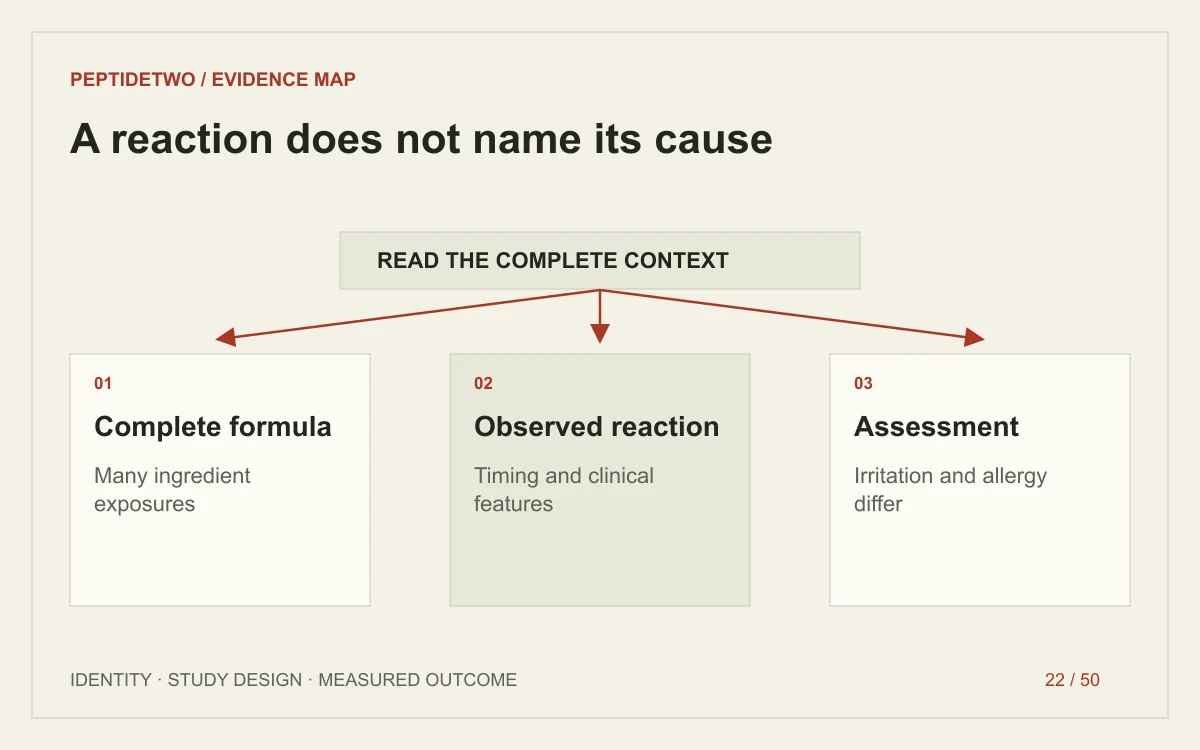 Research Practice
Copper Peptide Serum Irritation: How to Read Reactions Without Guessing the Cause
Copper peptide serum irritation describes an experience, not a confirmed ingredient diagnosis. A serum contains a complete formulation, and a reaction can occur in the context of other products, skin conditions or recent procedures.
Updated 2026-11-06 ↗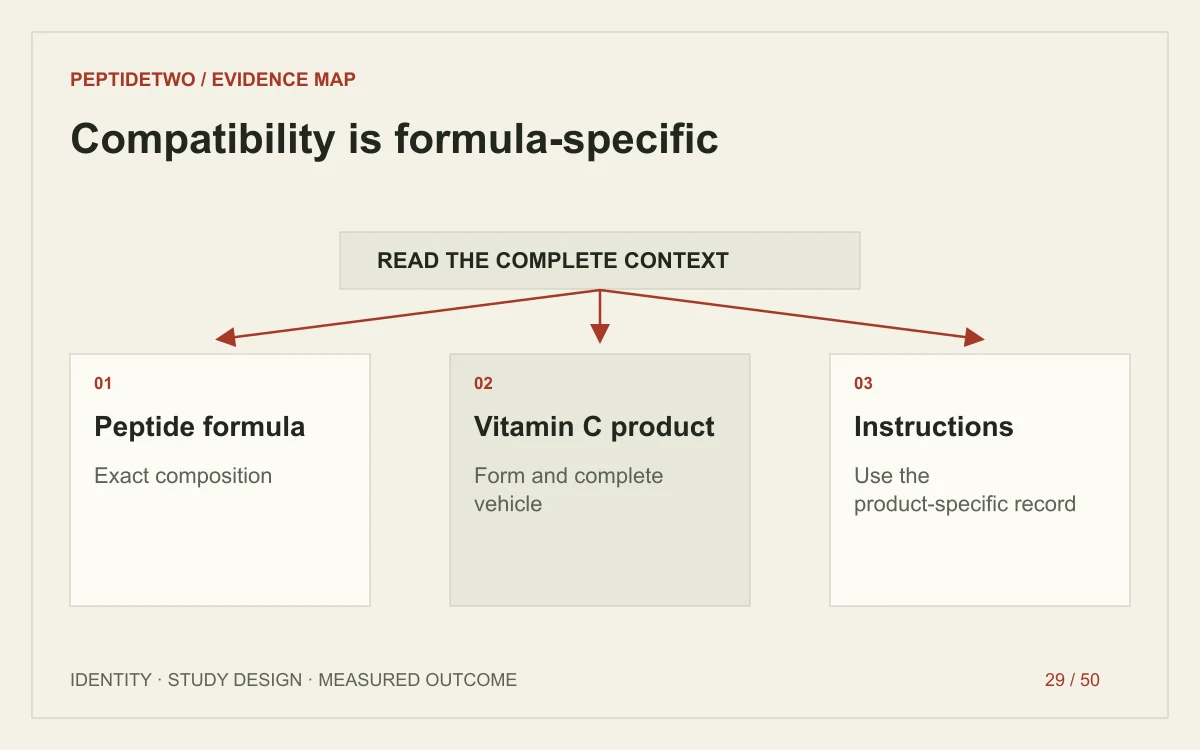 Research Practice
Copper Peptides and Vitamin C: Product Instructions vs Universal Chemistry Claims
Copper peptides and vitamin C cannot be assessed from two ingredient-family names alone. A useful answer separates the instructions for a specific finished product from a universal chemical claim.
Updated 2026-11-06 ↗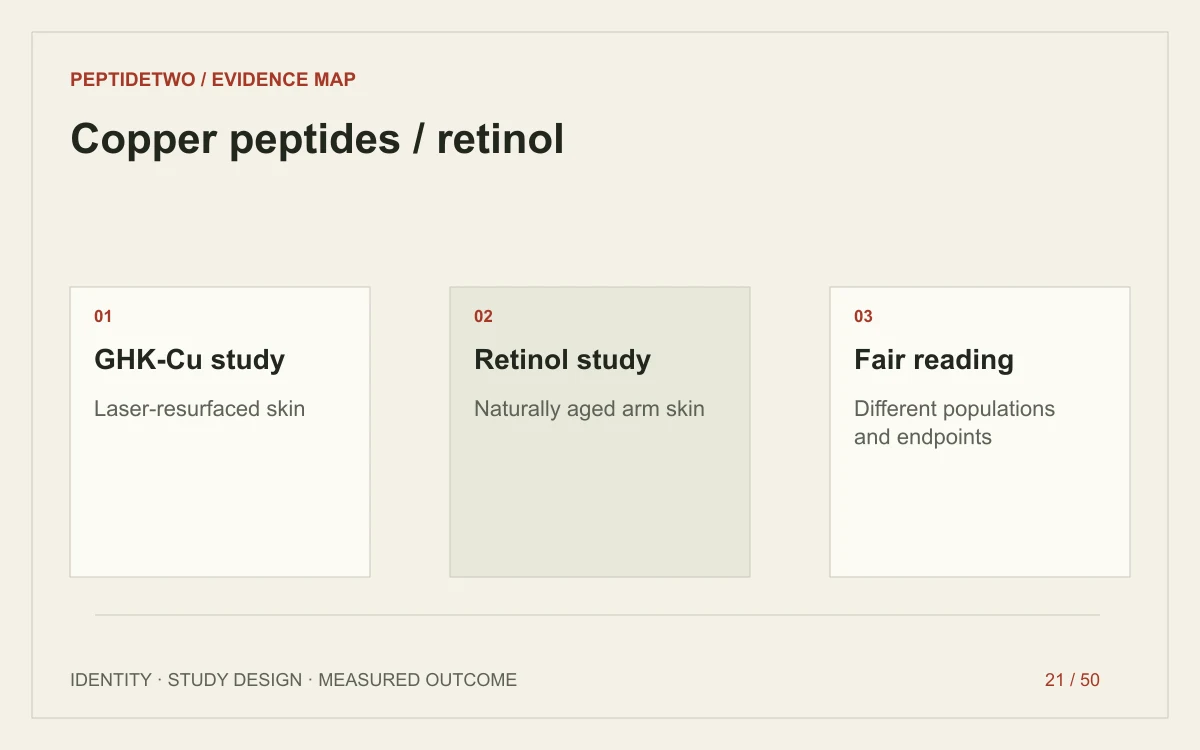 Research Practice
Copper Peptides vs Retinol: Compare the Studies Before the Skin-Care Claims
Copper peptides vs retinol is often presented as a choice between two equivalent anti-aging ingredients. The studies usually cited do not form a direct head-to-head comparison.
Updated 2026-11-06 ↗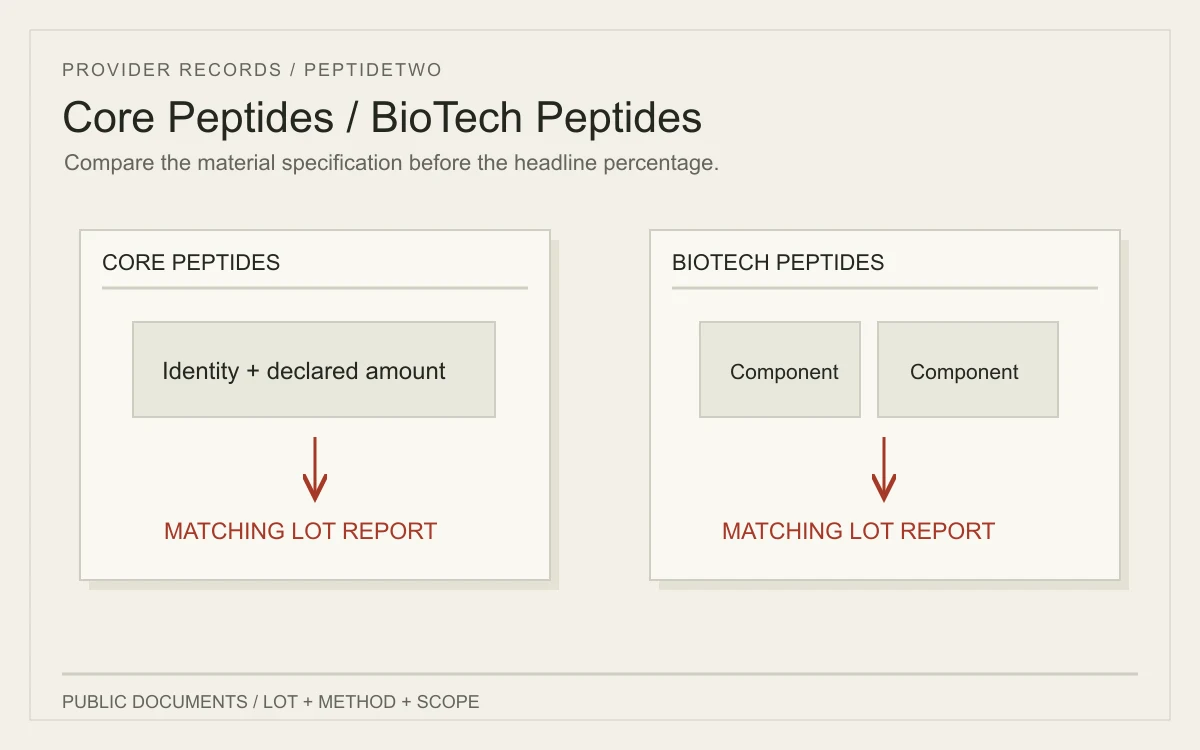 Research Practice
Core Peptides vs BioTech Peptides: Catalogue, COAs and Policy Differences
A comparison focused on matching the material and its batch record, with a separate look at the companies’ published returns and shipping policies.
Updated 2026-11-09T09:06:28.317Z ↗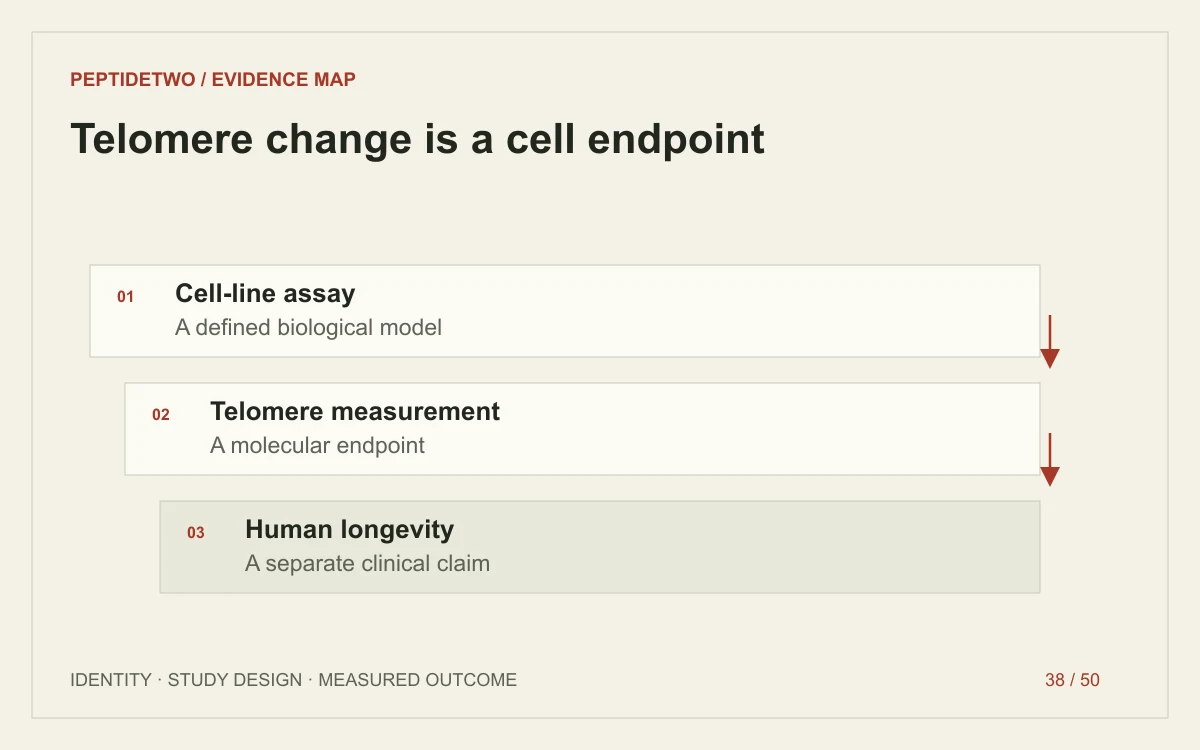 Research Practice
Epitalon and Telomeres: Why Cell-Line Findings Do Not Prove Human Longevity
Epitalon and telomeres are linked in laboratory research, but a cell-line result is not proof of longer human life. Telomere length, telomerase-related activity and alternative lengthening pathways are biological measurements.
Updated 2026-11-06 ↗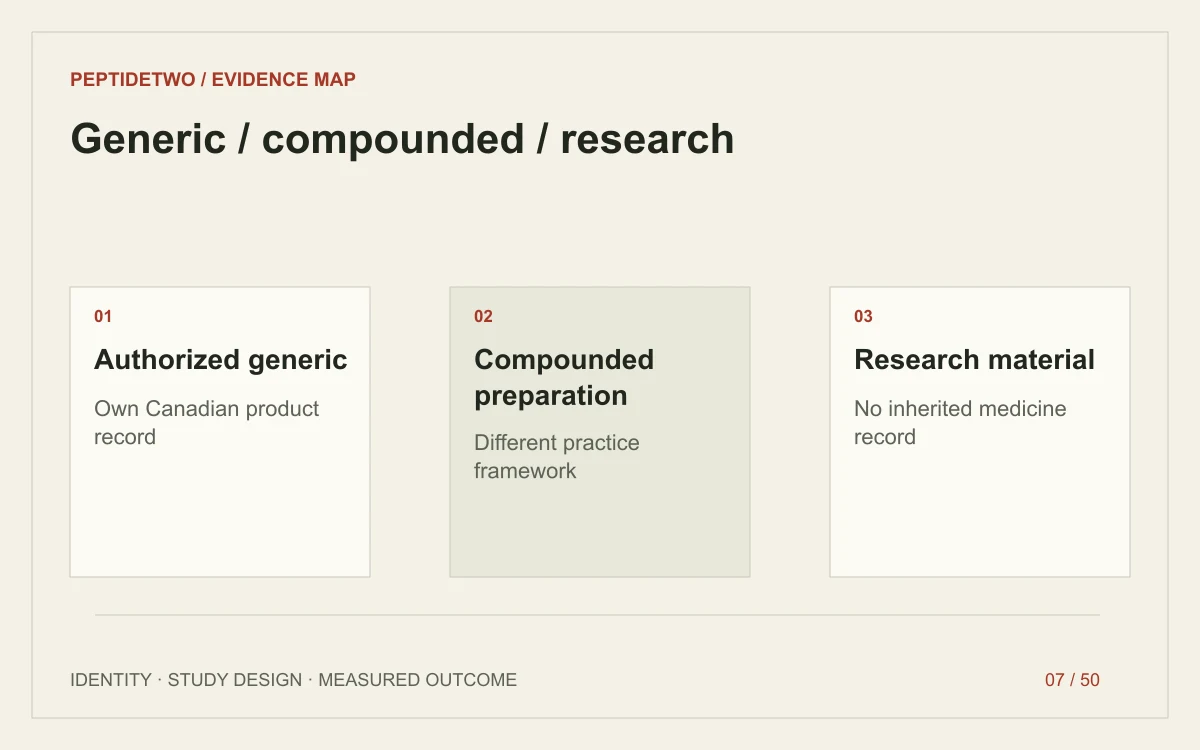 Documentation & Traceability
Generic Semaglutide in Canada: Approval, Product Identity and Common Mix-Ups
Generic semaglutide in Canada is no longer just a future-market topic. Health Canada announced its first generic semaglutide authorization on 28 April 2026 and a second on 1 May 2026.
Updated 2026-11-06 ↗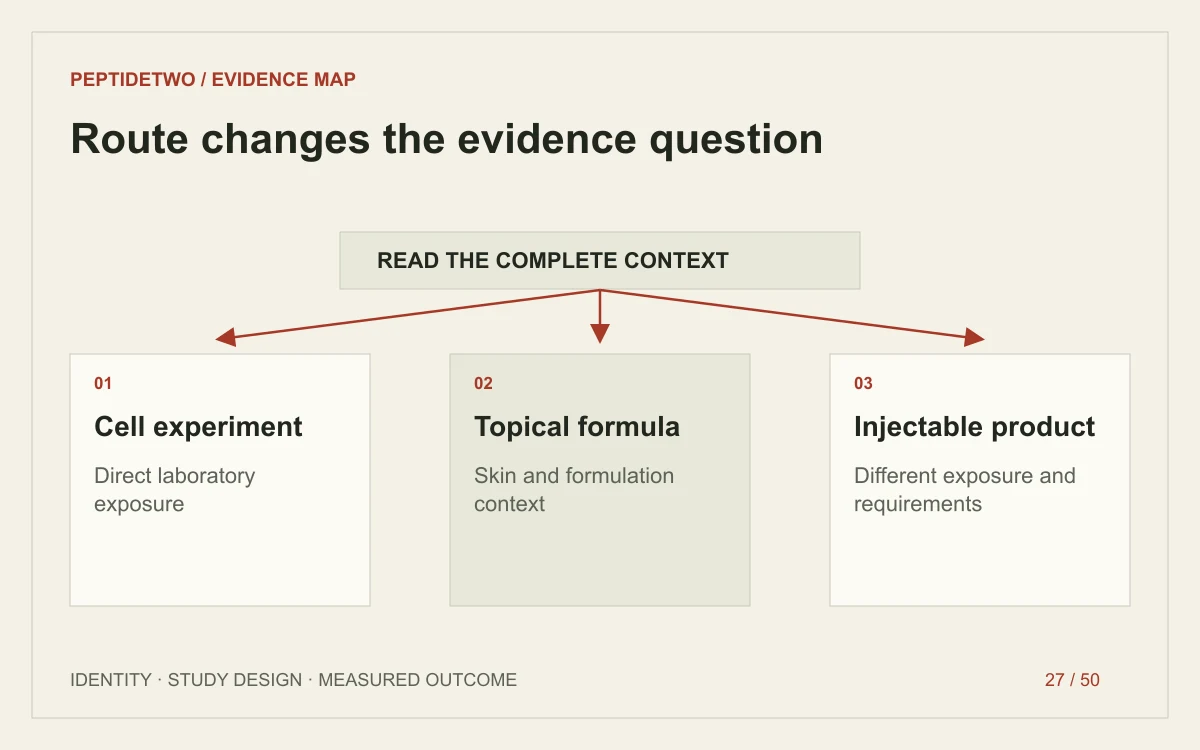 Research Practice
Topical GHK-Cu vs Injectable Products: Why the Evidence Cannot Be Transferred
Topical GHK-Cu evidence cannot automatically validate an injectable product. A copper-peptide serum, direct exposure of cultured cells and an injected preparation involve different formulations, exposure conditions and regulatory questions.
Updated 2026-11-06 ↗ Peptide Fundamentals
GHK-Cu vs AHK-Cu: One Amino Acid, Different Experimental Evidence
GHK-Cu vs AHK-Cu starts with a sequence difference: glycine in GHK and alanine in AHK. Both names describe copper-associated tripeptides, but a shared metal and similar letters do not make their experimental evidence interchangeable.
Updated 2026-11-06 ↗