Research peptides: questions & evidence.
Read focused questions about BPC-157, GH-release pathways, copper complexes, MOTS-c and Epitalon. Keep cell, animal and human evidence distinct, examine combination claims, and separate Canadian product rules from anti-doping requirements.
Guides in this topic
 Research Practice
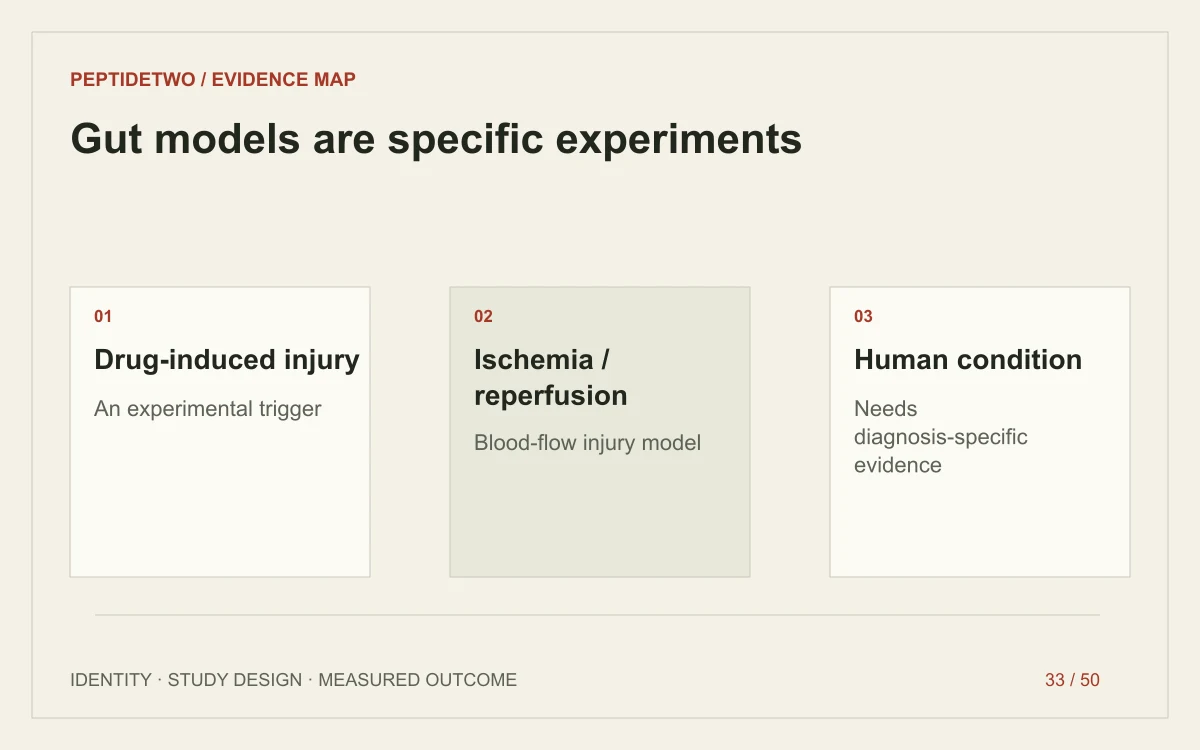
BPC-157 and Gut Research: Injury Models, Colitis and Human Evidence Gaps
BPC-157 gut research spans several experimental injury models, especially in rats. A result in a chemically induced lesion or blood-flow injury model is not the same as evidence for treating a human digestive diagnosis.
Updated 2026-11-06 ↗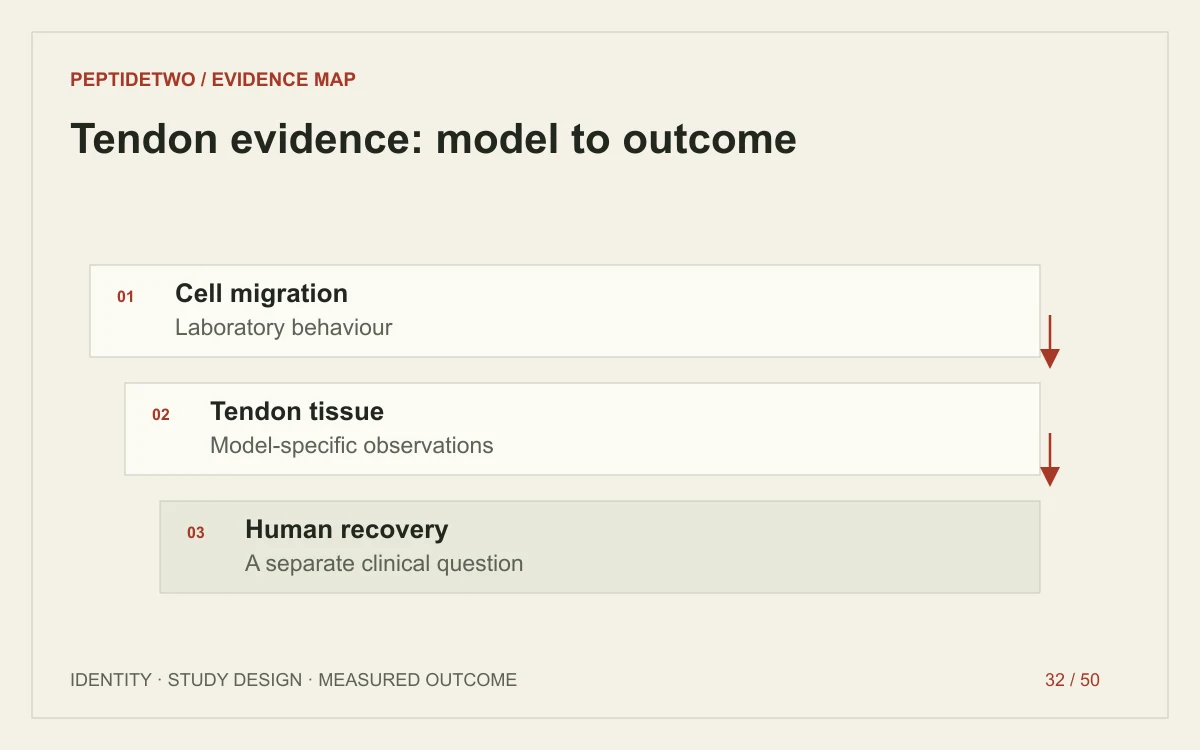 Research Practice
BPC-157 Tendon Research: Cell Migration Is Not a Human Recovery Time
BPC-157 tendon research includes laboratory studies of tendon explants and fibroblasts. These experiments investigate biological mechanisms.
Updated 2026-11-06 ↗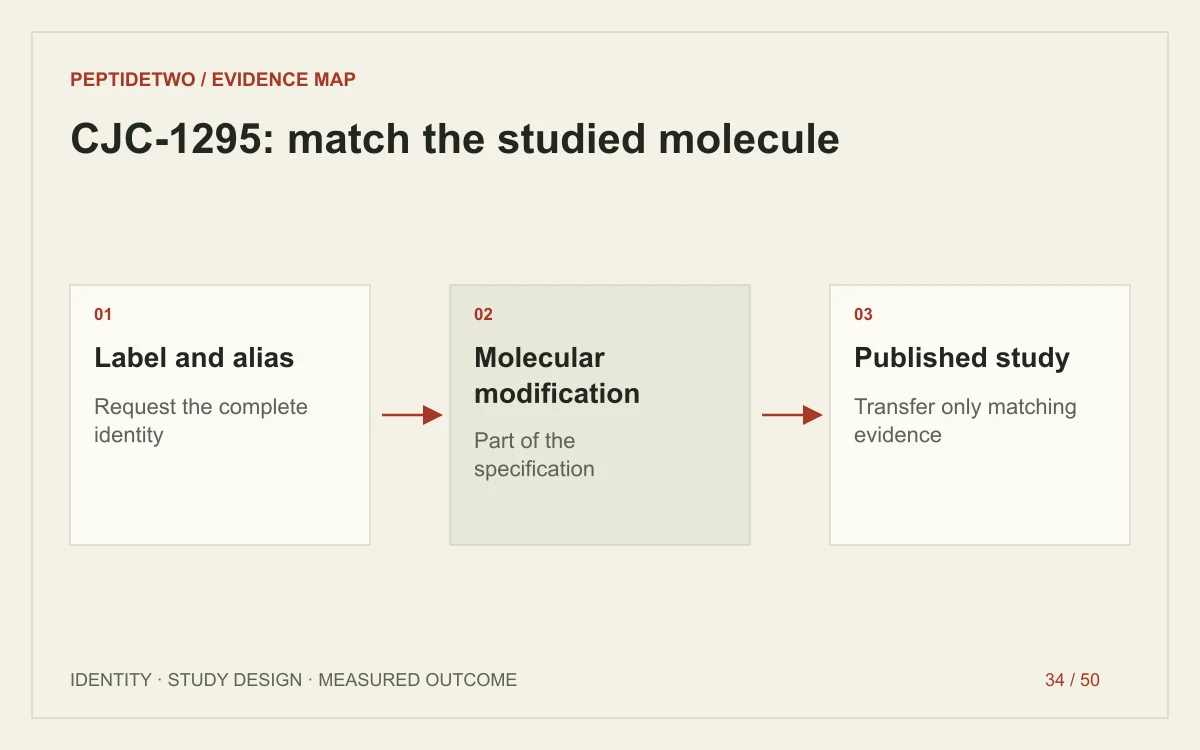 Documentation & Traceability
CJC-1295 DAC vs “No DAC”: Identity Comes Before the Half-Life Claim
CJC-1295 DAC vs no DAC is first an identity question. A supplier’s alias is not enough to establish that two products are the same molecule or share a pharmacokinetic profile.
Updated 2026-11-06 ↗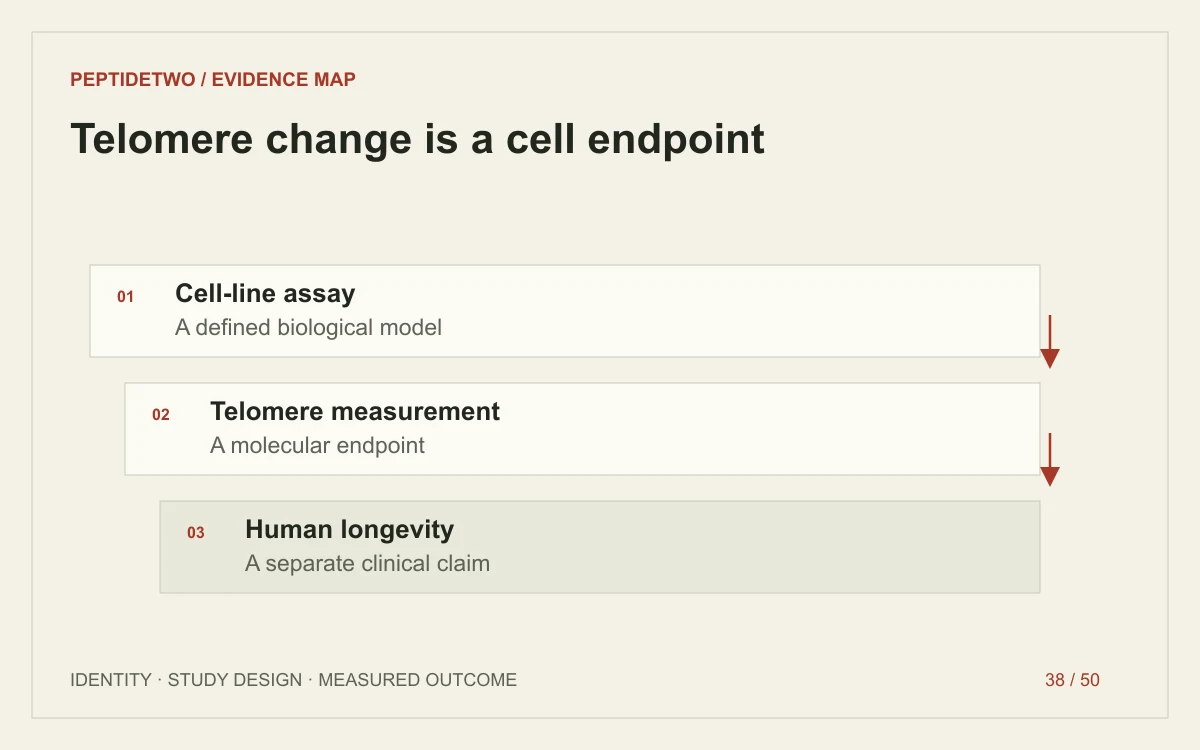 Research Practice
Epitalon and Telomeres: Why Cell-Line Findings Do Not Prove Human Longevity
Epitalon and telomeres are linked in laboratory research, but a cell-line result is not proof of longer human life. Telomere length, telomerase-related activity and alternative lengthening pathways are biological measurements.
Updated 2026-11-06 ↗ Peptide Fundamentals
GHK-Cu vs AHK-Cu: One Amino Acid, Different Experimental Evidence
GHK-Cu vs AHK-Cu starts with a sequence difference: glycine in GHK and alanine in AHK. Both names describe copper-associated tripeptides, but a shared metal and similar letters do not make their experimental evidence interchangeable.
Updated 2026-11-06 ↗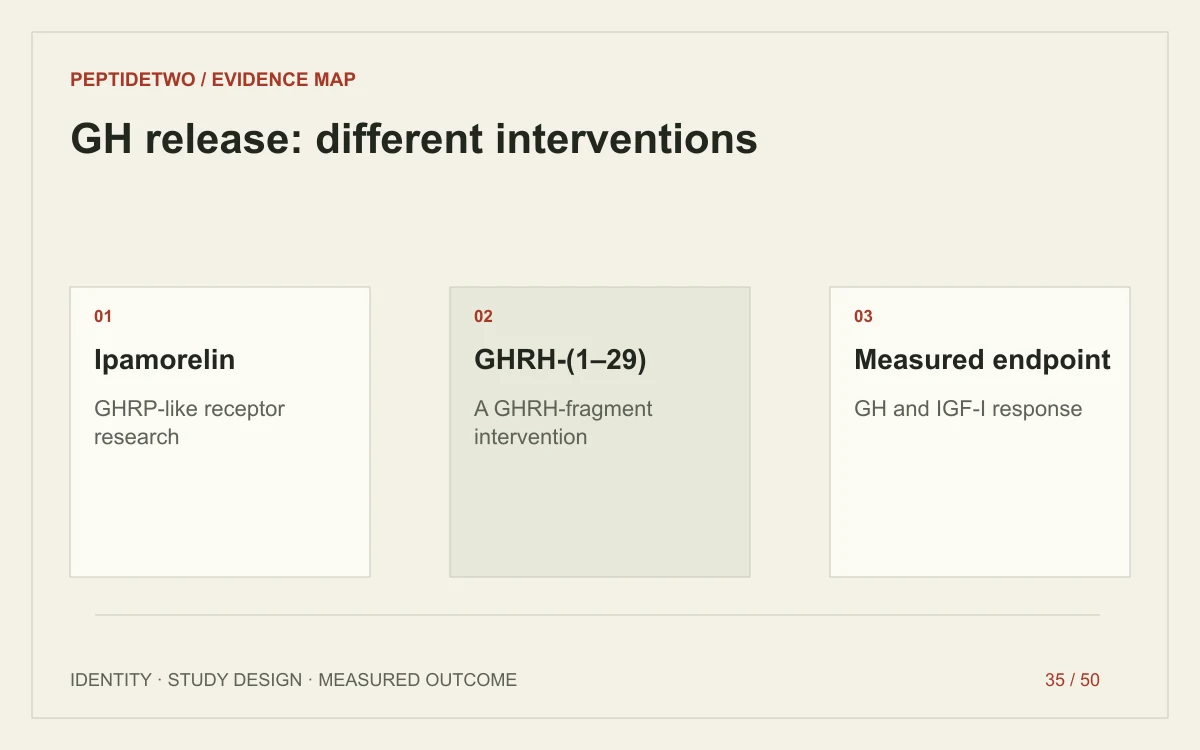 Peptide Fundamentals
Ipamorelin vs Sermorelin: Different GH-Release Pathways and Evidence
Ipamorelin vs sermorelin compares different approaches to stimulating growth-hormone release. The shared hormonal endpoint does not make the molecules, receptor pathways or evidence interchangeable.
Updated 2026-11-06 ↗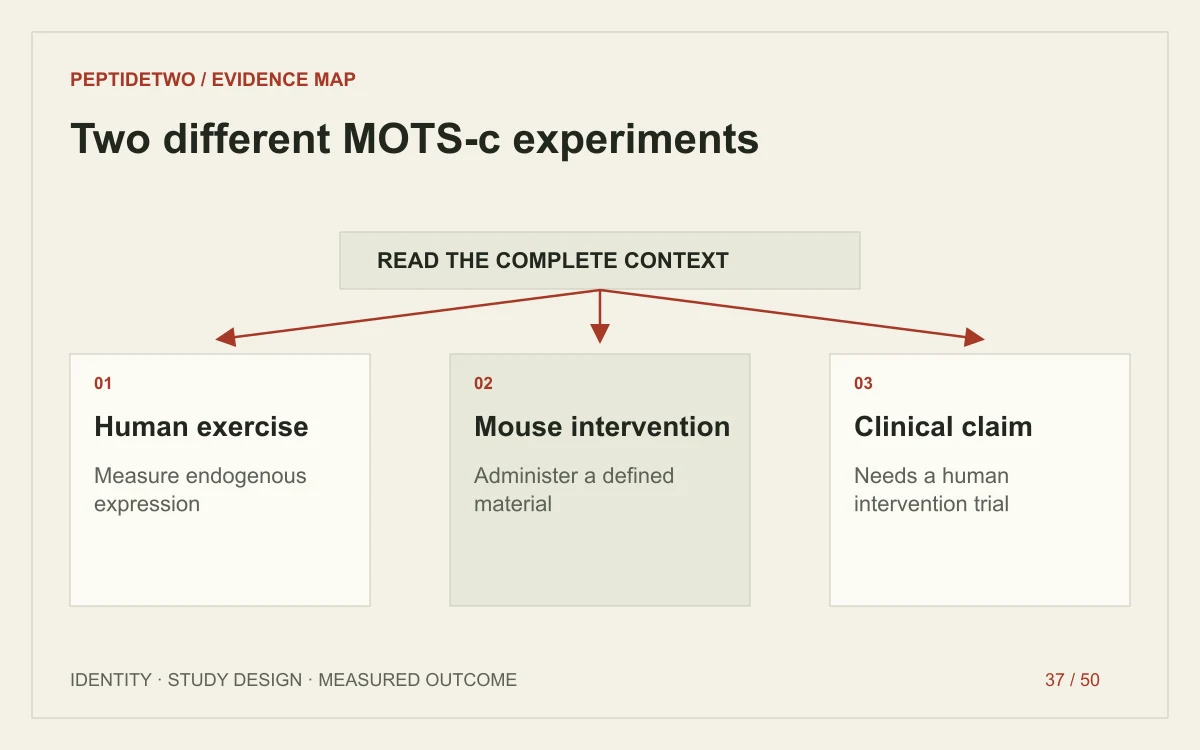 Research Practice
MOTS-c and Exercise: Endogenous Human Responses vs Peptide Administration
MOTS-c and exercise research contains two observations that are often merged incorrectly. Measuring an endogenous peptide after exercise in people is different from administering a peptide to mice and measuring performance.
Updated 2026-11-06 ↗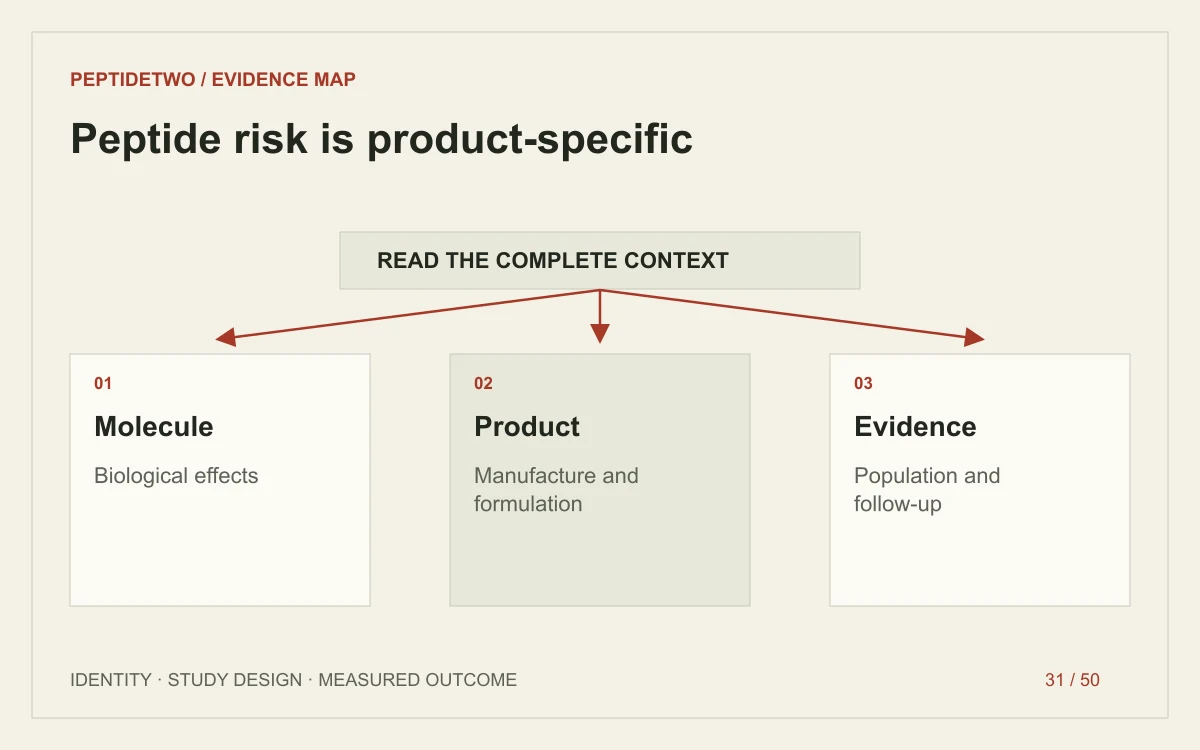 Research Practice
Peptide Side Effects: Why the Exact Molecule, Product and Evidence Matter
Peptide side effects depend on the exact molecule, finished product, route and person studied. The word peptide covers a broad chemical category.
Updated 2026-11-06 ↗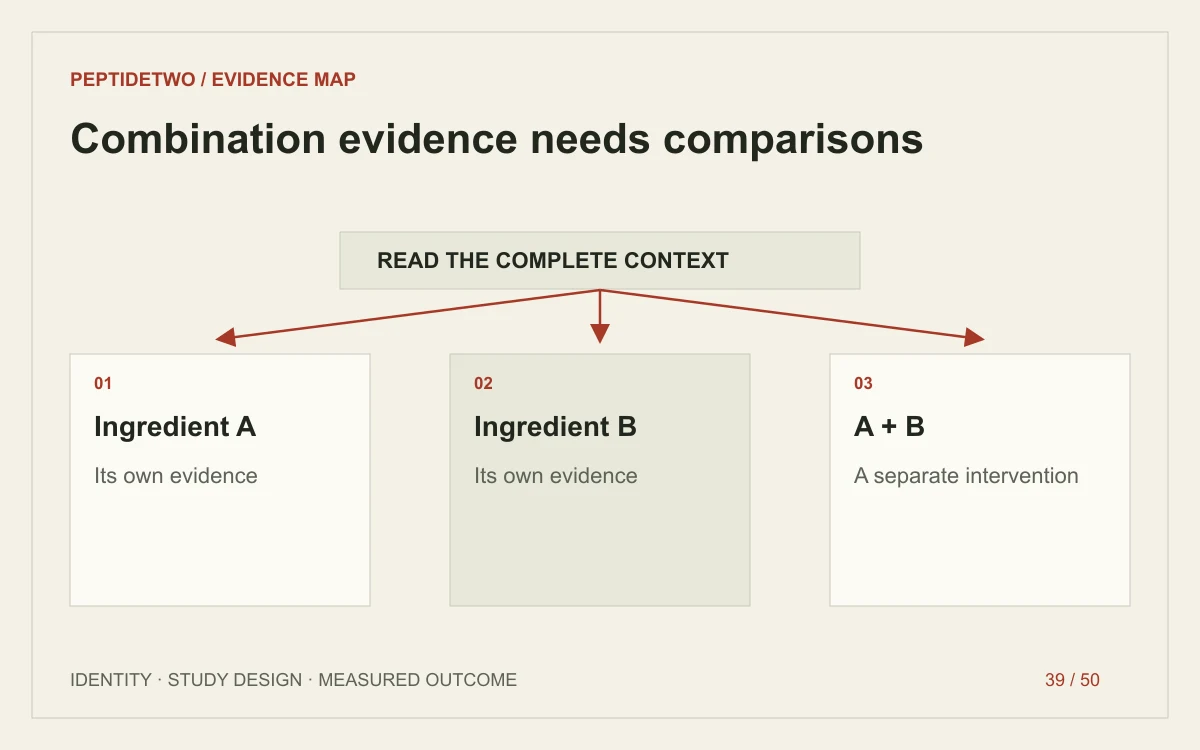 Research Practice
Peptide Stacks: Why Evidence for Two Ingredients Does Not Prove a Combination
Peptide stacks are combinations, and a combination is a new evidence question. Two ingredients with separate studies do not automatically produce demonstrated synergy, a known safety profile or a predictable clinical outcome when combined.
Updated 2026-11-06 ↗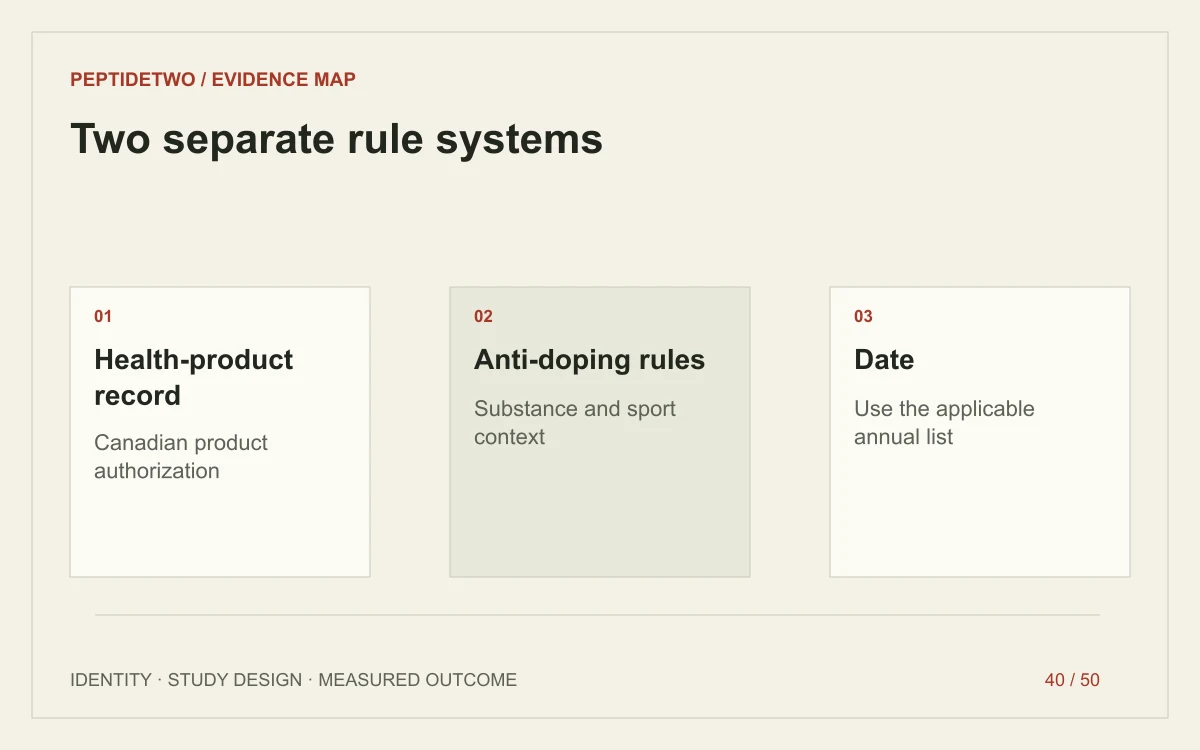 Research Practice
Peptides and WADA in Canada: Product Approval Is Not Anti-Doping Permission
Peptides and WADA require a separate check from Canadian medicine authorization. A product can have a medical use while still being subject to sport restrictions, and a research-use label does not provide anti-doping permission.
Updated 2026-11-06 ↗