Metabolic outcomes & safety.
Follow the clinical questions behind weight change: maintenance, lean tissue, sleep apnea, kidney and cardiovascular outcomes, liver histology and adverse-event signals. These guides keep the studied population, endpoint and duration beside each finding.
Guides in this topic
 Research Practice
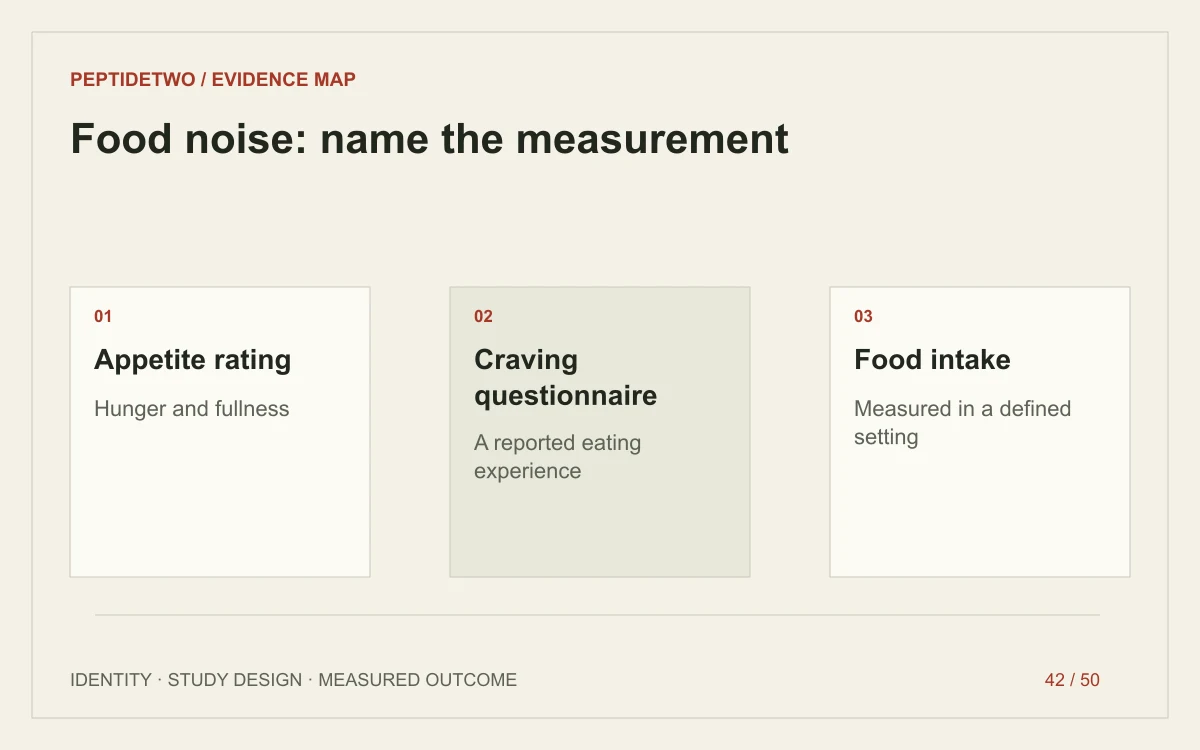
GLP-1 and “Food Noise”: What Appetite and Craving Studies Actually Measure
GLP-1 and food noise discussions often mix a familiar everyday phrase with several different research outcomes. A person may use food noise to describe persistent thoughts about food.
Updated 2026-11-06 ↗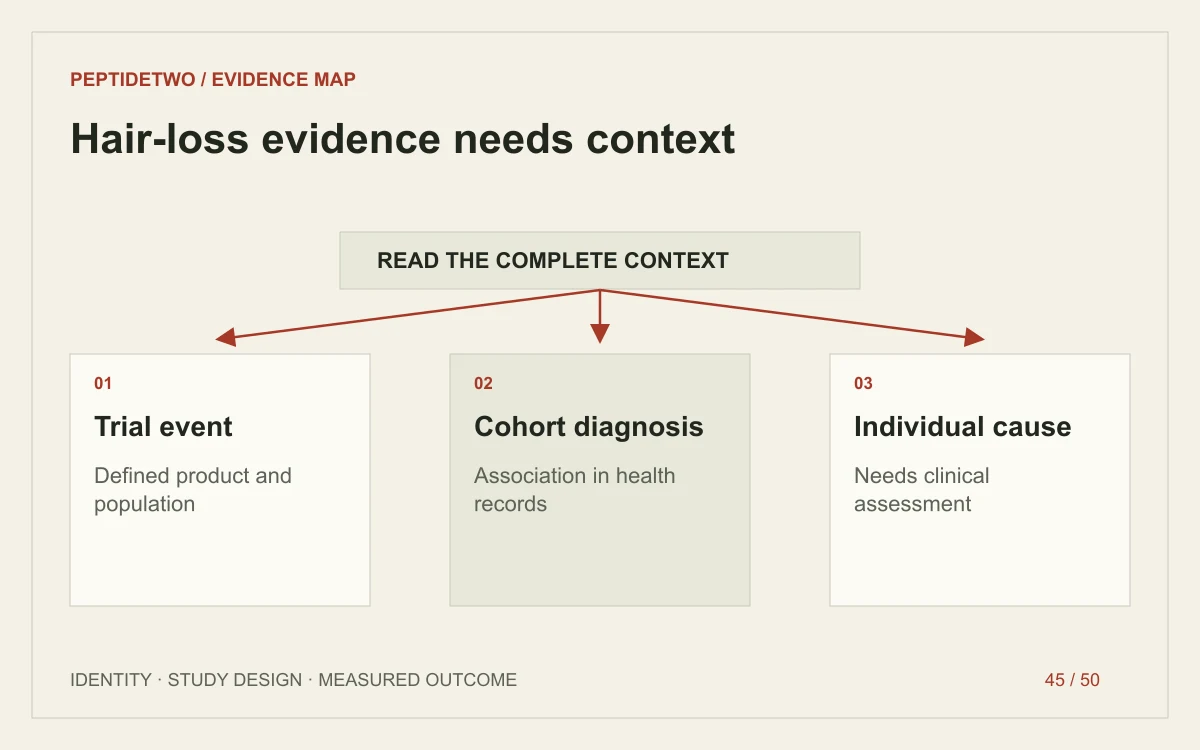 Research Practice
GLP-1 Drugs and Hair Loss: Reported Events, Weight Change and Causal Uncertainty
GLP-1 and hair loss is a legitimate research question, but reported events do not establish one cause for every person. Product trials, electronic-health-record cohorts and individual experiences provide different kinds of evidence.
Updated 2026-11-06 ↗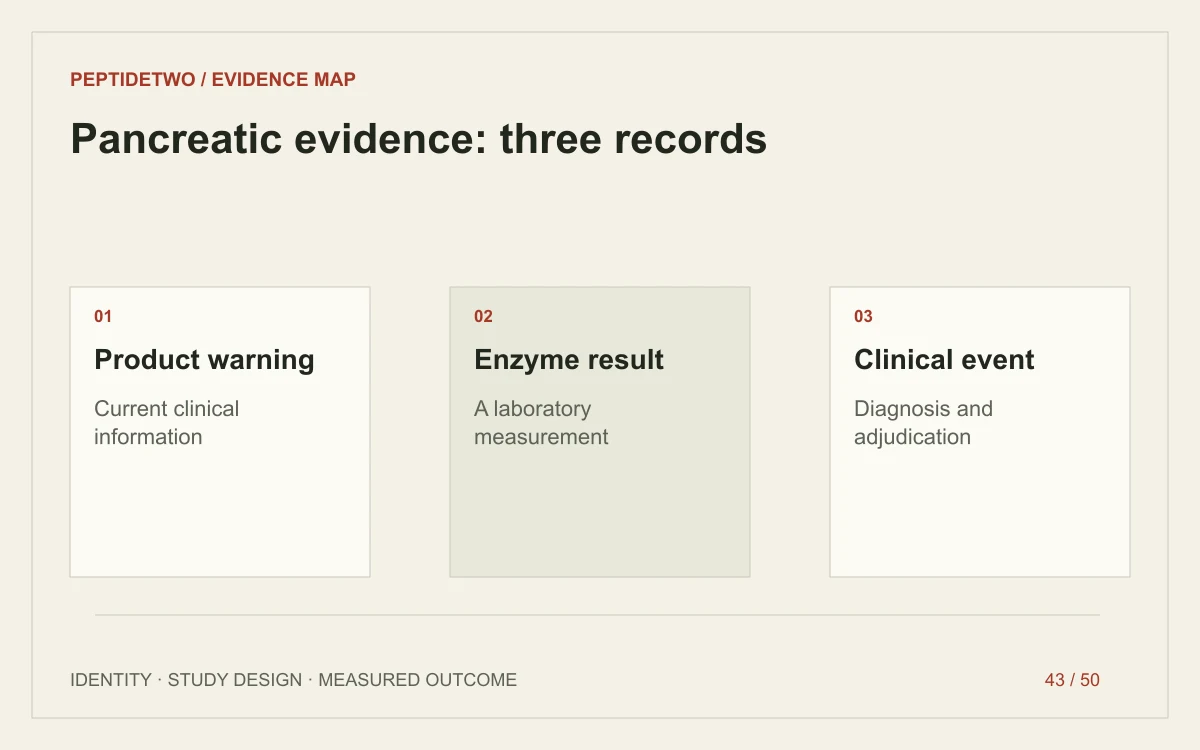 Research Practice
GLP-1 Drugs and Pancreatitis: Warnings, Enzymes and Adjudicated Events
GLP-1 and pancreatitis discussions need to separate product warnings from laboratory enzyme changes and confirmed clinical events. These records address different questions.
Updated 2026-11-06 ↗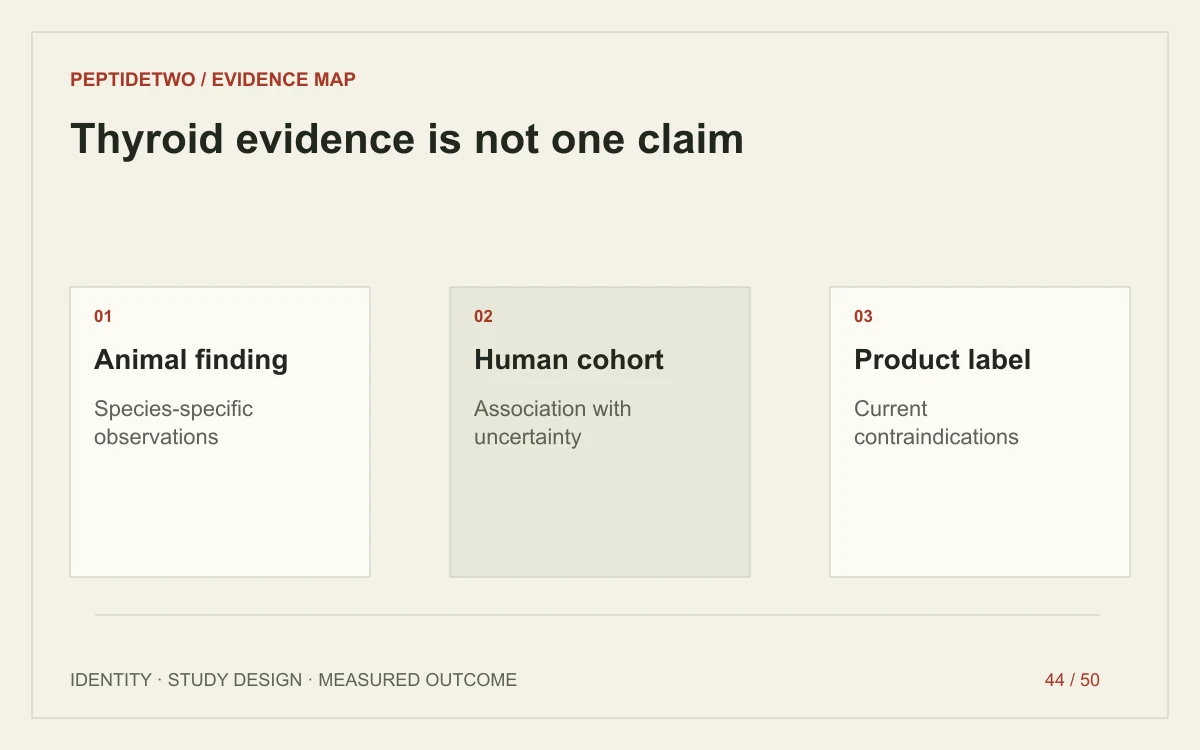 Research Practice
GLP-1 Drugs and Thyroid Cancer: Rodent Warnings and Human Cohort Evidence
GLP-1 and thyroid cancer involves several different evidence questions.
Updated 2026-11-06 ↗ Research Practice
Ozempic Side Effects in Canada: Common Events, Warnings and Study Context
Ozempic side effects should be read from the current Canadian product monograph and the relevant trial, rather than a generic list for every GLP-1 product.
Updated 2026-11-06 ↗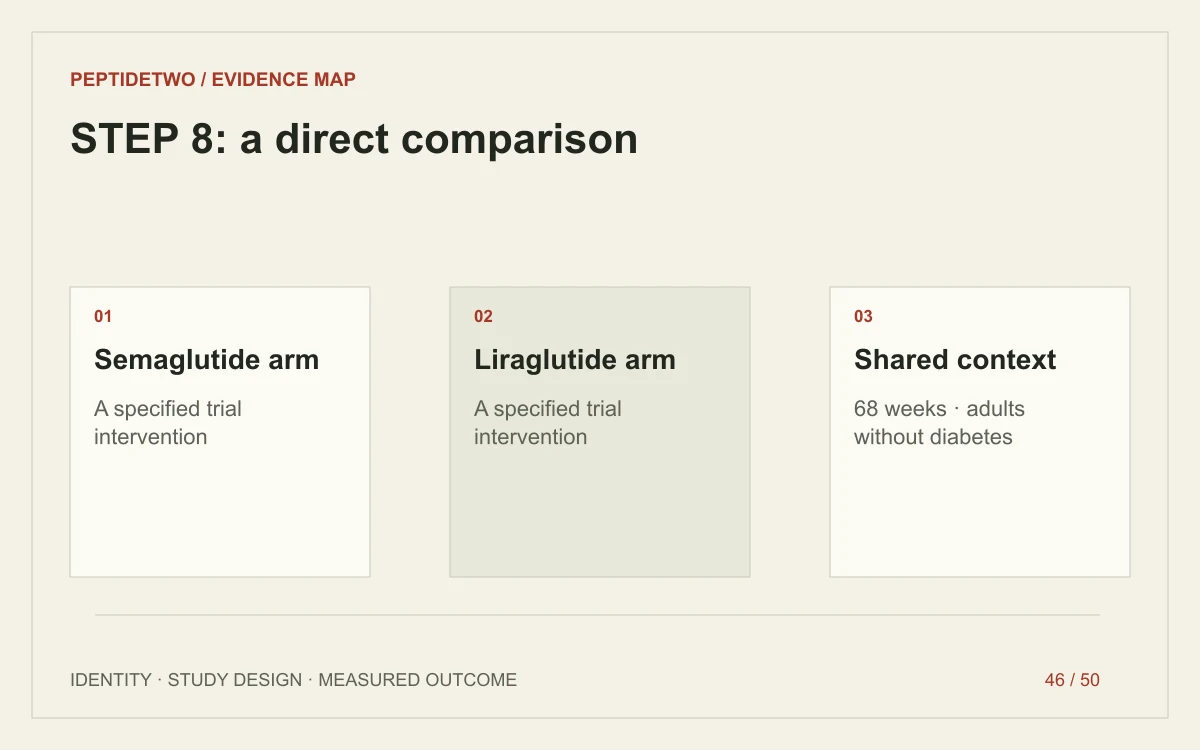 Research Practice
Semaglutide vs Liraglutide: What the STEP 8 Head-to-Head Trial Shows
Semaglutide vs liraglutide has direct randomized evidence from STEP 8. That is more informative for its particular question than comparing unrelated trials.
Updated 2026-11-06 ↗ Research Practice
GLP-1 Drugs and Gallbladder Events: What the Studies Show
A gallstone, gallbladder inflammation and obstruction of the biliary tract are related outcomes, but they are not interchangeable.
Updated 2026-10-29 ↗ Research Practice
GLP-1 Drugs and Gastroparesis: Delay, Symptoms and Diagnosis
Delayed gastric emptying is a measured physiological effect. Gastroparesis is a clinical diagnosis that requires more context than a delayed measurement alone.
Updated 2026-10-29 ↗ Research Practice
GLP-1 Weight Loss and Muscle Loss: What DXA Can Tell You
A headline about GLP-1 muscle loss may be describing a DXA estimate of lean tissue, the proportion of lost weight classified as lean, or a direct measure of strength.
Updated 2026-10-29 ↗ Research Practice
Semaglutide and Diabetic Retinopathy: Reading the Safety Signal
The semaglutide retinopathy signal arose from a defined complication endpoint in SUSTAIN 6, a cardiovascular trial involving people with type 2 diabetes at high cardiovascular risk.
Updated 2026-10-29 ↗ Research Practice
Semaglutide and Kidney Disease: What the FLOW Trial Found
FLOW studied adults with type 2 diabetes and chronic kidney disease. Its 24% lower hazard concerned a composite of major kidney events and kidney-related or cardiovascular death.
Updated 2026-11-15 ↗ Research Practice
Semaglutide and Heart Outcomes: The SELECT Population Matters
SELECT tested a cardiovascular question in adults with established cardiovascular disease and overweight or obesity, without diabetes.
Updated 2026-10-29 ↗