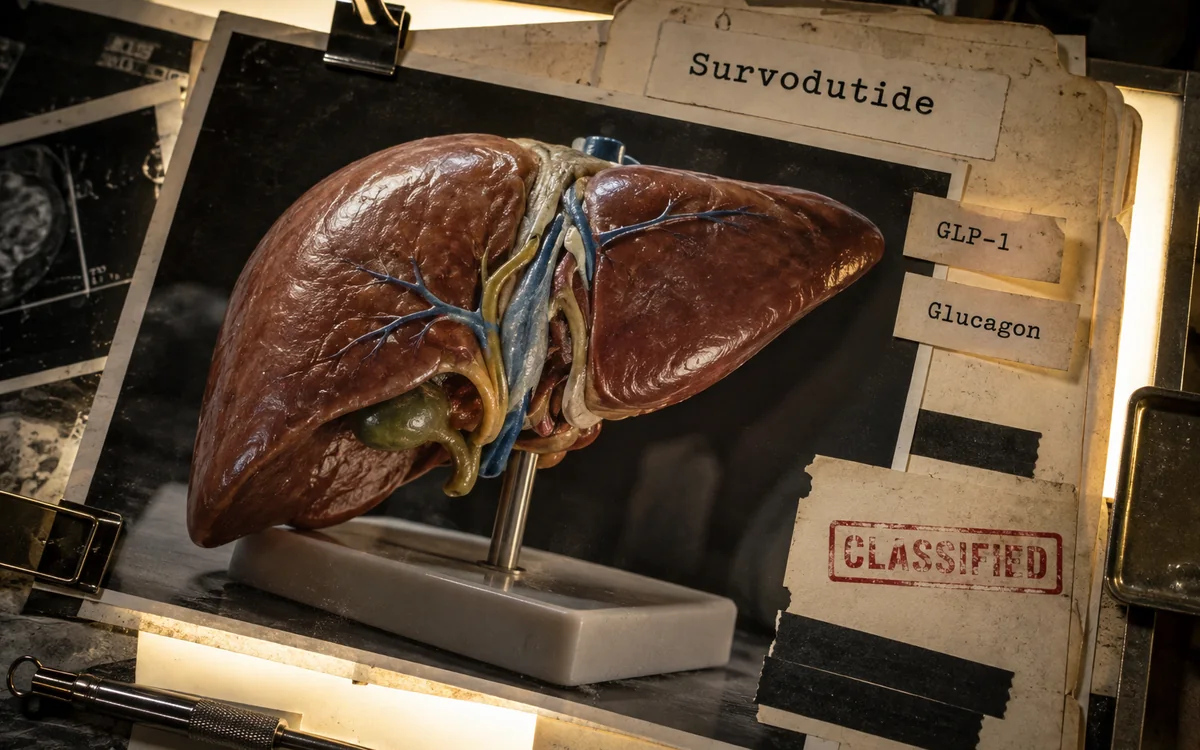
The receptor combination
Survodutide is investigated as a dual agonist of glucagon and GLP-1 receptors. The word dual does not make it the same class of pairing as tirzepatide, which is discussed through GIP and GLP-1 receptor activity. Naming both targets is more informative than counting receptors or assuming that more targets necessarily produce better outcomes.
Weight-management research
A phase 2 randomized placebo-controlled trial evaluated survodutide over 46 weeks. The report includes both treatment outcomes and substantial discontinuation, making the handling of missing observations important. A later phase 3 study, SYNCHRONIZE-2, examined adults with obesity and type 2 diabetes and reported greater weight reduction than placebo over 76 weeks. Those populations and follow-up periods should remain explicit.
A separate liver-disease question
A phase 2 study also investigated survodutide in people with biopsy-confirmed metabolic dysfunction-associated steatohepatitis and fibrosis. That trial asks a liver-disease question. Histological outcomes, fibrosis assessments and body-weight measurements are related clinical context but not interchangeable endpoints. A weight result alone does not establish improvement in a biopsy-based liver endpoint.
Reading newer evidence without discarding context
A phase 3 publication can strengthen or refine the evidence, but the earlier studies remain useful for understanding design and development. Record which trial supports each claim and avoid combining percentages, populations or durations into a composite result that no single study reported. The latest publication is not automatically the best answer to every clinical question.
Comparisons with other multi-receptor peptides
Mazdutide is another GLP-1/glucagon research subject, while retatrutide includes an additional GIP receptor target. Similar target labels do not establish equivalent receptor balance, formulation or clinical effects. Compare direct trials where available; otherwise explain that cross-trial comparisons remain indirect and may be influenced by differences in participants and methods.
What the evidence does not authorize
The cited clinical publications do not certify the identity of a commercial research vial or establish a personal-use procedure. A trial formulation and an unverified product are separate subjects. This dossier provides a dated research overview; it is not a claim about every country’s current regulatory status or every possible application of the molecule.