Skin-care peptides: ingredients & trials.
Follow cosmetic peptide claims from the exact ingredient to the finished formula. Explore copper complexes, Argireline, palmitoylated peptides and eye or lip products, with direct attention to comparators, visible outcomes and tolerability.
Guides in this topic
 Research Practice
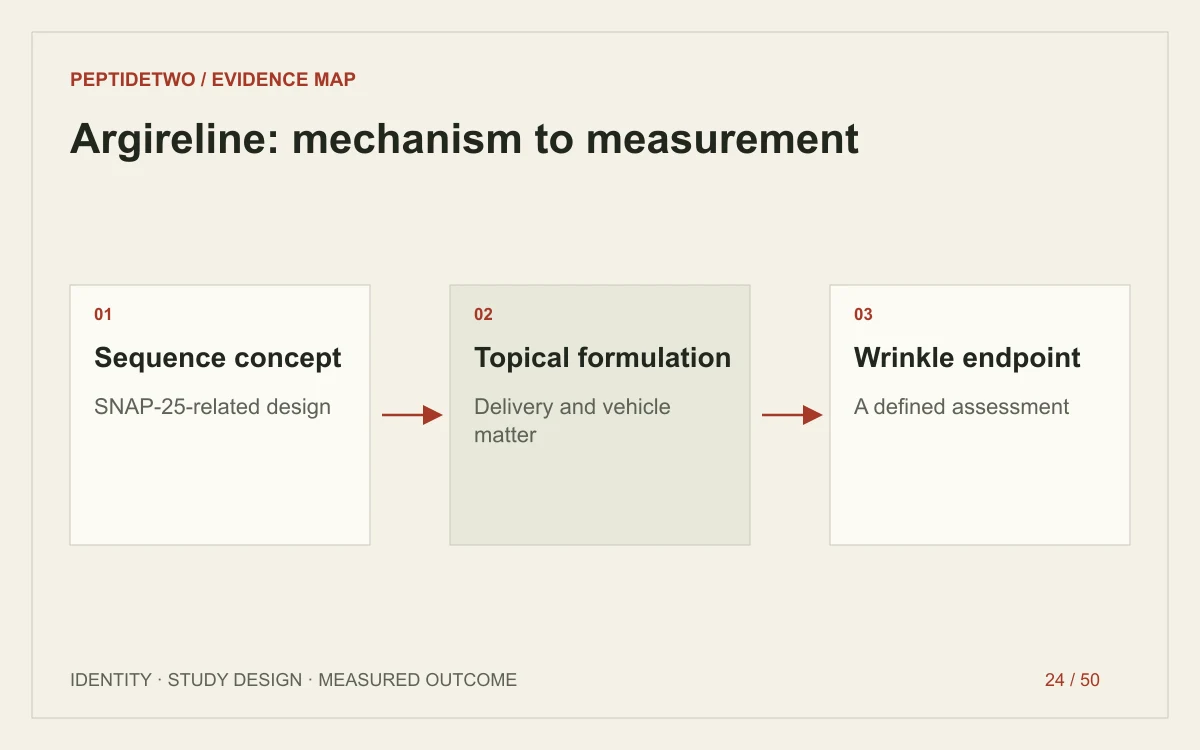
Argireline and Acetyl Hexapeptide-8: What the Wrinkle Trials Actually Show
Argireline is commonly associated with acetyl hexapeptide-8, a cosmetic peptide studied for wrinkle-related effects. Its proposed mechanism has encouraged “Botox-like” marketing.
Updated 2026-11-06 ↗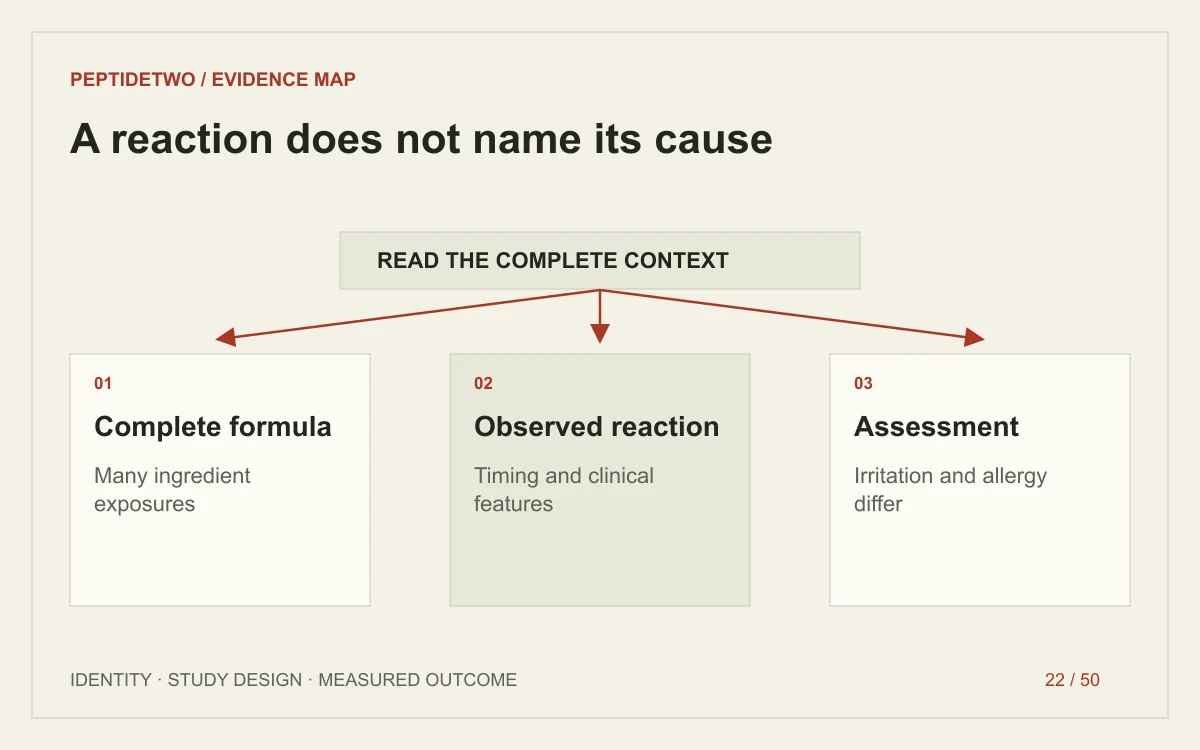 Research Practice
Copper Peptide Serum Irritation: How to Read Reactions Without Guessing the Cause
Copper peptide serum irritation describes an experience, not a confirmed ingredient diagnosis. A serum contains a complete formulation, and a reaction can occur in the context of other products, skin conditions or recent procedures.
Updated 2026-11-06 ↗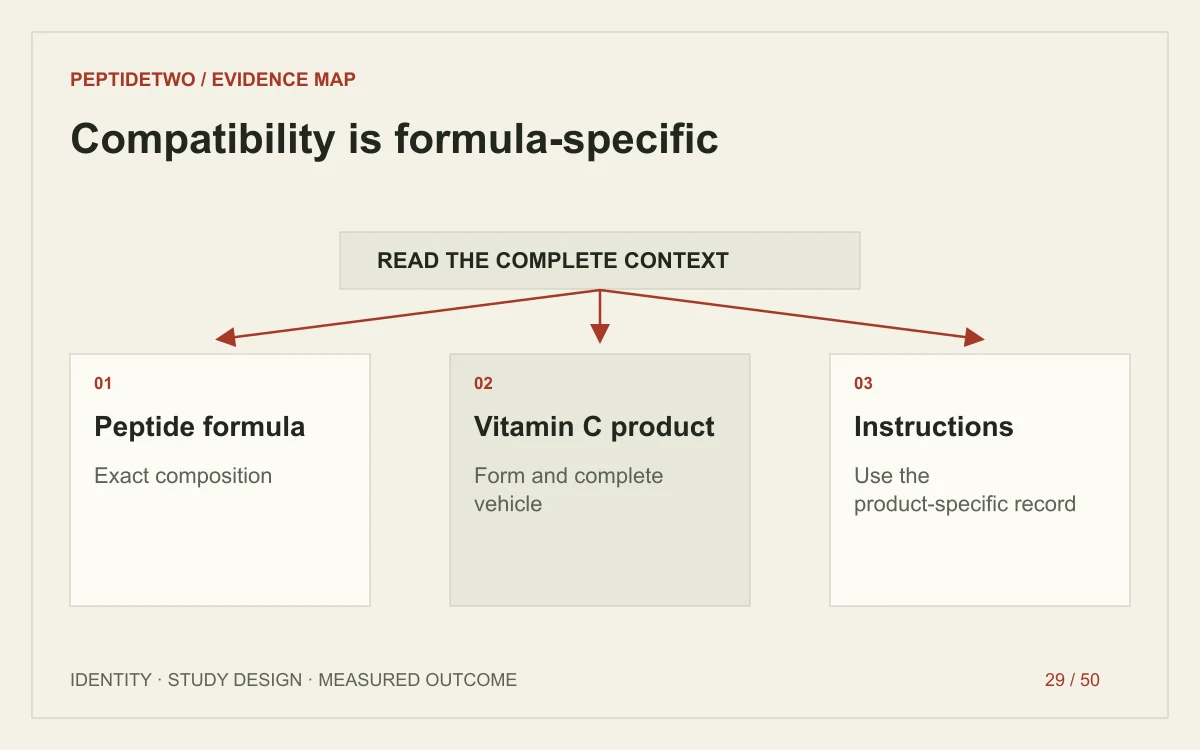 Research Practice
Copper Peptides and Vitamin C: Product Instructions vs Universal Chemistry Claims
Copper peptides and vitamin C cannot be assessed from two ingredient-family names alone. A useful answer separates the instructions for a specific finished product from a universal chemical claim.
Updated 2026-11-06 ↗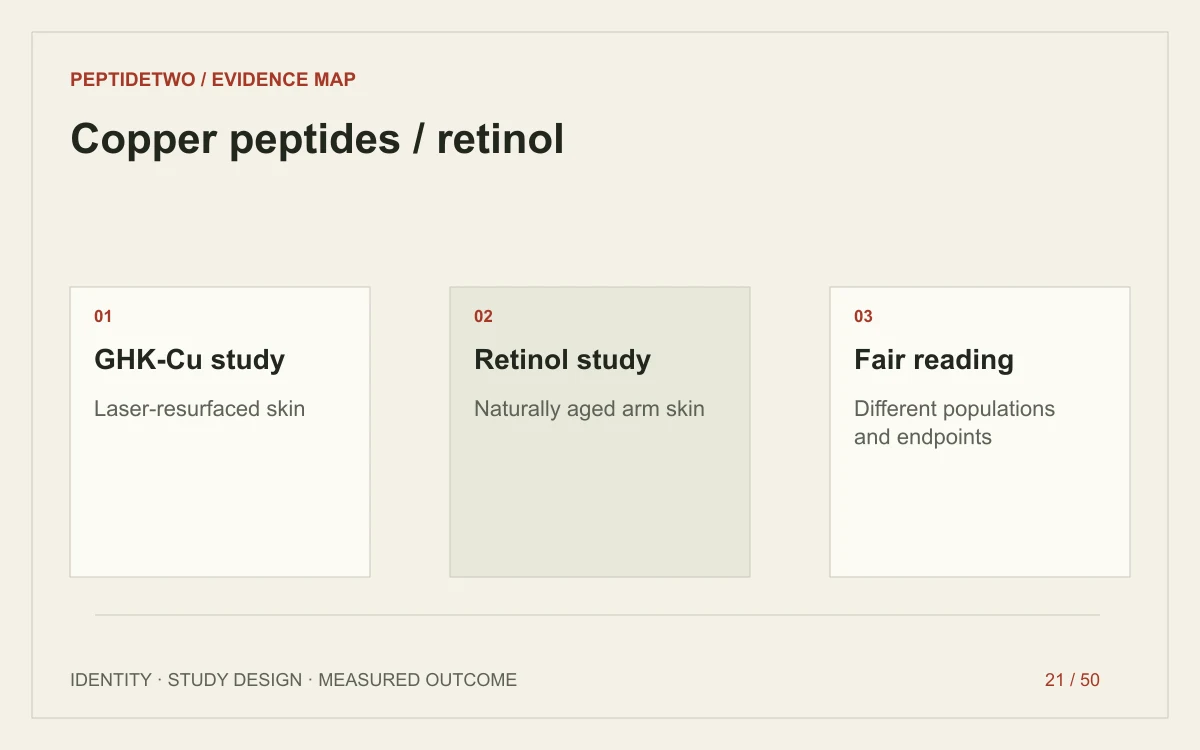 Research Practice
Copper Peptides vs Retinol: Compare the Studies Before the Skin-Care Claims
Copper peptides vs retinol is often presented as a choice between two equivalent anti-aging ingredients. The studies usually cited do not form a direct head-to-head comparison.
Updated 2026-11-06 ↗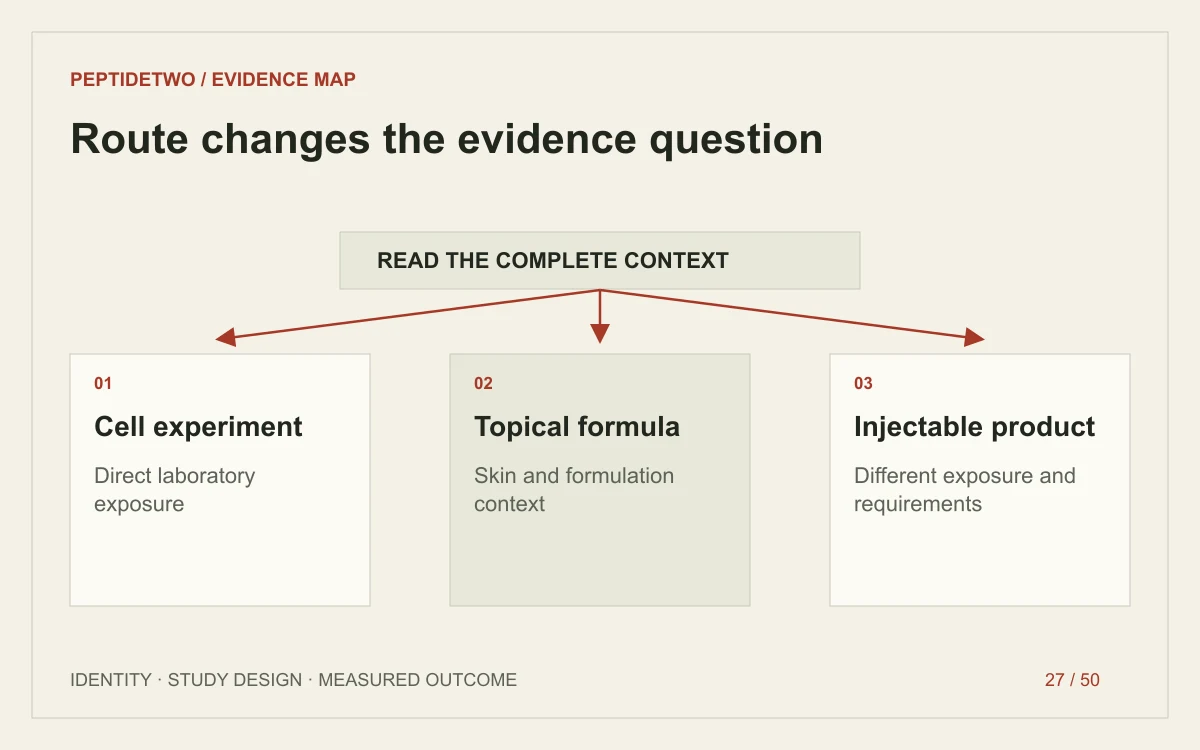 Research Practice
Topical GHK-Cu vs Injectable Products: Why the Evidence Cannot Be Transferred
Topical GHK-Cu evidence cannot automatically validate an injectable product. A copper-peptide serum, direct exposure of cultured cells and an injected preparation involve different formulations, exposure conditions and regulatory questions.
Updated 2026-11-06 ↗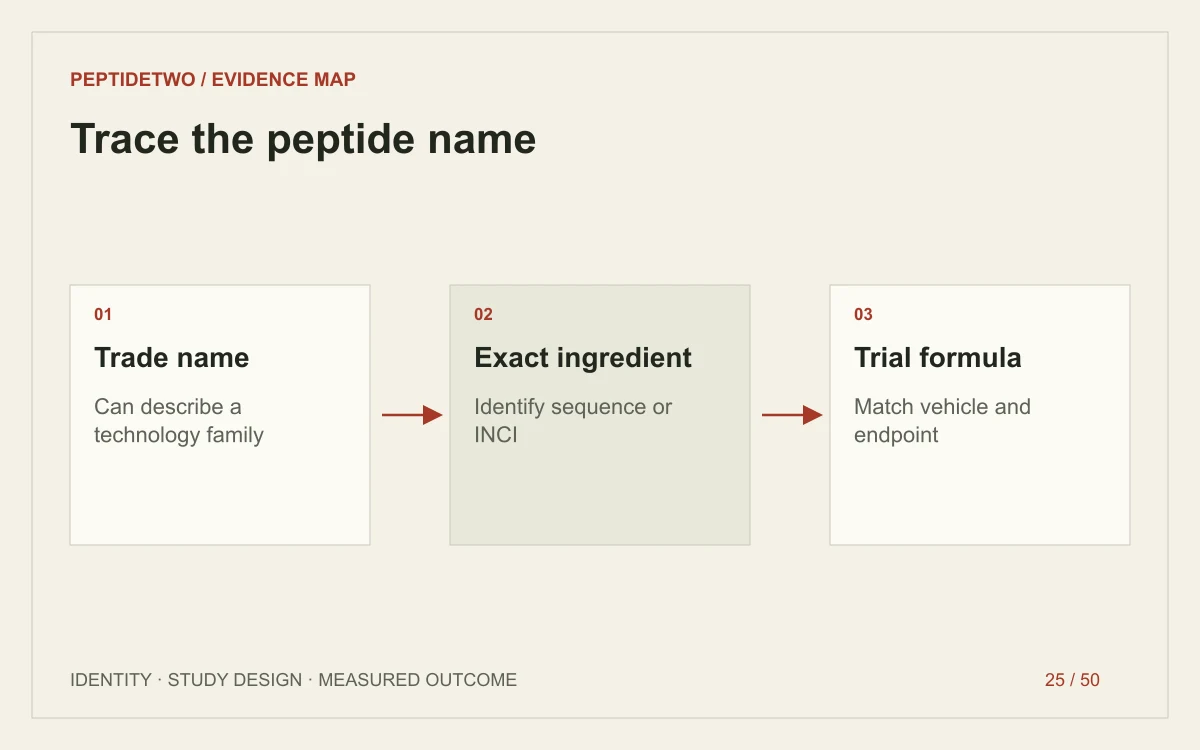 Research Practice
Matrixyl and Palmitoyl Pentapeptide-4: One Name Does Not Cover Every Formula
Palmitoyl pentapeptide evidence should be tied to the exact sequence and formulation. Matrixyl is a commercial name encountered across cosmetic peptide technologies, so the word alone is not a complete molecular specification.
Updated 2026-11-06 ↗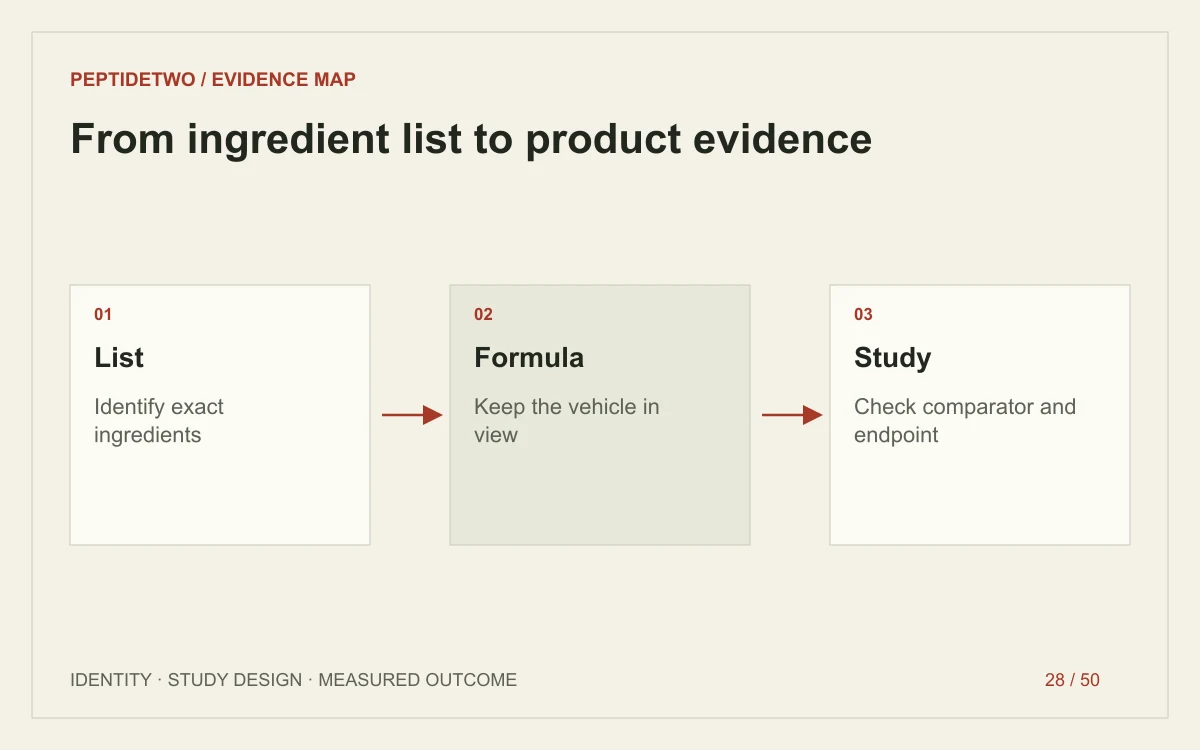 Documentation & Traceability
Multi-Peptide Serums: How to Read Ingredients and Separate Formula Claims
Multi-peptide serums contain more than one ingredient with a scientific-sounding name. Their evidence is best read at two levels: what is known about each named ingredient, and what has actually been tested for the complete finished formula.
Updated 2026-11-06 ↗ Research Practice
Peptide Eye Serums: Dark Circles, Puffiness and Wrinkles Are Different Claims
Peptide eye serums can be marketed for several different visible concerns. Dark circles, puffiness and wrinkles are not interchangeable endpoints.
Updated 2026-11-06 ↗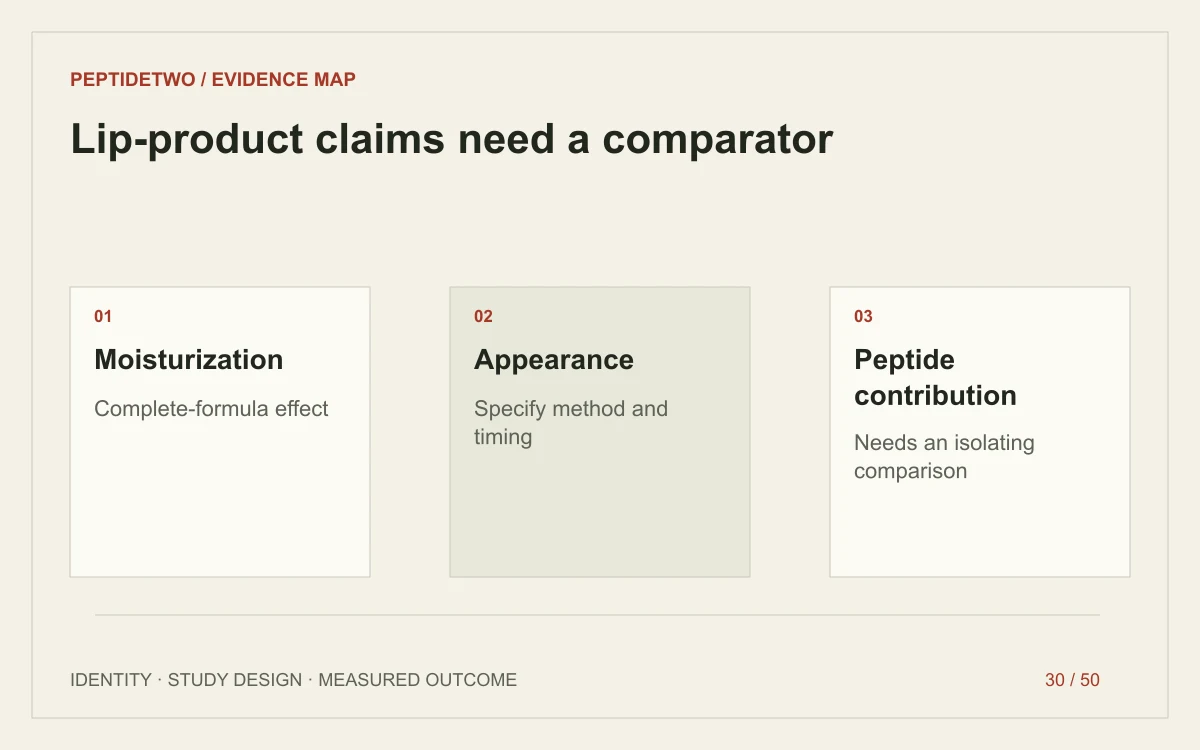 Research Practice
Peptide Lip Treatments: Hydration, Appearance and the Missing Comparator
Peptide lip treatments are finished cosmetic formulas, not isolated peptide experiments. Softer-looking lips after using a balm may reflect the complete moisturizer or its surface film.
Updated 2026-11-06 ↗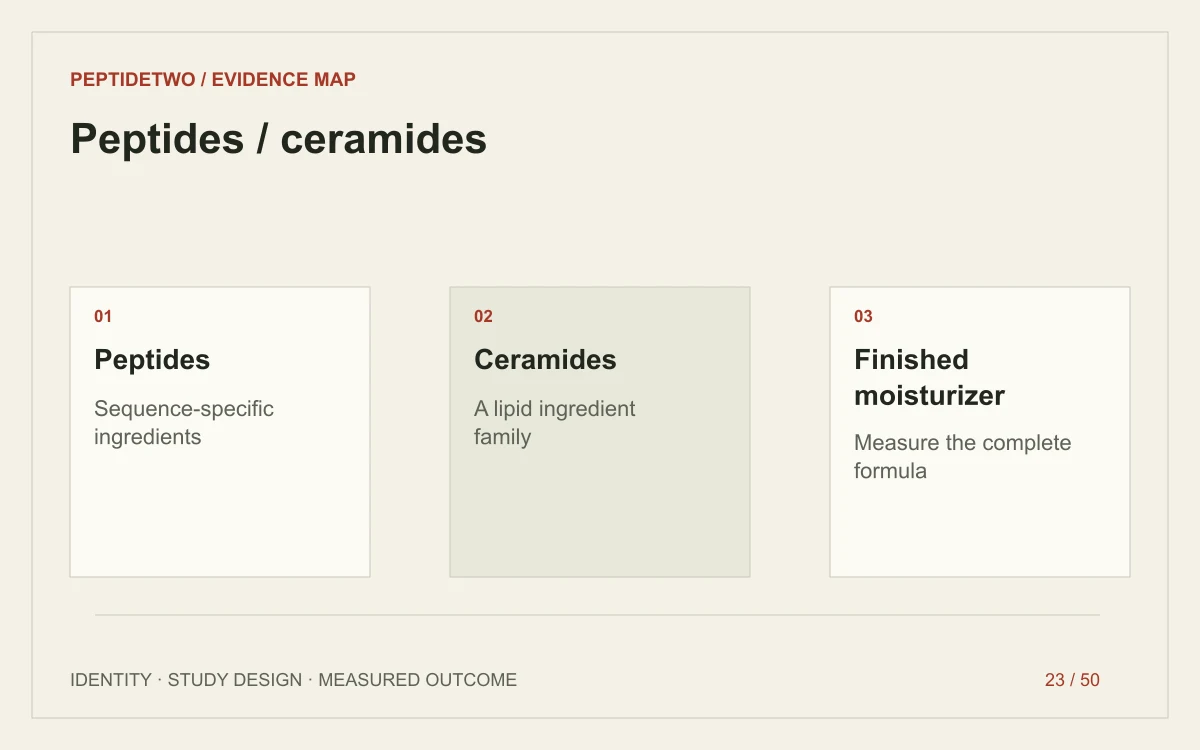 Peptide Fundamentals
Peptides vs Ceramides: Different Ingredients, Different Skin Measurements
Peptides vs ceramides compares different ingredient families, not two names for the same skin-care function. Peptides are amino-acid sequences; ceramides are lipids.
Updated 2026-11-06 ↗