Collagen peptides: human evidence.
Examine collagen studies by their actual endpoint: skin elasticity, hydration, joint symptoms, muscle synthesis, hair diameter and bone density. Compare preparations and study designs, and keep Canadian product labels separate from broader ingredient claims.
Guides in this topic
 Research Practice
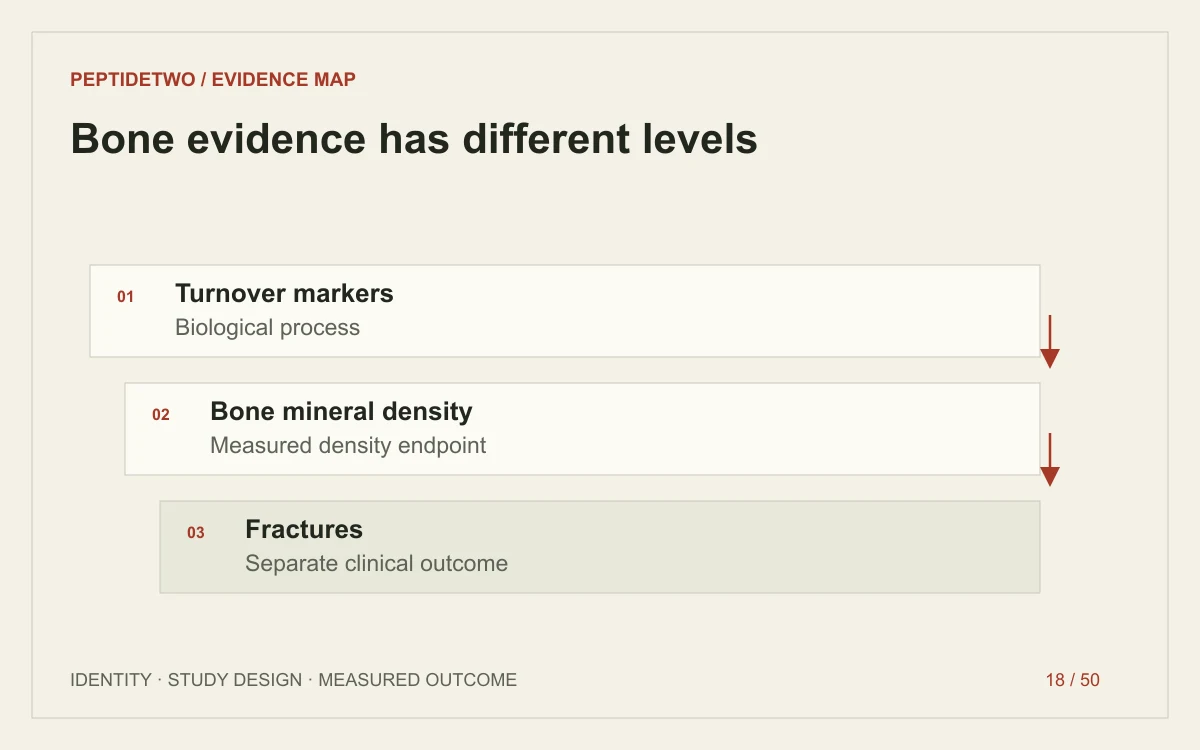
Collagen Peptides for Bone Health: Bone Density Is Not a Fracture Outcome
Collagen peptides for bone health have been studied using bone mineral density and biochemical markers. Those outcomes should not be rewritten as proof that a supplement prevents fractures or replaces established osteoporosis care.
Updated 2026-11-06 ↗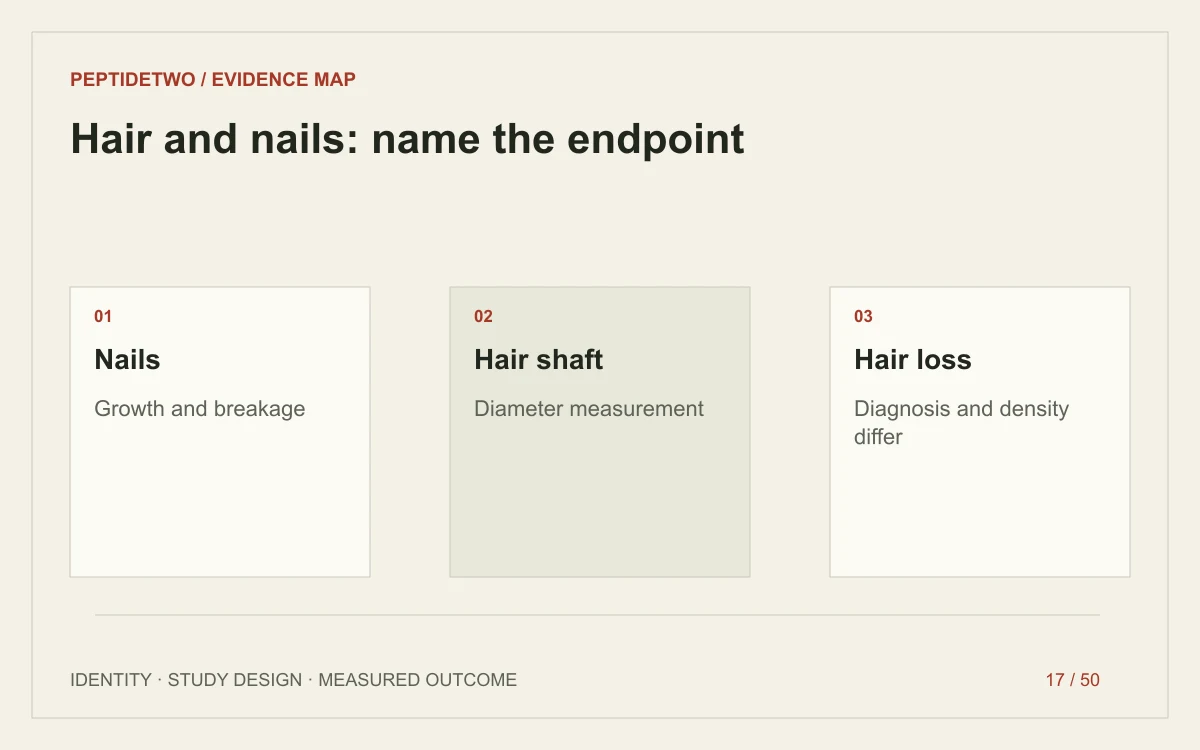 Research Practice
Collagen Peptides for Hair and Nails: Thickness, Growth and Study Design
Collagen for hair and nails needs two separate evidence checks. Nail growth and breakage are different outcomes from hair-shaft thickness, hair count or treatment of a hair-loss condition.
Updated 2026-11-06 ↗ Research Practice
Collagen Peptides for Joint Pain: Reading Symptoms and Structural Claims
Collagen peptides for joint pain should be evaluated by the symptoms and populations actually studied. A trial reporting a change in pain does not automatically demonstrate regenerated cartilage, repaired tendons or prevention of arthritis.
Updated 2026-11-06 ↗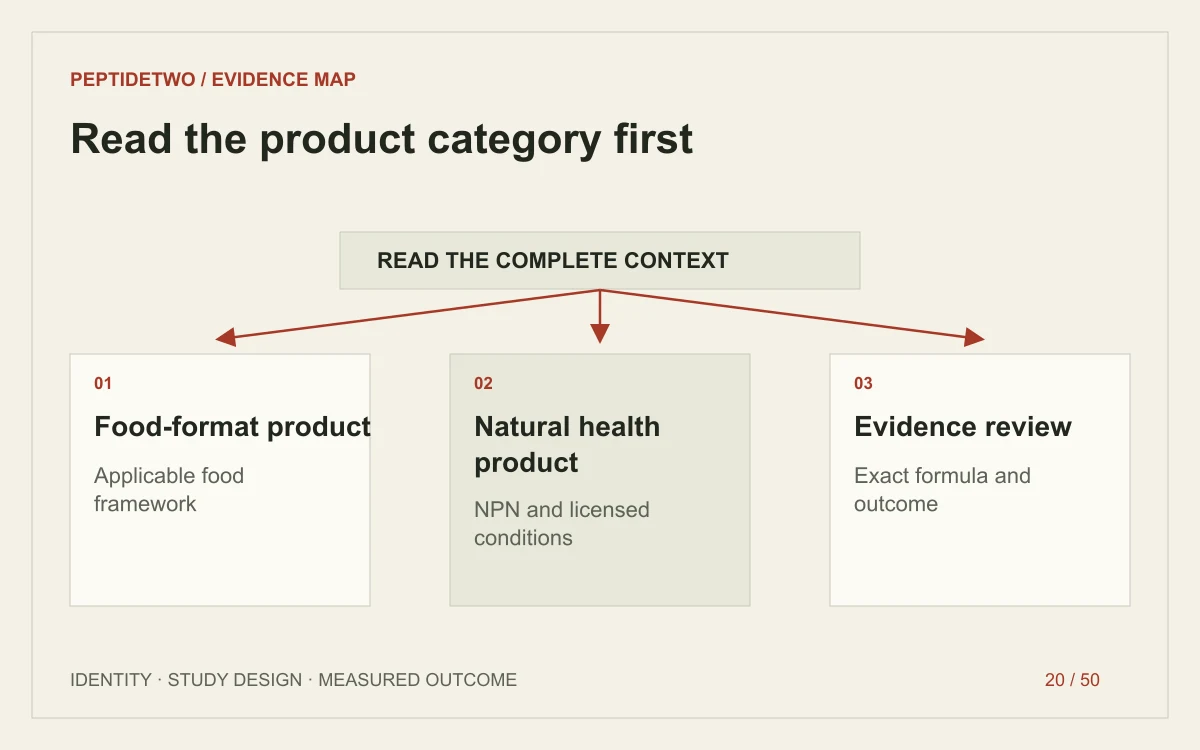 Documentation & Traceability
Collagen Peptides in Canada: Reading NPNs, Food Labels and Ingredient Claims
Collagen peptides in Canada can appear in products with different regulatory classifications. Before looking for an NPN, determine whether the item is marketed as a food or a natural health product.
Updated 2026-11-06 ↗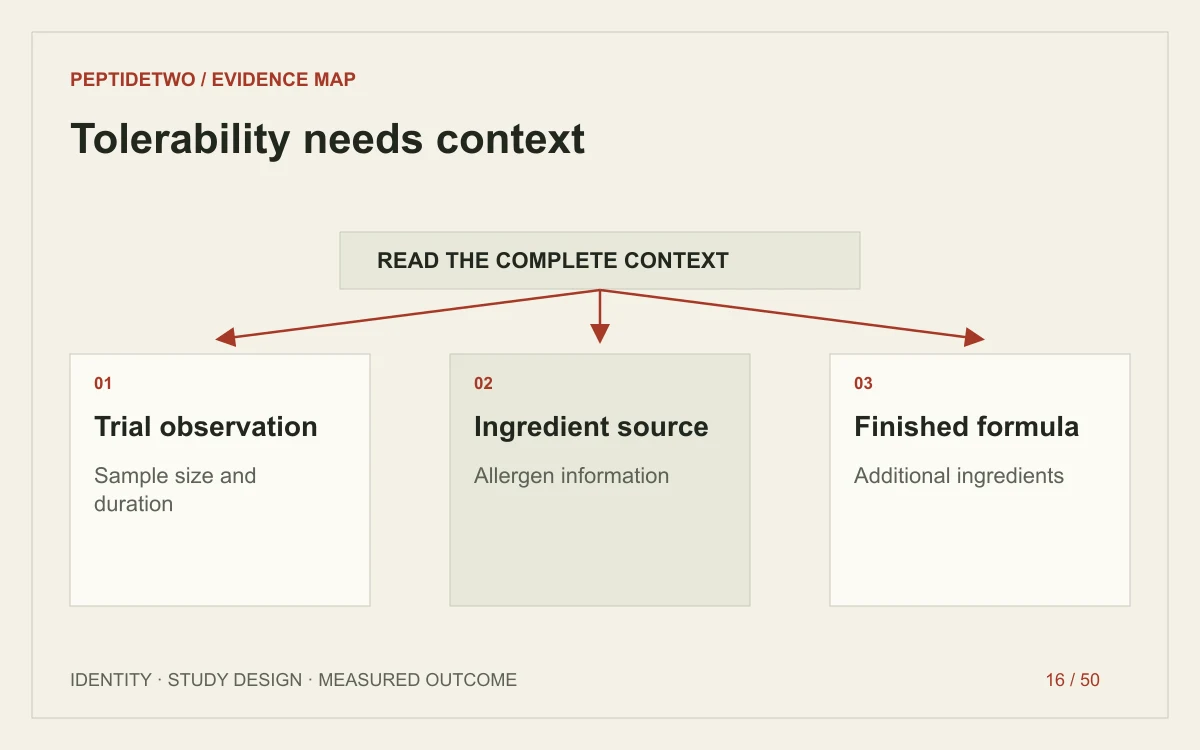 Research Practice
Collagen Peptides Side Effects: What Trials and Allergy Reports Can Tell You
Collagen peptides side effects cannot be summarized with either “completely safe” or a list of unverified internet reports. Controlled trials, case reports and product labels provide different kinds of information.
Updated 2026-11-06 ↗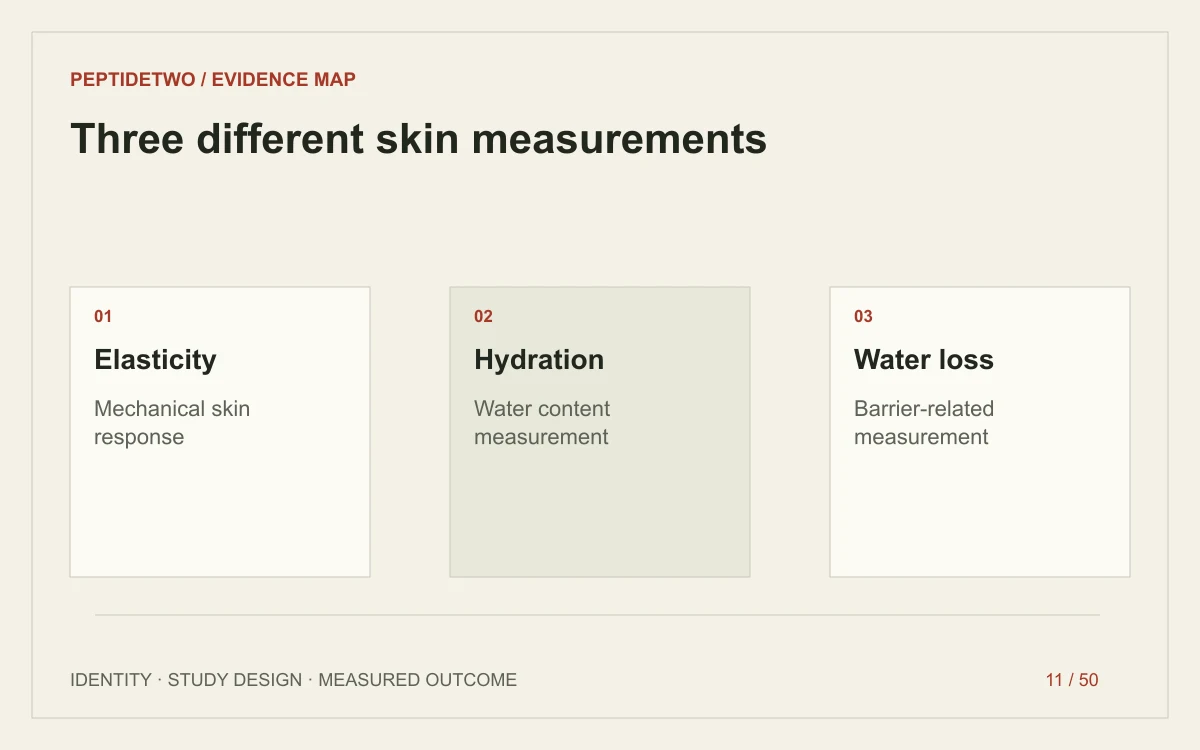 Research Practice
Collagen Peptides for Skin: Elasticity, Hydration and What Trials Measure
Collagen peptides for skin have human trial evidence, but elasticity, hydration and water loss are different outcomes. A positive result for one measurement should not be rewritten as proof that a powder improves every sign of skin aging.
Updated 2026-11-06 ↗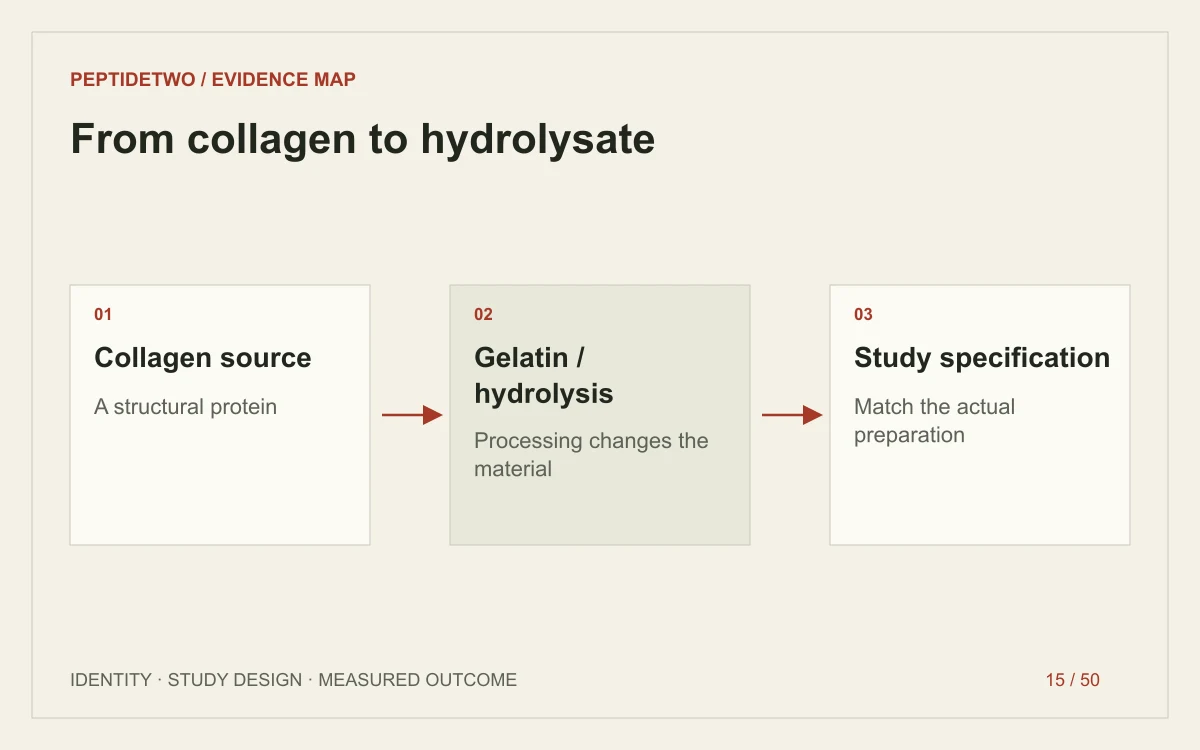 Peptide Fundamentals
Collagen Peptides vs Gelatin: Processing, Blood Markers and Clinical Claims
Collagen peptides vs gelatin is mainly a question of processing and material specification. Both terms relate to collagen-derived material, but they do not identify identical preparations.
Updated 2026-11-06 ↗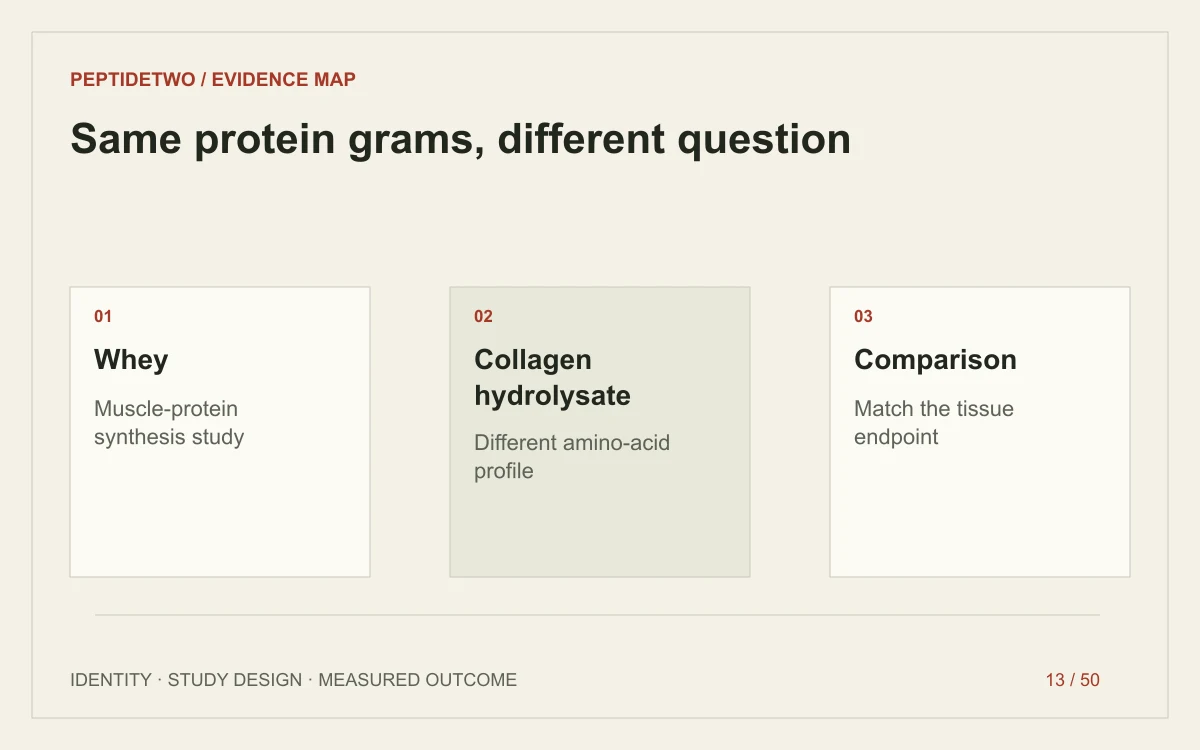 Peptide Fundamentals
Collagen Peptides vs Whey Protein: Muscle Synthesis and Different Research Goals
Collagen peptides vs whey protein is not settled by counting grams of powder. Protein sources differ in amino-acid composition, and a study of muscle-protein synthesis answers a different question from a study of skin elasticity or tendon-related biomarkers.
Updated 2026-11-06 ↗ Research Practice
Collagen Peptides for Weight Loss: Appetite Markers and Long-Term Outcomes
Collagen for weight loss is a broader claim than the small appetite experiments usually cited. A change in a gut hormone, a laboratory meal or a short-term appetite rating does not by itself demonstrate sustained weight loss.
Updated 2026-11-06 ↗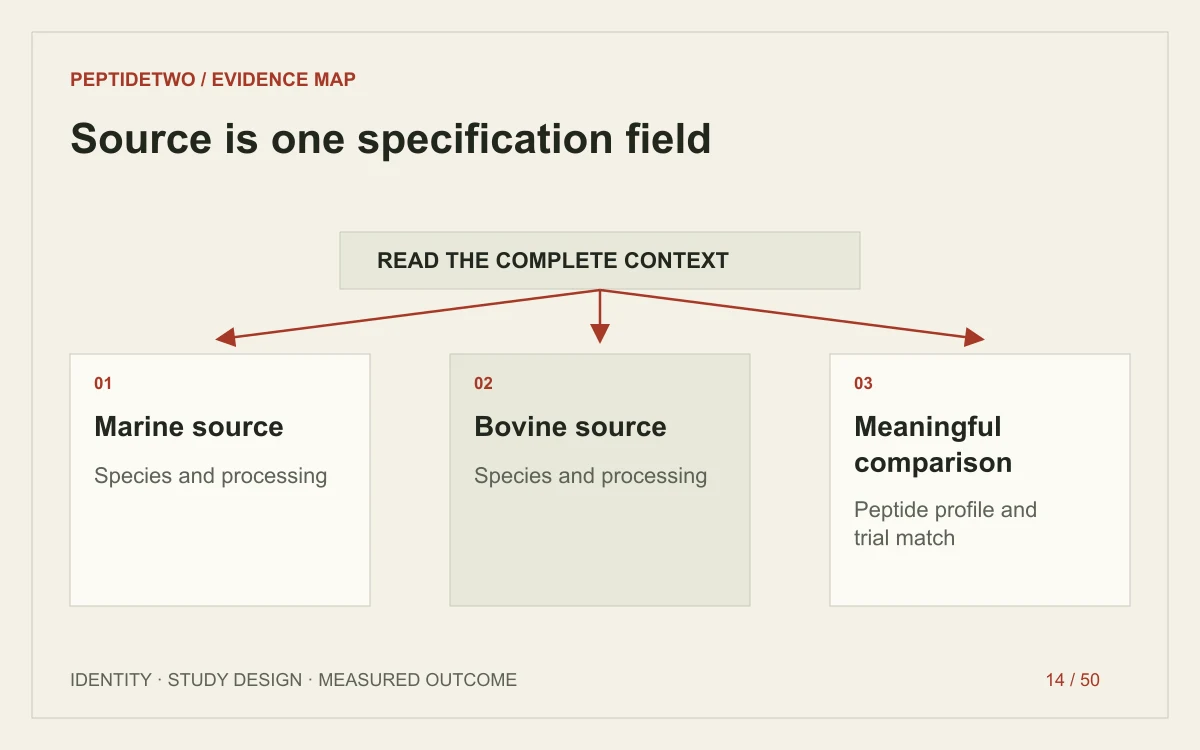 Peptide Fundamentals
Marine vs Bovine Collagen Peptides: Source, Specification and Evidence
Marine vs bovine collagen is a source comparison, not a finished clinical conclusion. Species, tissue source, processing and peptide distribution can differ.
Updated 2026-11-06 ↗