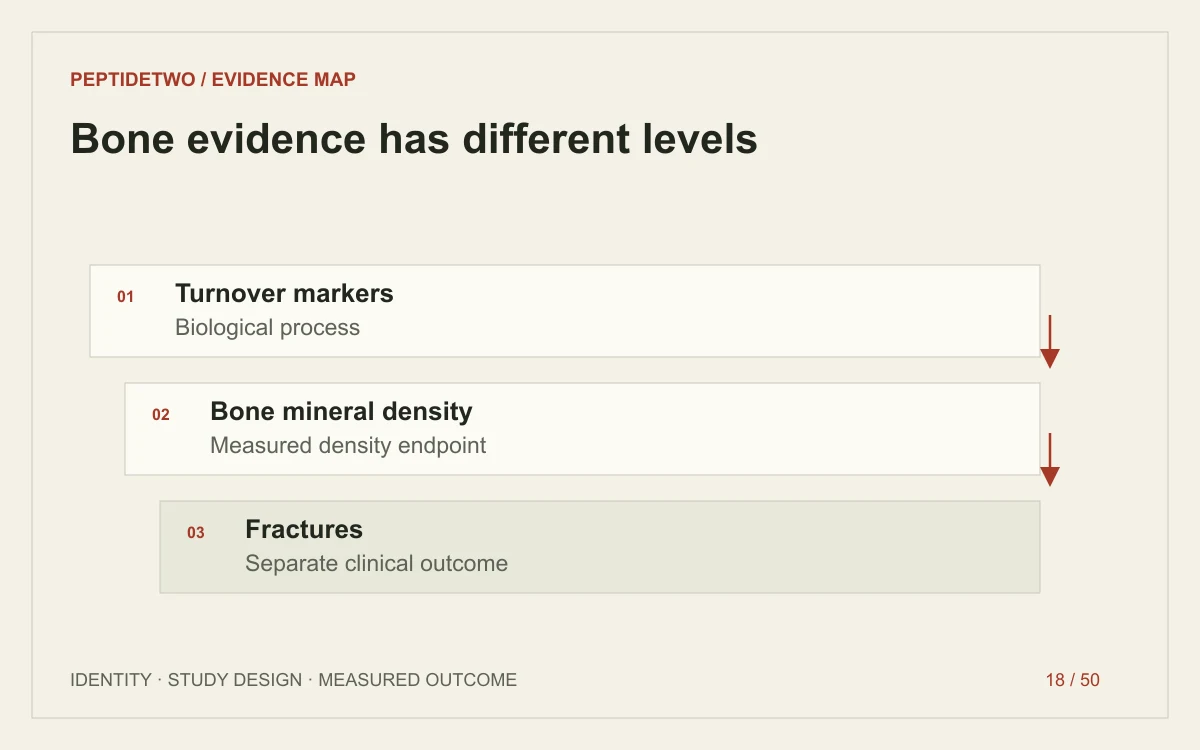
Collagen peptides for bone health have been studied using bone mineral density and biochemical markers. Those outcomes should not be rewritten as proof that a supplement prevents fractures or replaces established osteoporosis care. The distinction matters because a measurement associated with bone biology is not the same event as a fracture.
What the randomized trial measured
The 2018 specific-collagen-peptide trial enrolled 131 postmenopausal women with age-related reduction in bone mineral density. It compared a defined preparation with placebo for 12 months. The main outcomes were changes at the spine and femoral neck; bone-turnover markers were also examined.
The abstract reports 102 participants completing the study and an intention-to-treat analysis including all enrolled participants. It reports favorable between-group density findings for the studied preparation. The participant accounting and analysis method belong beside that conclusion.
What each measurement means
Scroll horizontally to read all columns.
| Measurement | What it addresses | Limit on interpretation |
|---|---|---|
| Bone mineral density | A measured density-related endpoint | Not a direct count of prevented fractures |
| Bone-turnover markers | Processes related to formation or breakdown | Do not alone establish stronger bones |
| Fracture events | A clinically meaningful event | Require sufficient sample size and follow-up |
| Joint pain | A symptom in another tissue context | Cannot stand in for a bone-density result |
Improvement in an intermediate endpoint can justify further investigation without establishing the largest possible clinical claim. A reader should be able to see exactly where the evidence stops.
Why product and population matching matter
The trial concerns a specific preparation in a selected population. It is not evidence that any collagen powder produces the same density change in men, younger adults or people with a different bone condition. Background nutrition, medicines and eligibility criteria can affect transferability.
For the same reason, a result about a particular hydrolysate should not be assigned to a product simply because its packaging uses the word collagen. Match the actual ingredient specification when discussing the study.
Do not combine bone and joint studies into one promise
The athlete joint-pain trial evaluated symptom measures, not the same bone outcomes. Combining these publications under a single “bone and joint repair” statement would conceal the differences in participants, tissue and endpoints.
Our joint-pain explanation retains those distinctions. The clinical-endpoint guide explains why biomarkers and intermediate measurements need their own qualifications.
What a Canadian product record can add
For a licensed natural health product, the Canadian licence record can identify its authorized conditions and risk information. That is separate from evaluating one publication. A literature citation does not expand a product’s licensed claim to every related disease or outcome.
This review does not recommend replacing diagnosis, fracture-risk assessment or prescribed care with a supplement. Read the collagen-label guide to separate product records from scientific findings, and source comparisons for why the source alone does not decide the outcome.