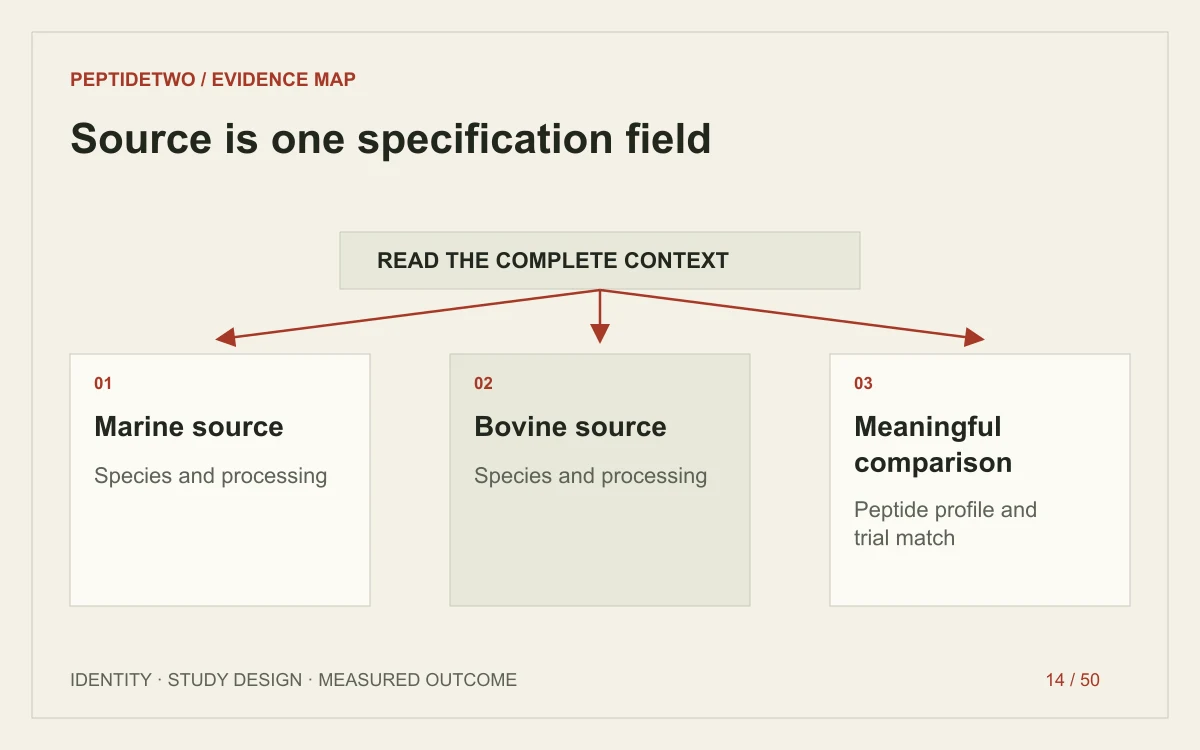
Marine vs bovine collagen is a source comparison, not a finished clinical conclusion. Species, tissue source, processing and peptide distribution can differ. A fish-derived hydrolysate tested for one skin outcome and another product tested for bone density do not create a head-to-head trial showing which source is universally superior.
What the source label tells you
Marine generally describes an aquatic source, while bovine describes cattle-derived material. Neither word fully specifies the hydrolysate. The manufacturing process and resulting peptide profile remain important. A source label also does not identify every added ingredient or the finished product’s study evidence.
The Nile-tilapia-skin tripeptide trial describes a particular preparation and skin measurements. A separate specific-collagen-peptide bone trial concerns a different population and endpoint. Comparing their outcomes directly would confound source with product, study design and purpose.
Use a specification comparison
Scroll horizontally to read all columns.
| Field | What to record |
|---|---|
| Animal source | Species and tissue where disclosed |
| Processing | Whether the material is hydrolysed and how it is characterized |
| Peptide distribution | The tested material’s specification rather than a generic average |
| Additional ingredients | Anything that changes the intervention being compared |
| Evidence | Exact product, population, comparator and endpoint |
A label that gives only the species leaves several of those fields unanswered. That gap should remain visible instead of being filled with a general claim about absorption or effectiveness.
Absorption studies have their own limits
Iwai and colleagues detected collagen-derived peptides in blood after selected gelatin hydrolysates. That is evidence about exposure for the materials studied. It does not establish that a marine product always produces a larger clinical benefit than a bovine product.
A meaningful comparison would control the specification and other ingredients and measure the outcome of interest. A difference in a blood marker is not automatically a difference in skin, joints or hair. The skin-outcome guide explains this endpoint distinction.
Source also matters for safety information
A published fish-collagen anaphylaxis case demonstrates that a processed collagen ingredient cannot be assumed non-allergenic merely because it is hydrolysed. A case report does not estimate how often that reaction occurs in all consumers.
Read the actual allergen and ingredient information for the finished product. Dietary, religious and sourcing preferences are separate considerations from a demonstrated efficacy difference. They can matter to a reader without becoming a scientific superiority claim.
What a fair conclusion looks like
The evidence discussed here supports product-specific observations, not one universal winner. Ask whether a headline rests on a direct comparison or on two unrelated studies. Preserve the difference between the source species and the material actually tested.
For processing terminology, see collagen peptides versus gelatin. For Canadian labelling, use the NPN and product-category guide. No brand was purchased or independently tested for this comparison.