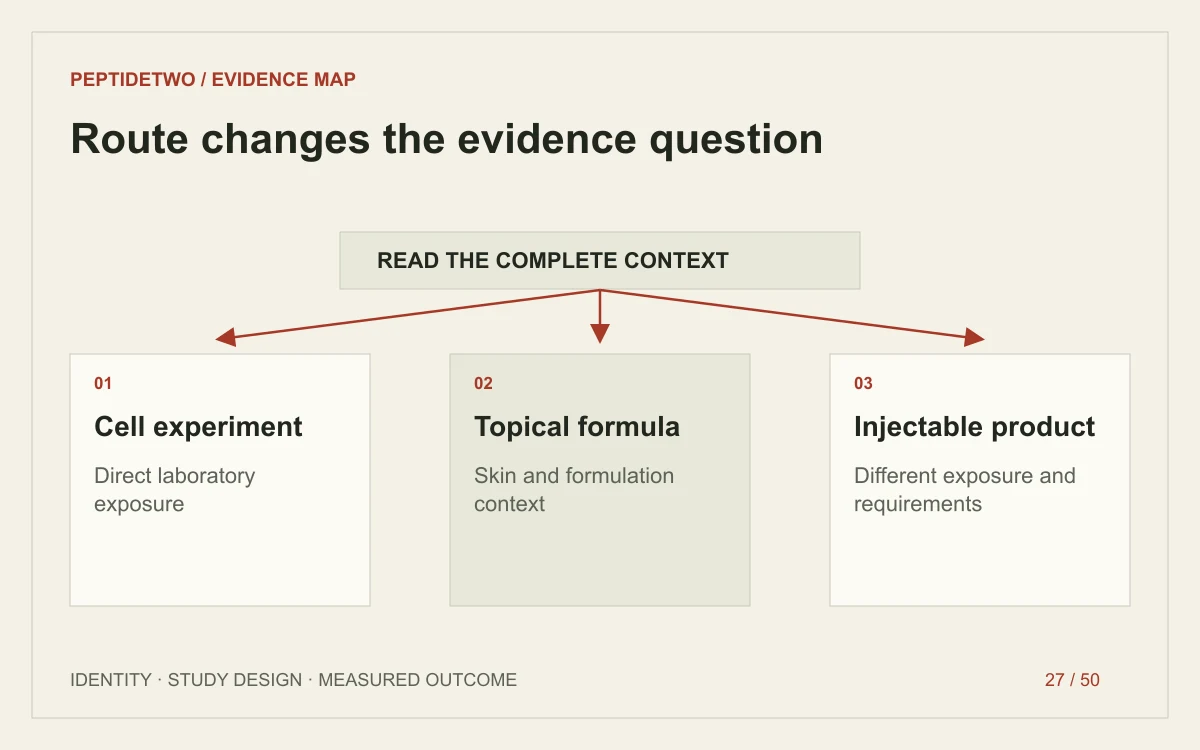
Topical GHK-Cu evidence cannot automatically validate an injectable product. A copper-peptide serum, direct exposure of cultured cells and an injected preparation involve different formulations, exposure conditions and regulatory questions. Sharing an ingredient name is not enough to transfer their safety or effectiveness claims.
Begin with identity and the actual material
GHK-Cu is a copper complex associated with the glycine–histidine–lysine tripeptide. The original fibroblast-culture work describes that complex in a laboratory experiment. The ingredient record of a current topical product identifies copper tripeptide within a complete cosmetic formula.
Neither description authenticates an unrelated vial. A sequence name does not establish copper content, formulation, manufacturing controls or the material actually delivered to a person.
What the topical human study can say
The small post-laser randomized study compared regimens after a defined procedure. Its objective findings and patient-satisfaction result differed. That study is evidence about a topical regimen on laser-resurfaced skin, not an injectable GHK-Cu intervention.
Scroll horizontally to read all columns.
| Evidence setting | Exposure described | Limit on transfer |
|---|---|---|
| Cultured fibroblasts | Direct experimental contact | Not an intact-skin or human injection study |
| Cosmetic serum | A complete topical formulation | Does not establish injectable safety |
| Post-laser study | A procedural skin-care setting | Does not represent every routine or route |
| Injectable-product claim | A different intervention | Needs its own evidence and authorization context |
Why route and formulation matter
Changing the route can change where and how much material reaches tissues. The vehicle, barriers and manufacturing requirements also change. A reassuring statement about a cosmetic ingredient cannot resolve contamination or other quality questions about a product intended for injection.
The same logic applies across peptide research. A cell concentration, a topical ingredient percentage and systemic exposure are not interchangeable quantities. Read delivery-route evidence for the broader principle.
The Canadian distinction is explicit
Health Canada’s April 2026 advisory names GHK-Cu among examples of unauthorized injectable peptide products. The October overview distinguishes cosmetic uses from peptide medicines and unauthorized products. A cosmetic on sale is therefore not evidence of authorization for an injectable product sharing a similar ingredient name.
This article does not offer an injection protocol, sourcing recommendation or a conversion between product types. It explains why those extrapolations are unsupported by the cited topical evidence.
Read “benefits” with the model beside them
When a claim is made, identify whether its source is a cell experiment, an animal model, a topical human trial or a finished-product record. Keep the exact molecule and route in the same sentence as the result. If that connection is missing, the claim needs further evidence.
For the ingredient’s broader literature, read the GHK-Cu dossier. For comparison with another copper complex, see GHK-Cu versus AHK-Cu. For Canadian product categories, use the classification guide.