Peptide research, explained.
Detailed guides to peptide identity, biological pathways, analytical methods and clinical evidence. Search the reading room or follow a research topic.
Browse 13 research topics
All guides & articles
 Research Practice
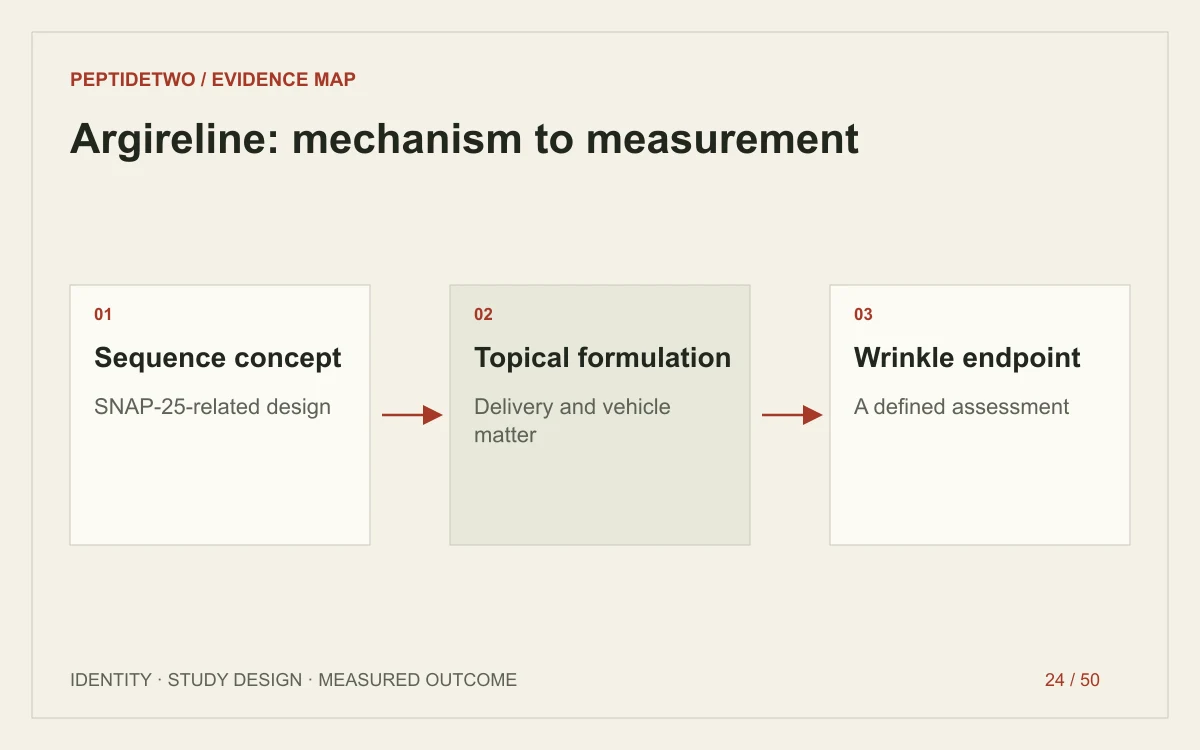
Argireline and Acetyl Hexapeptide-8: What the Wrinkle Trials Actually Show
Argireline is commonly associated with acetyl hexapeptide-8, a cosmetic peptide studied for wrinkle-related effects. Its proposed mechanism has encouraged “Botox-like” marketing.
Updated 2026-11-06 ↗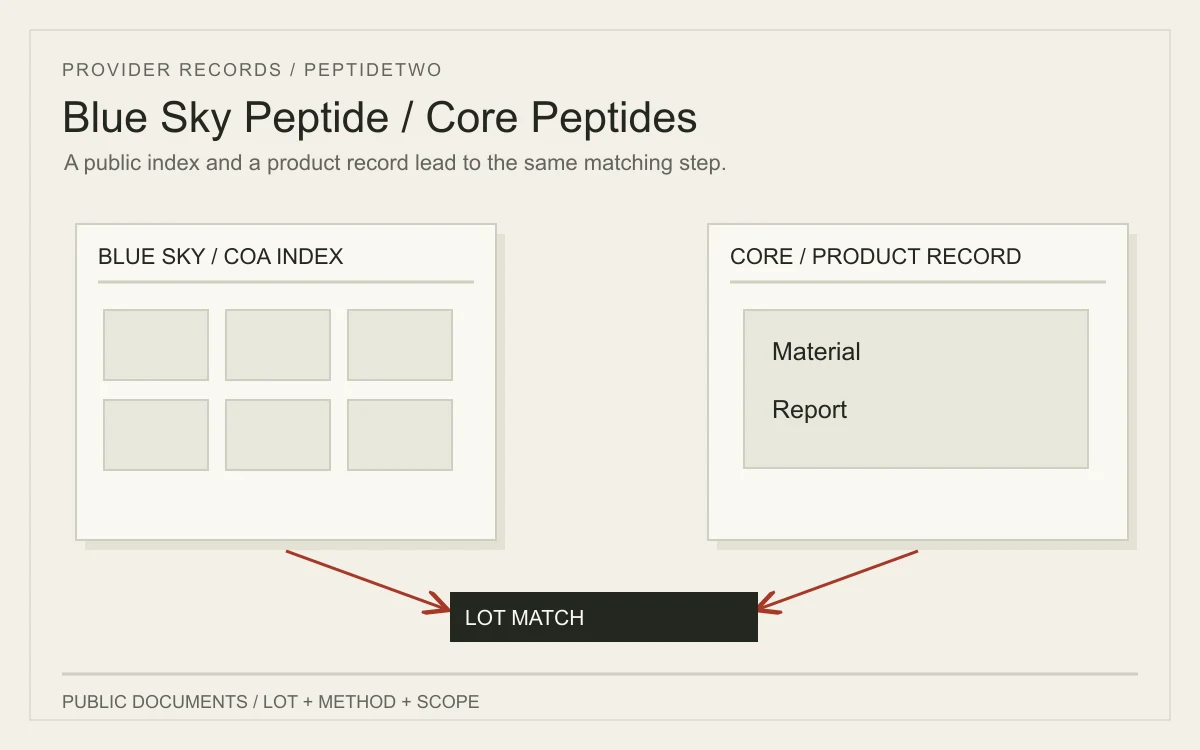 Research Practice
Blue Sky Peptide vs Core Peptides: COA Libraries and Product-Page Records
A comparison of two document-discovery models: Blue Sky Peptide’s public COA directory and Core’s published product-page approach.
Updated 2026-11-09T09:06:28.317Z ↗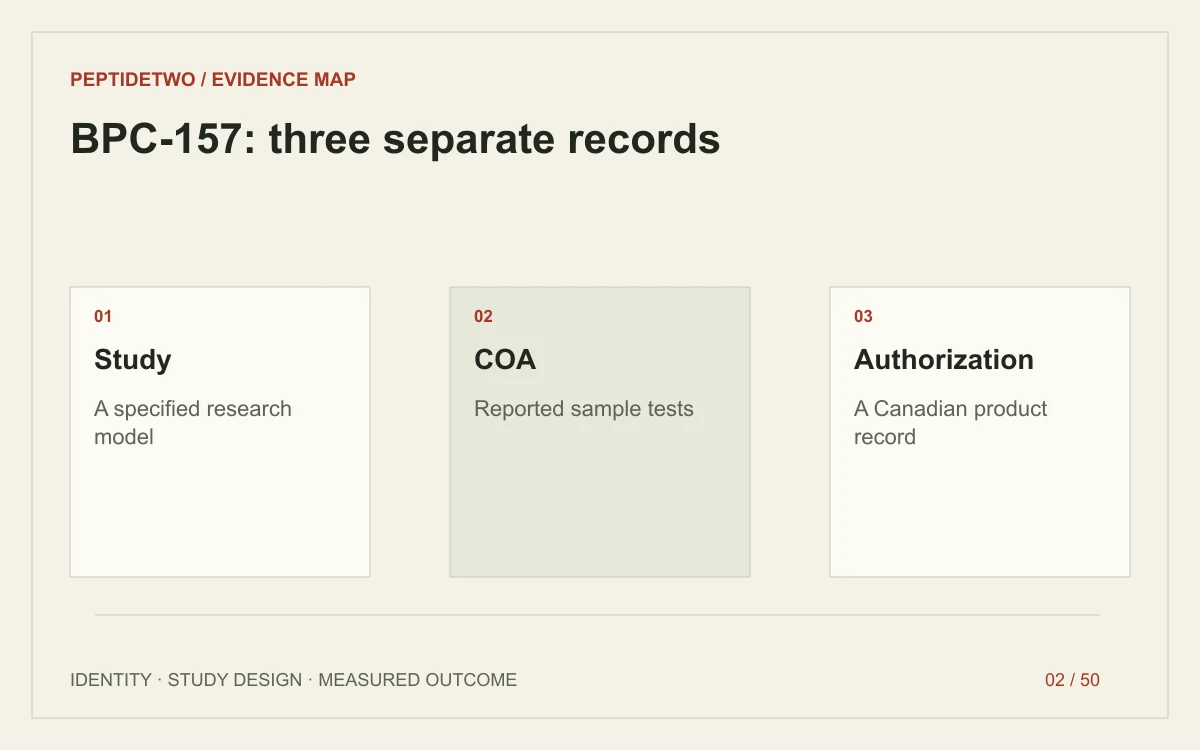 Research Practice
BPC-157 in Canada: What Health Canada’s Notices Actually Say
BPC-157 in Canada is a product-status question as well as a research question. Health Canada’s public material identifies BPC-157 among ingredients encountered in unauthorized peptide products.
Updated 2026-11-06 ↗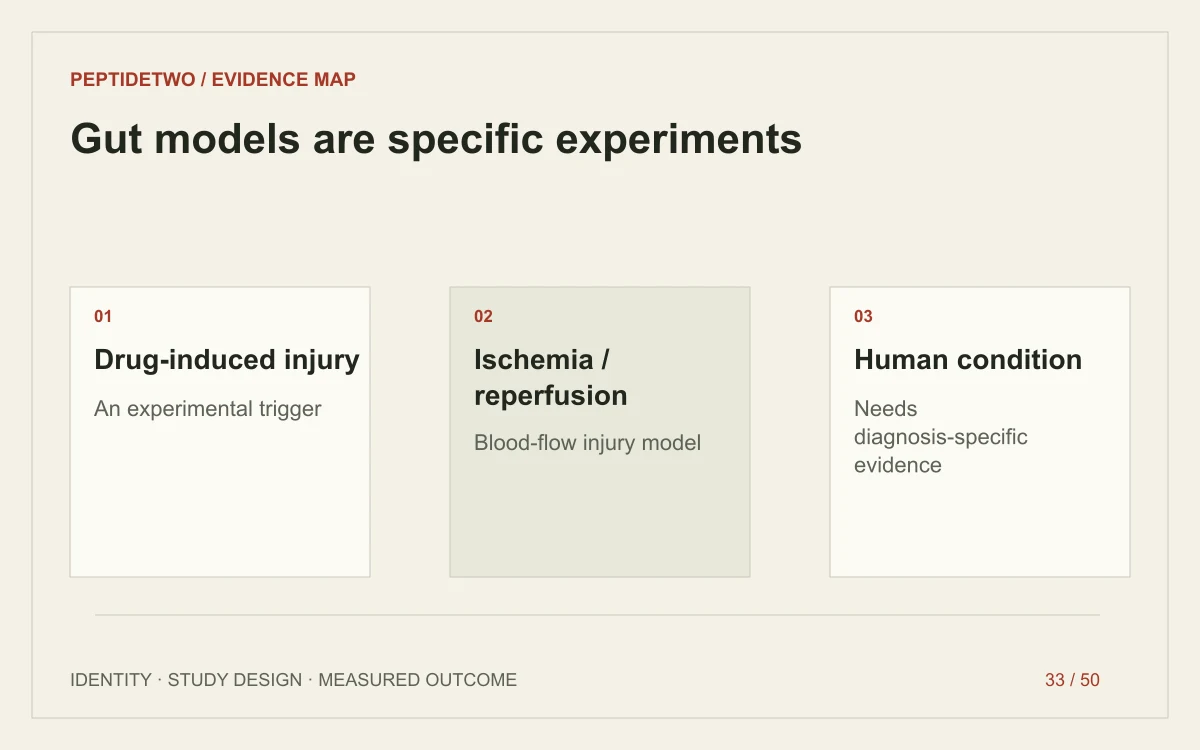 Research Practice
BPC-157 and Gut Research: Injury Models, Colitis and Human Evidence Gaps
BPC-157 gut research spans several experimental injury models, especially in rats. A result in a chemically induced lesion or blood-flow injury model is not the same as evidence for treating a human digestive diagnosis.
Updated 2026-11-06 ↗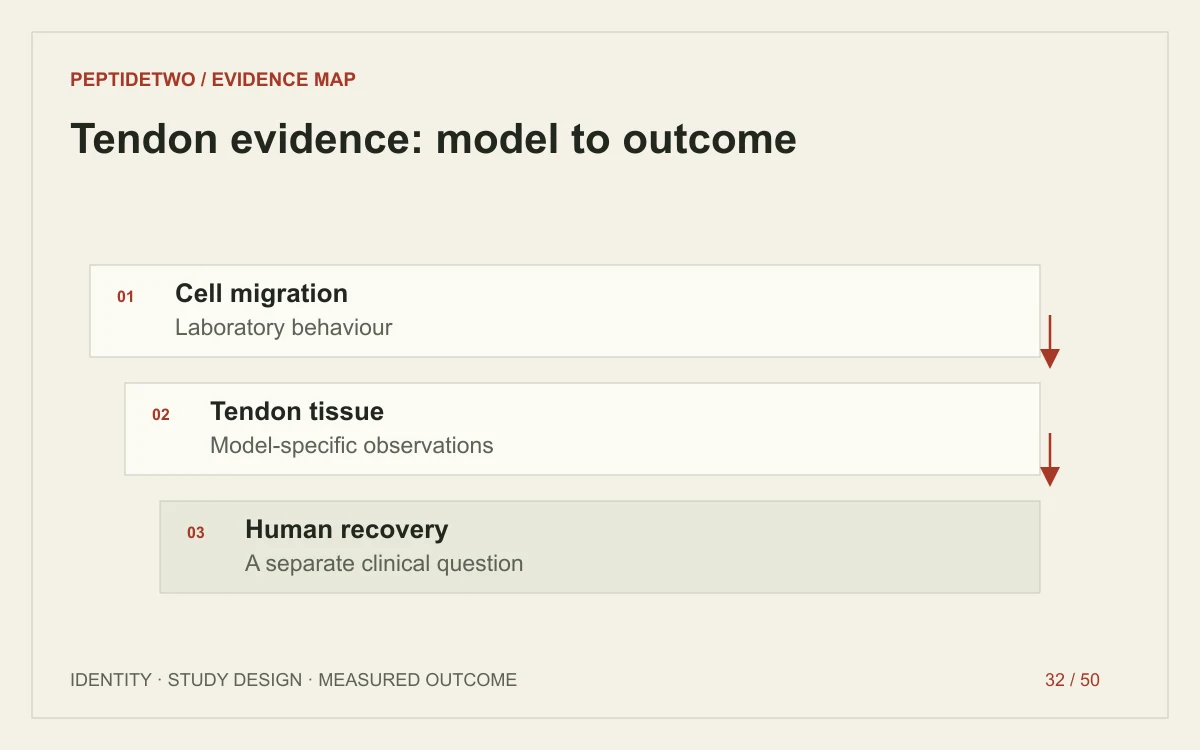 Research Practice
BPC-157 Tendon Research: Cell Migration Is Not a Human Recovery Time
BPC-157 tendon research includes laboratory studies of tendon explants and fibroblasts. These experiments investigate biological mechanisms.
Updated 2026-11-06 ↗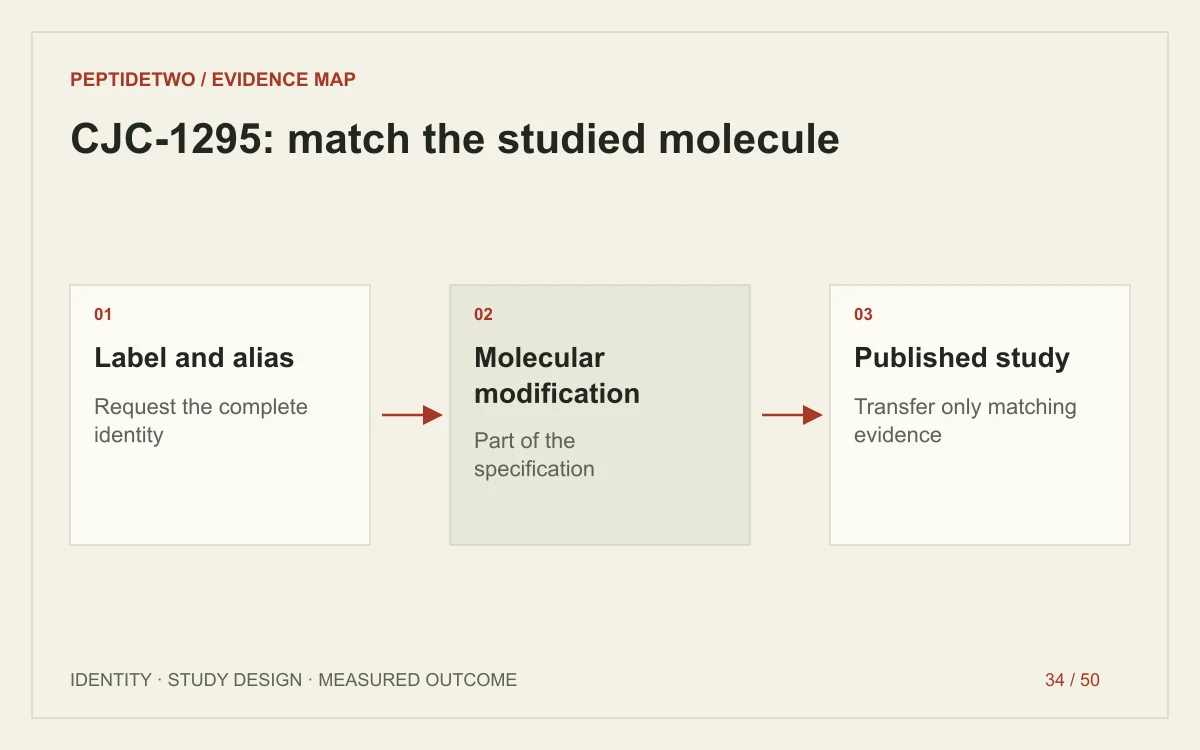 Documentation & Traceability
CJC-1295 DAC vs “No DAC”: Identity Comes Before the Half-Life Claim
CJC-1295 DAC vs no DAC is first an identity question. A supplier’s alias is not enough to establish that two products are the same molecule or share a pharmacokinetic profile.
Updated 2026-11-06 ↗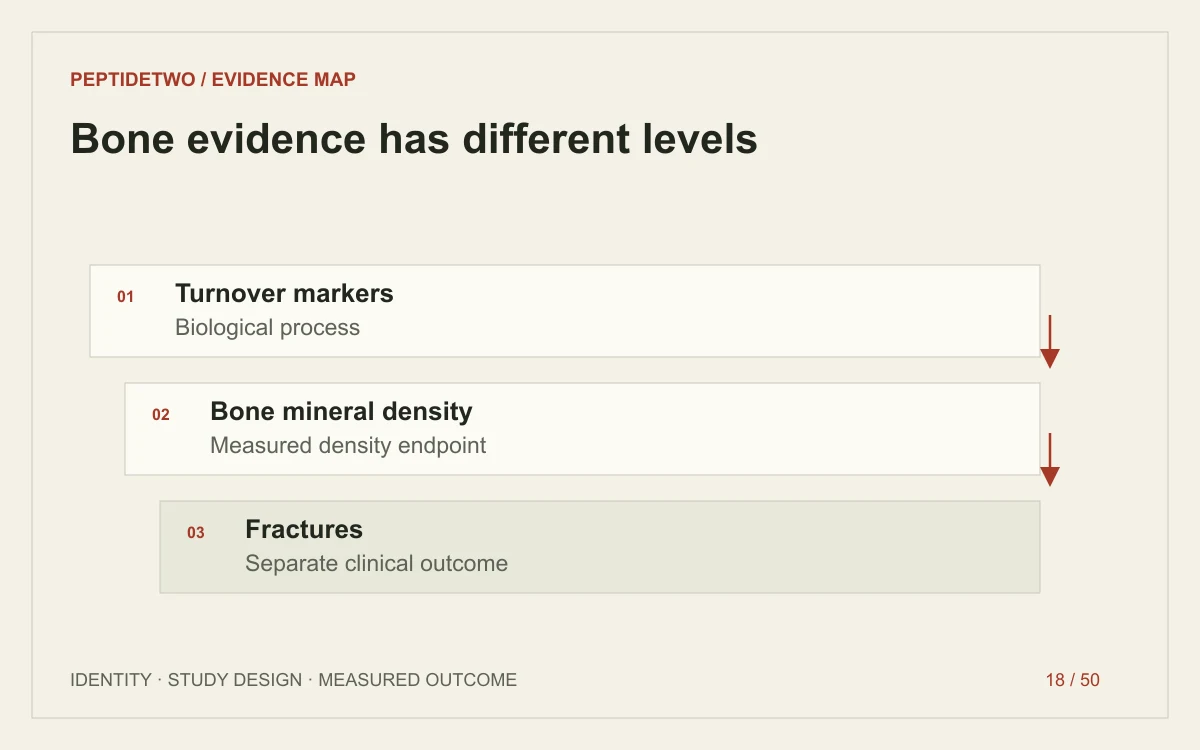 Research Practice
Collagen Peptides for Bone Health: Bone Density Is Not a Fracture Outcome
Collagen peptides for bone health have been studied using bone mineral density and biochemical markers. Those outcomes should not be rewritten as proof that a supplement prevents fractures or replaces established osteoporosis care.
Updated 2026-11-06 ↗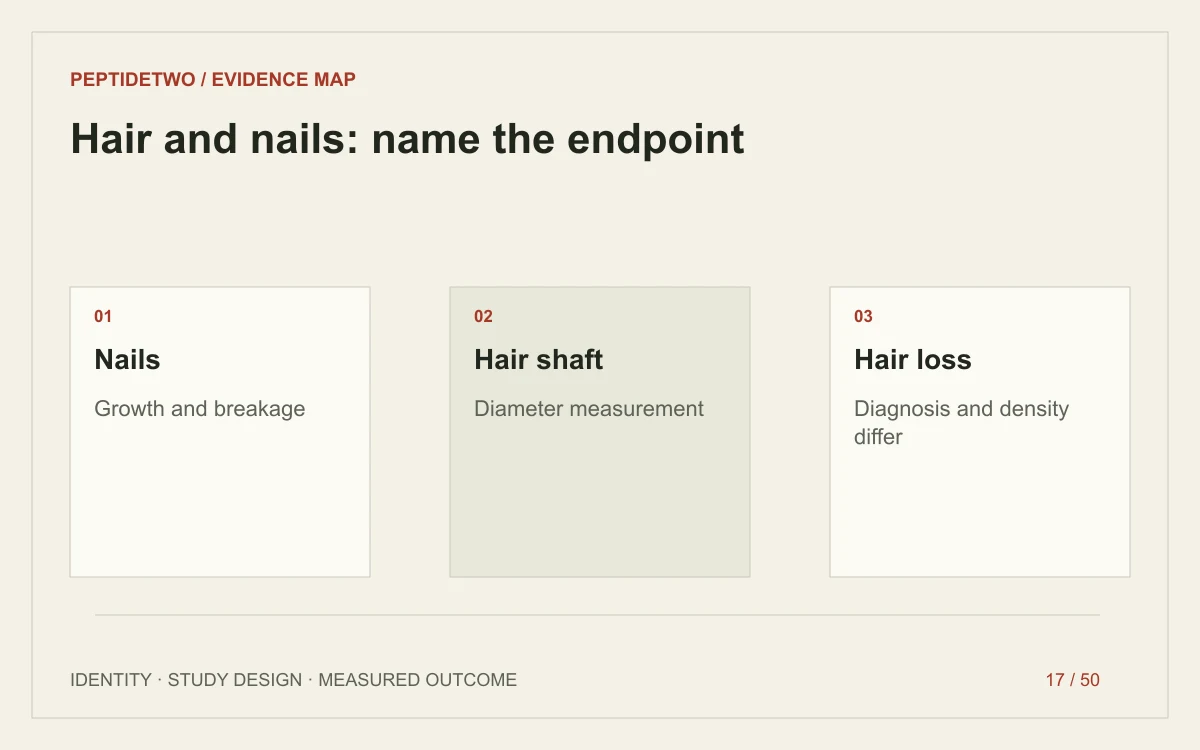 Research Practice
Collagen Peptides for Hair and Nails: Thickness, Growth and Study Design
Collagen for hair and nails needs two separate evidence checks. Nail growth and breakage are different outcomes from hair-shaft thickness, hair count or treatment of a hair-loss condition.
Updated 2026-11-06 ↗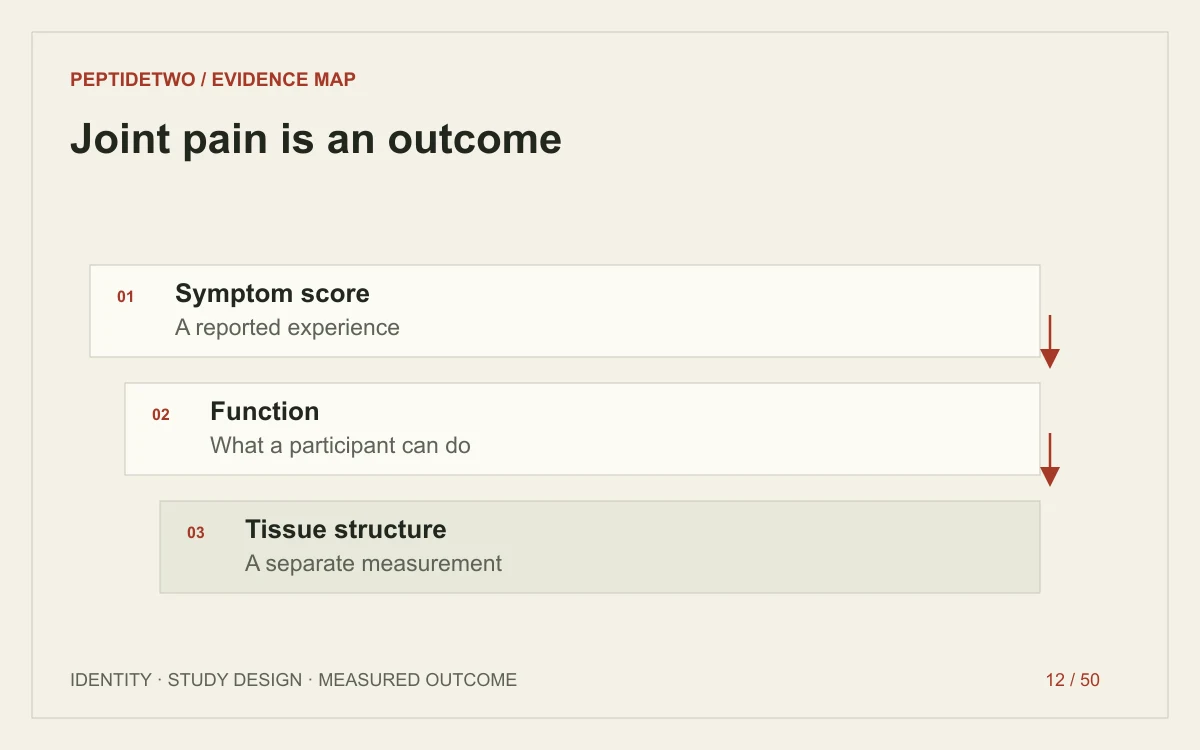 Research Practice
Collagen Peptides for Joint Pain: Reading Symptoms and Structural Claims
Collagen peptides for joint pain should be evaluated by the symptoms and populations actually studied. A trial reporting a change in pain does not automatically demonstrate regenerated cartilage, repaired tendons or prevention of arthritis.
Updated 2026-11-06 ↗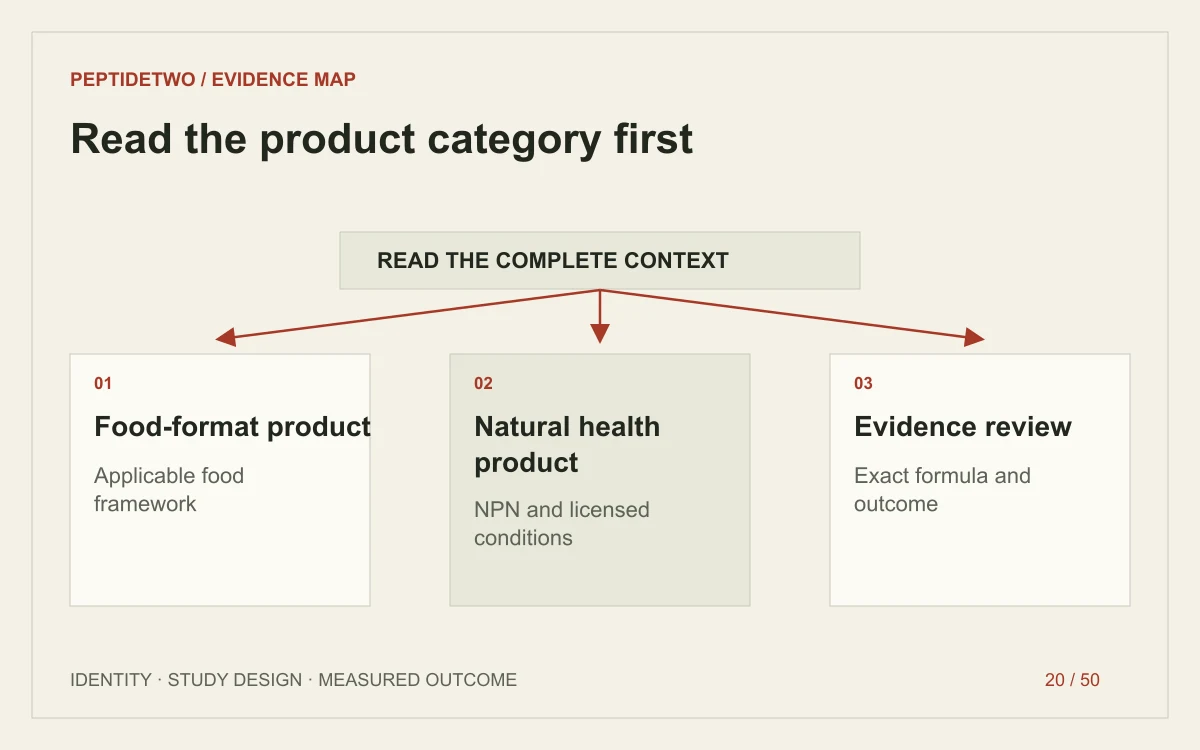 Documentation & Traceability
Collagen Peptides in Canada: Reading NPNs, Food Labels and Ingredient Claims
Collagen peptides in Canada can appear in products with different regulatory classifications. Before looking for an NPN, determine whether the item is marketed as a food or a natural health product.
Updated 2026-11-06 ↗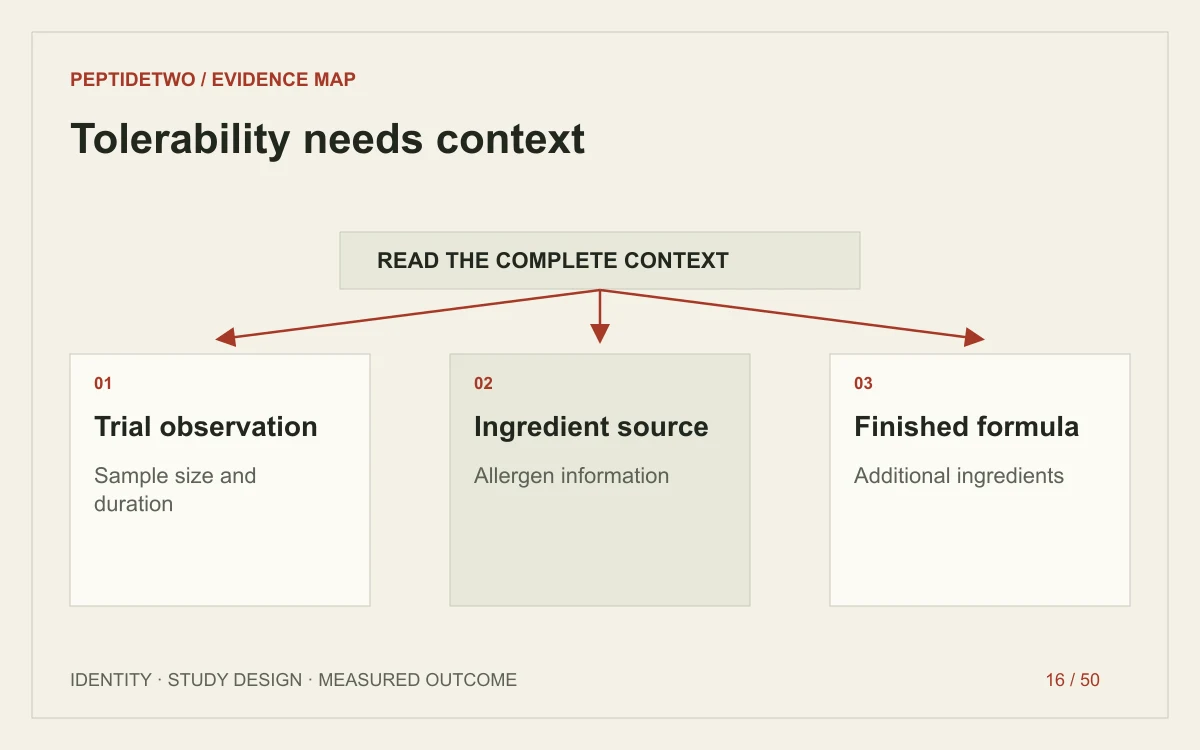 Research Practice
Collagen Peptides Side Effects: What Trials and Allergy Reports Can Tell You
Collagen peptides side effects cannot be summarized with either “completely safe” or a list of unverified internet reports. Controlled trials, case reports and product labels provide different kinds of information.
Updated 2026-11-06 ↗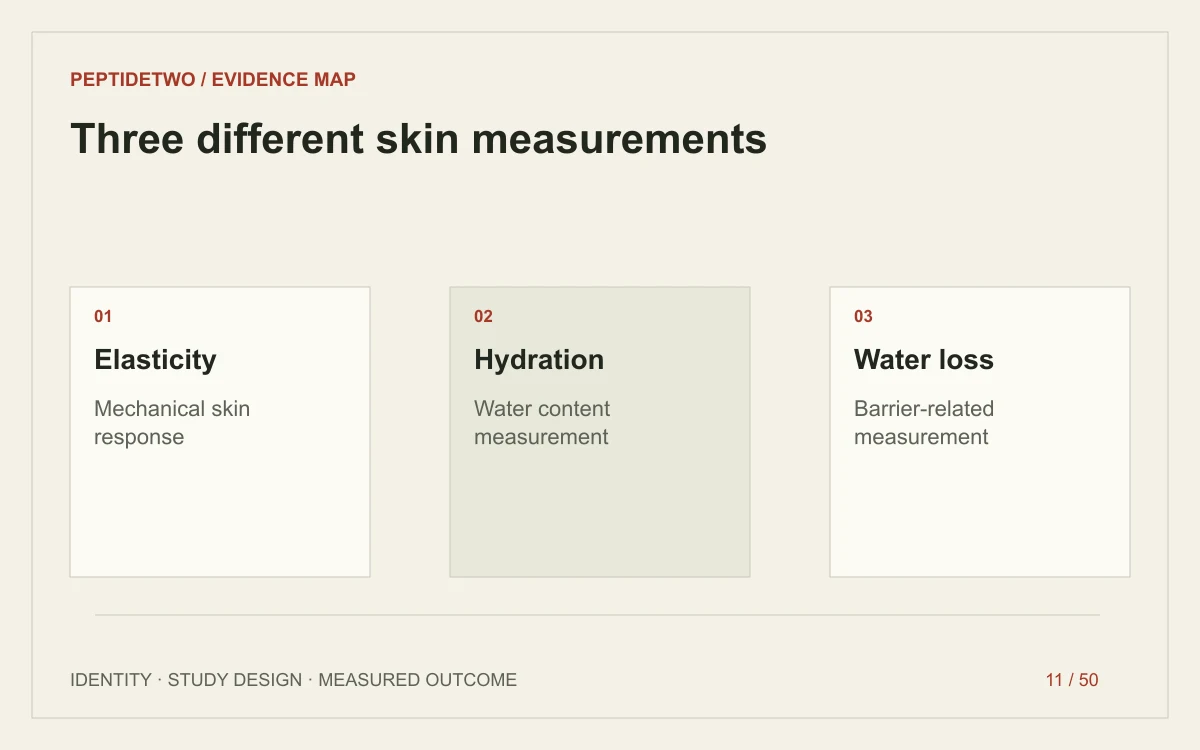 Research Practice
Collagen Peptides for Skin: Elasticity, Hydration and What Trials Measure
Collagen peptides for skin have human trial evidence, but elasticity, hydration and water loss are different outcomes. A positive result for one measurement should not be rewritten as proof that a powder improves every sign of skin aging.
Updated 2026-11-06 ↗