Peptide research, explained.
Detailed guides to peptide identity, biological pathways, analytical methods and clinical evidence. Search the reading room or follow a research topic.
Browse 13 research topics
All guides & articles
 Research Practice
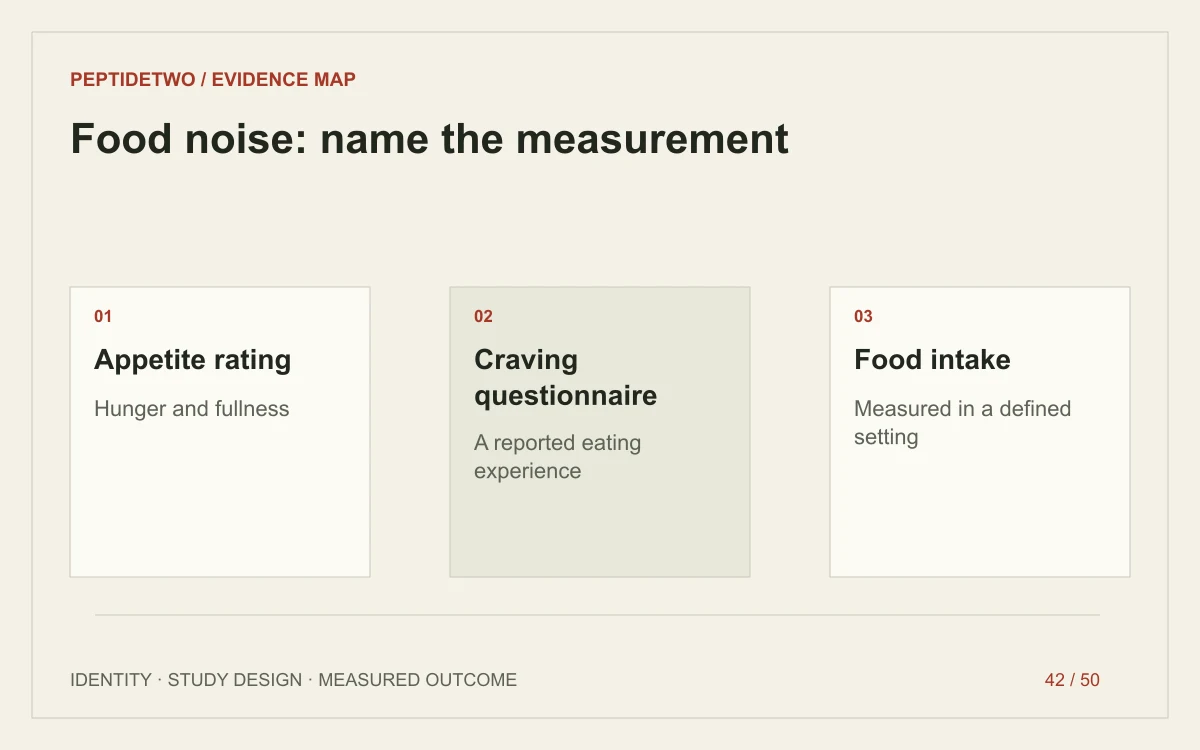
GLP-1 and “Food Noise”: What Appetite and Craving Studies Actually Measure
GLP-1 and food noise discussions often mix a familiar everyday phrase with several different research outcomes. A person may use food noise to describe persistent thoughts about food.
Updated 2026-11-06 ↗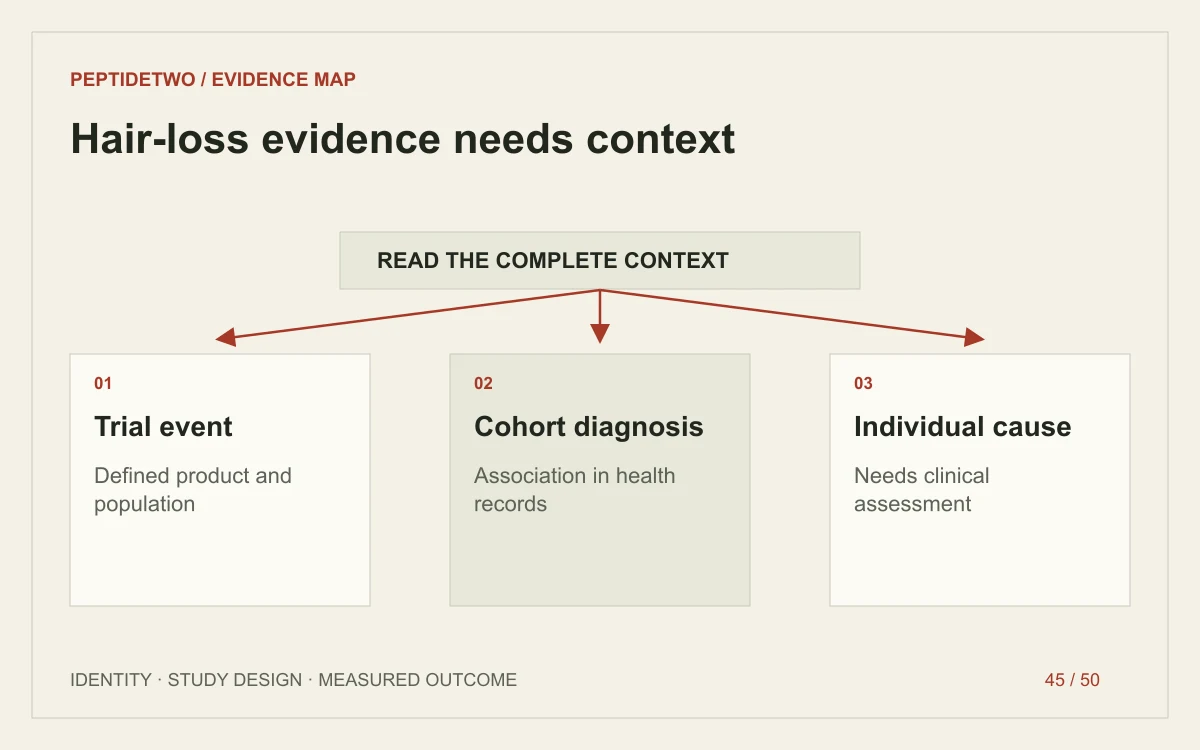 Research Practice
GLP-1 Drugs and Hair Loss: Reported Events, Weight Change and Causal Uncertainty
GLP-1 and hair loss is a legitimate research question, but reported events do not establish one cause for every person. Product trials, electronic-health-record cohorts and individual experiences provide different kinds of evidence.
Updated 2026-11-06 ↗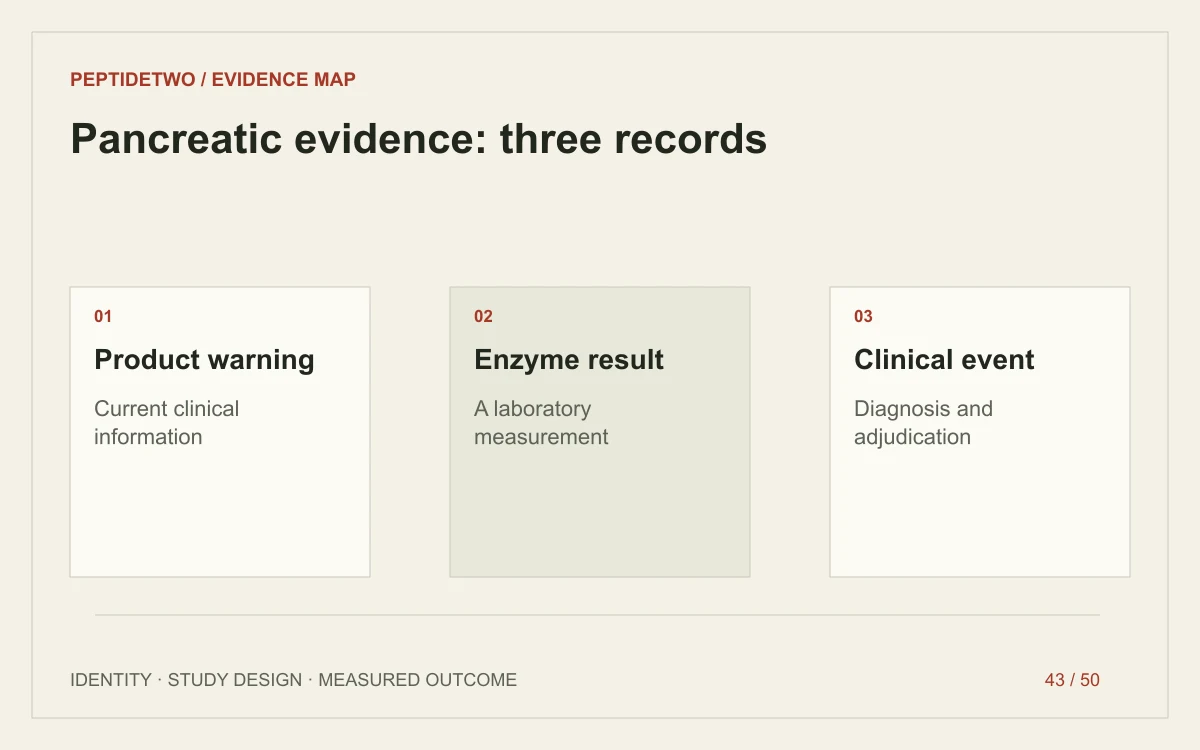 Research Practice
GLP-1 Drugs and Pancreatitis: Warnings, Enzymes and Adjudicated Events
GLP-1 and pancreatitis discussions need to separate product warnings from laboratory enzyme changes and confirmed clinical events. These records address different questions.
Updated 2026-11-06 ↗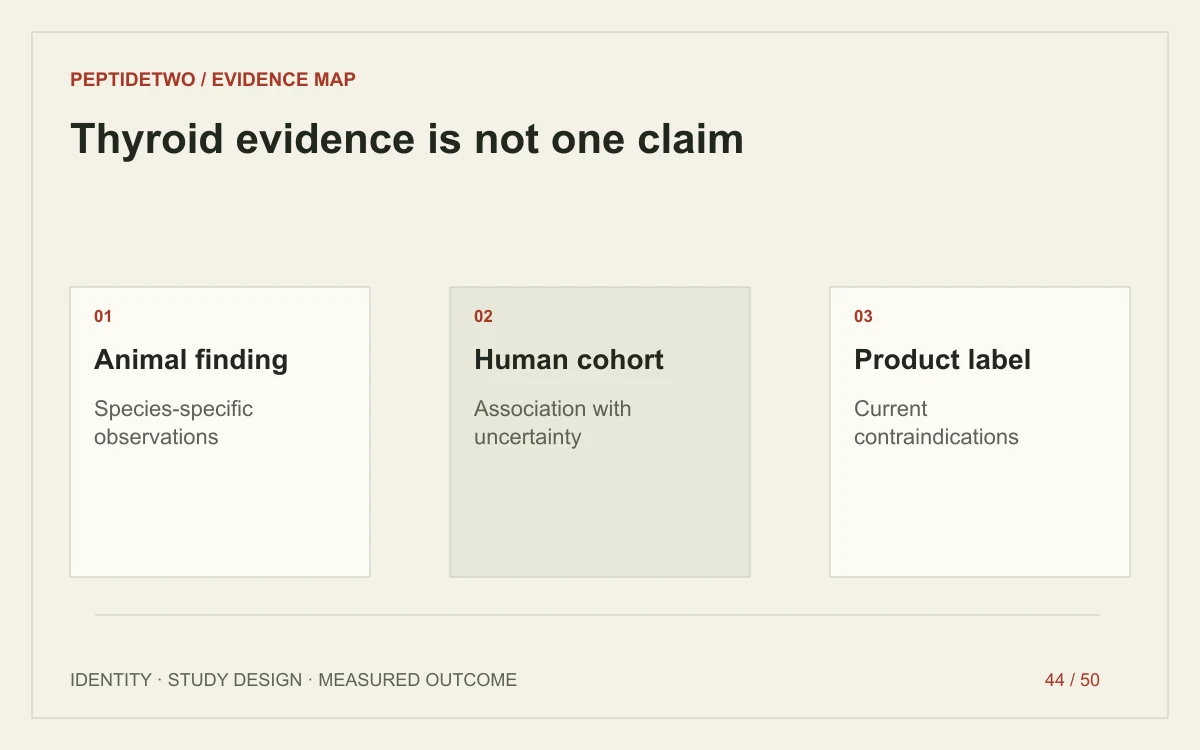 Research Practice
GLP-1 Drugs and Thyroid Cancer: Rodent Warnings and Human Cohort Evidence
GLP-1 and thyroid cancer involves several different evidence questions.
Updated 2026-11-06 ↗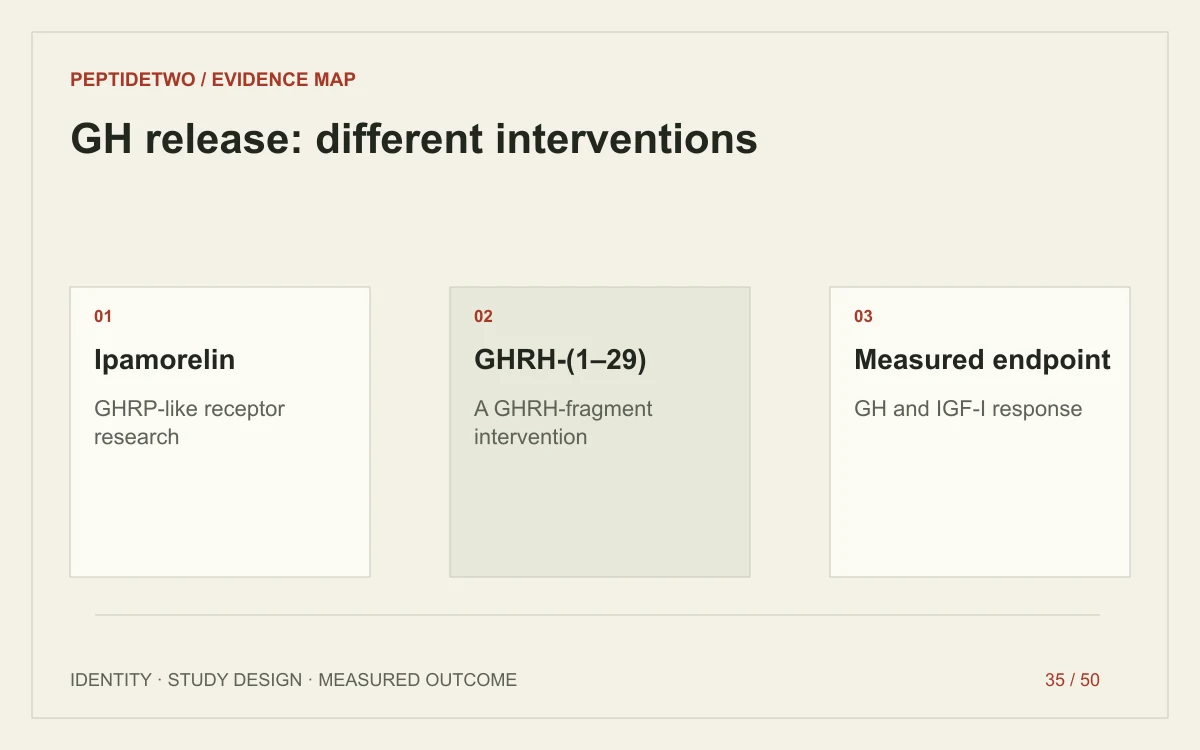 Peptide Fundamentals
Ipamorelin vs Sermorelin: Different GH-Release Pathways and Evidence
Ipamorelin vs sermorelin compares different approaches to stimulating growth-hormone release. The shared hormonal endpoint does not make the molecules, receptor pathways or evidence interchangeable.
Updated 2026-11-06 ↗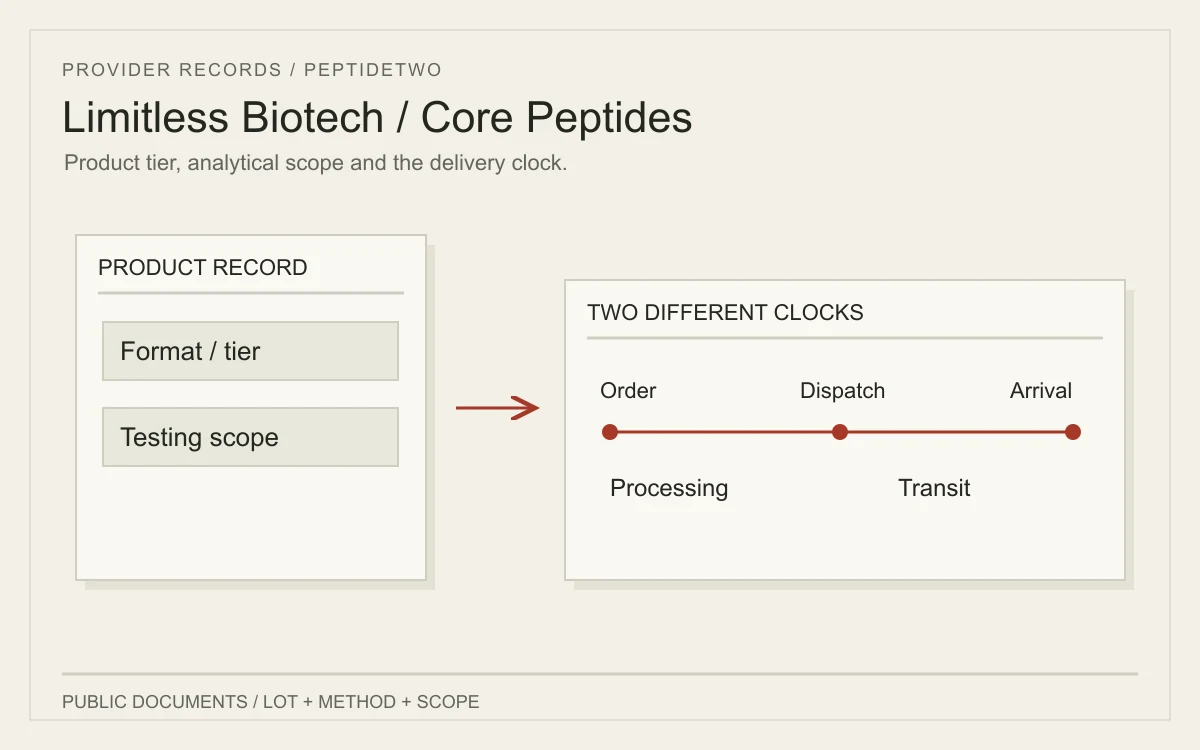 Research Practice
Limitless Biotech vs Core Peptides: Product Tiers, COAs and Processing
Product format and testing scope come before delivery claims in this comparison of the companies’ public research-supply information.
Updated 2026-11-09T09:06:28.317Z ↗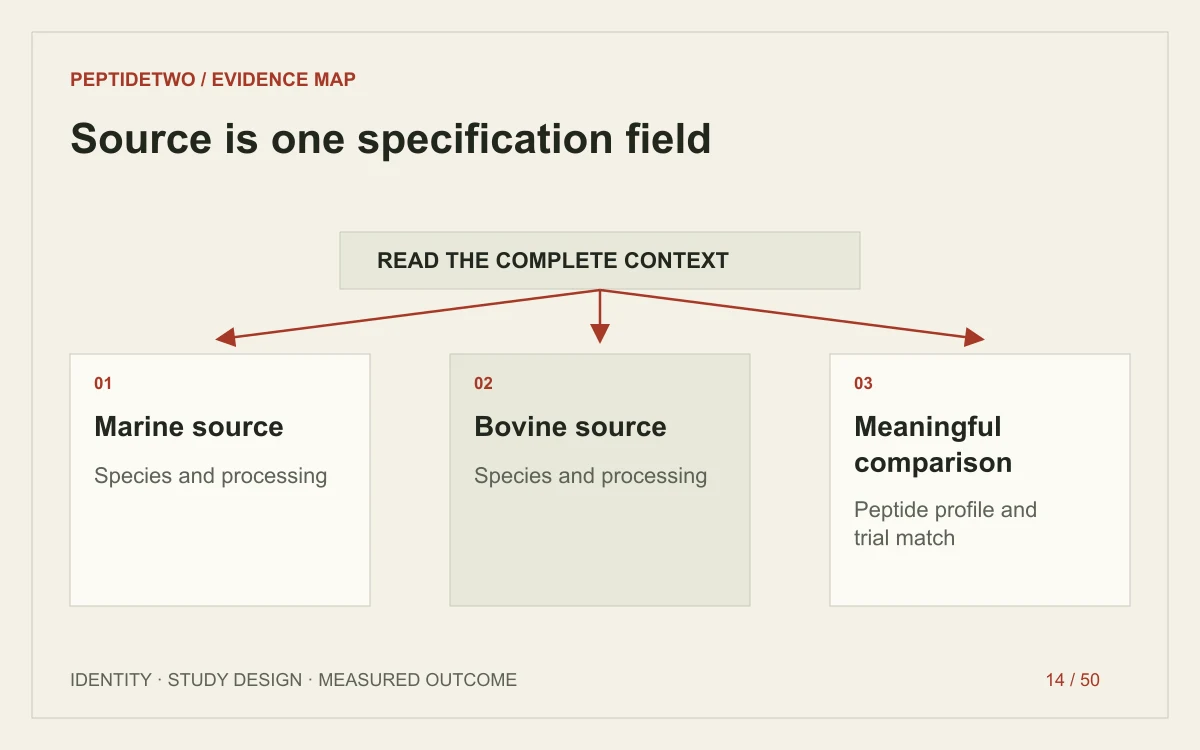 Peptide Fundamentals
Marine vs Bovine Collagen Peptides: Source, Specification and Evidence
Marine vs bovine collagen is a source comparison, not a finished clinical conclusion. Species, tissue source, processing and peptide distribution can differ.
Updated 2026-11-06 ↗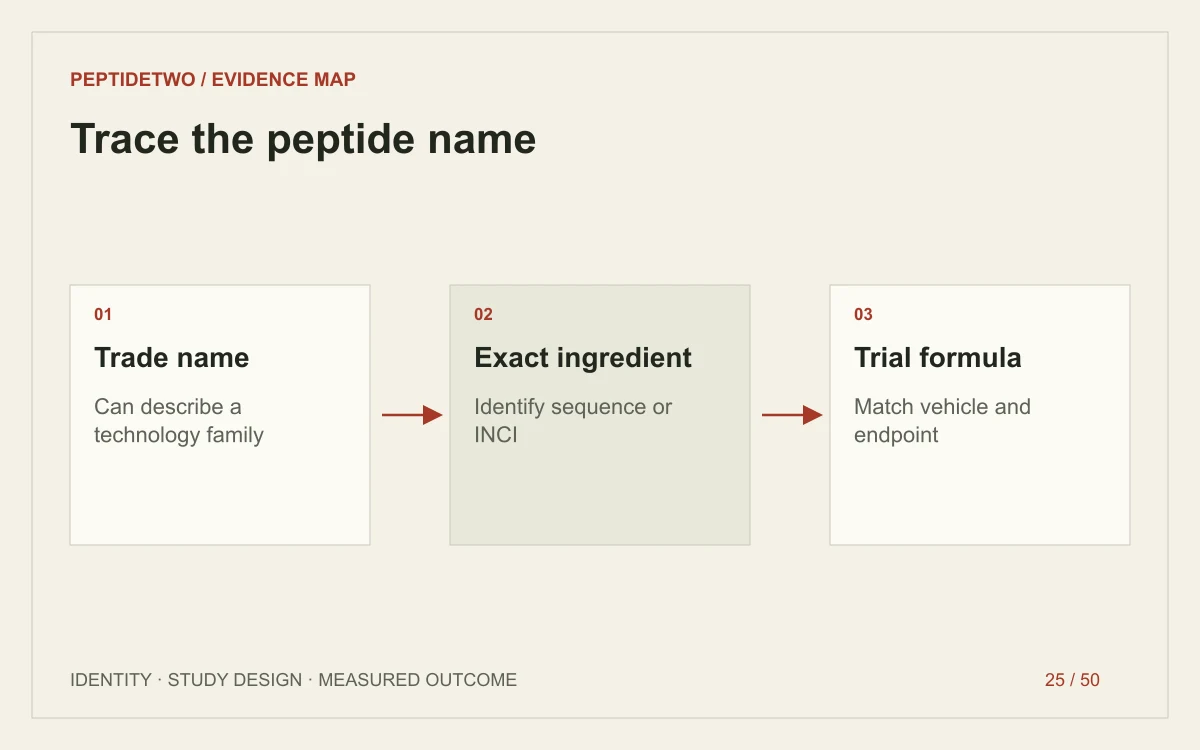 Research Practice
Matrixyl and Palmitoyl Pentapeptide-4: One Name Does Not Cover Every Formula
Palmitoyl pentapeptide evidence should be tied to the exact sequence and formulation. Matrixyl is a commercial name encountered across cosmetic peptide technologies, so the word alone is not a complete molecular specification.
Updated 2026-11-06 ↗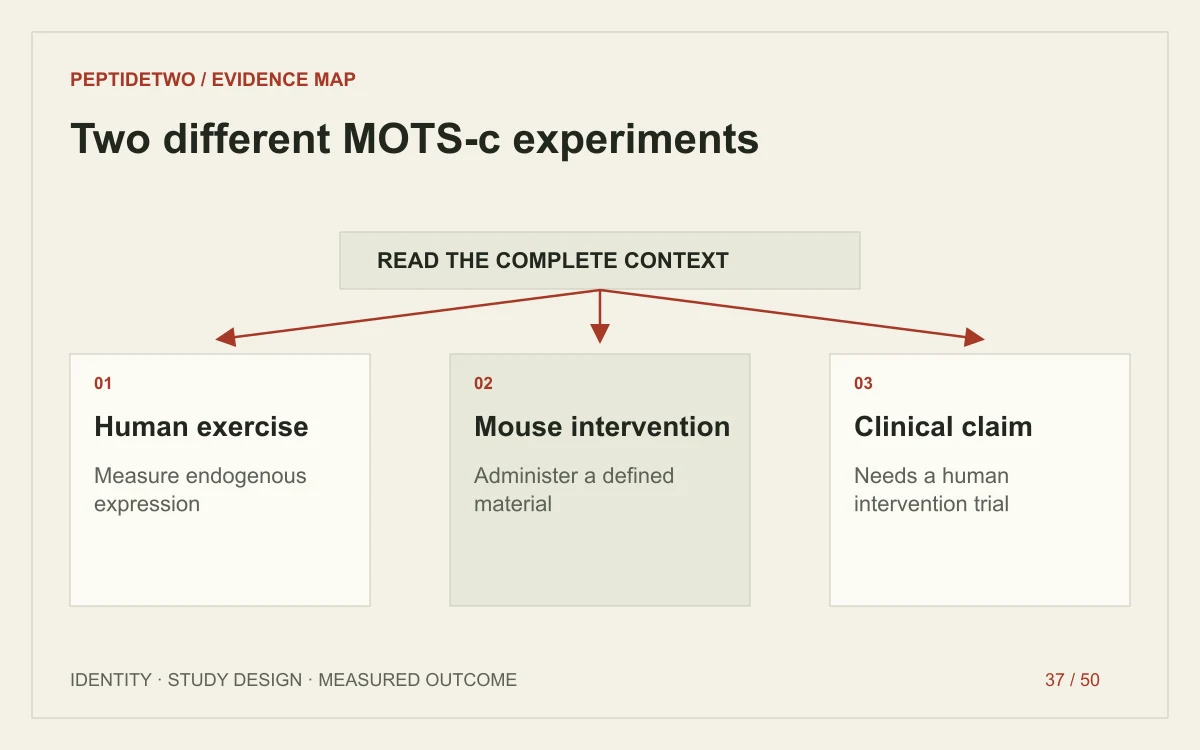 Research Practice
MOTS-c and Exercise: Endogenous Human Responses vs Peptide Administration
MOTS-c and exercise research contains two observations that are often merged incorrectly. Measuring an endogenous peptide after exercise in people is different from administering a peptide to mice and measuring performance.
Updated 2026-11-06 ↗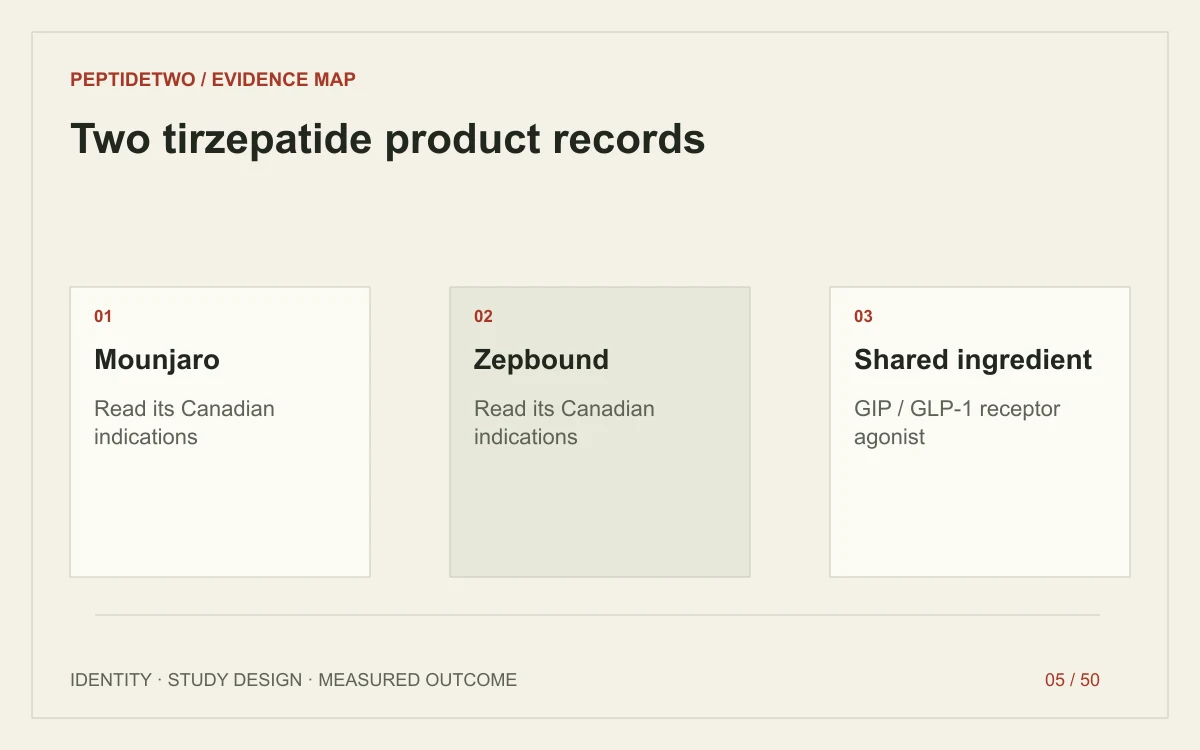 Peptide Fundamentals
Mounjaro vs Zepbound in Canada: Reading Tirzepatide Product Records
Mounjaro vs Zepbound compares two tirzepatide medicine brands. The shared ingredient does not erase the differences between their Canadian product records.
Updated 2026-11-06 ↗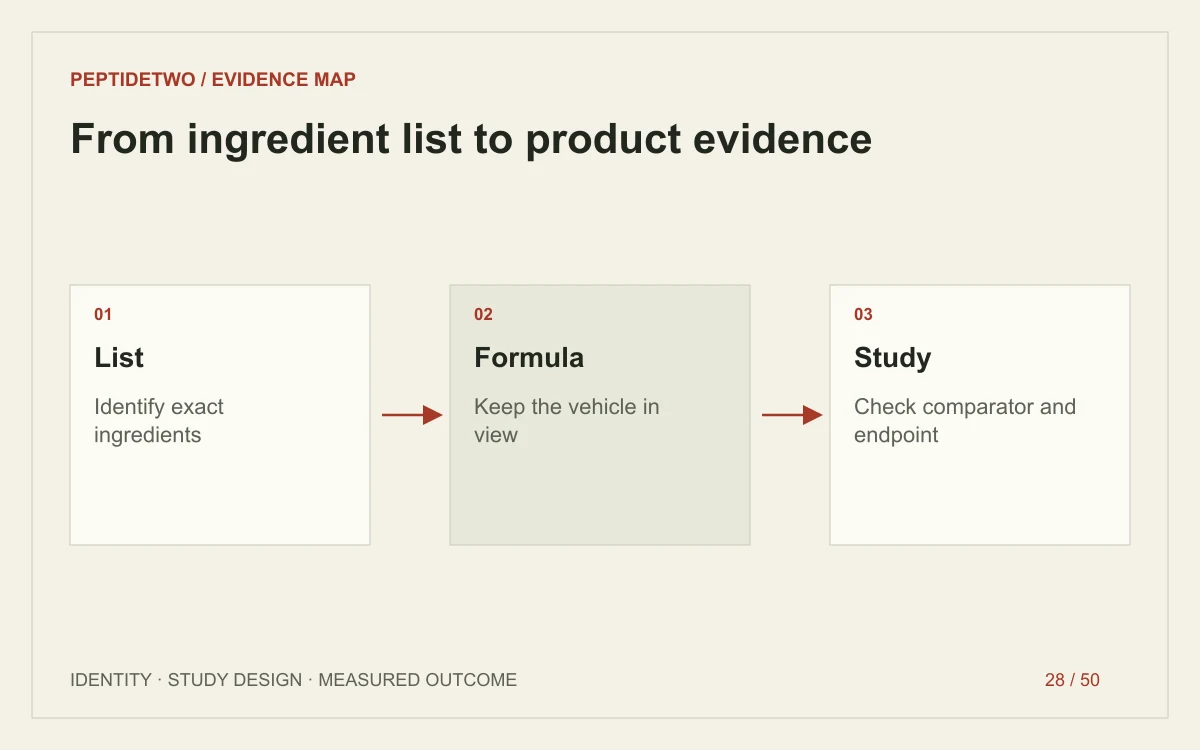 Documentation & Traceability
Multi-Peptide Serums: How to Read Ingredients and Separate Formula Claims
Multi-peptide serums contain more than one ingredient with a scientific-sounding name. Their evidence is best read at two levels: what is known about each named ingredient, and what has actually been tested for the complete finished formula.
Updated 2026-11-06 ↗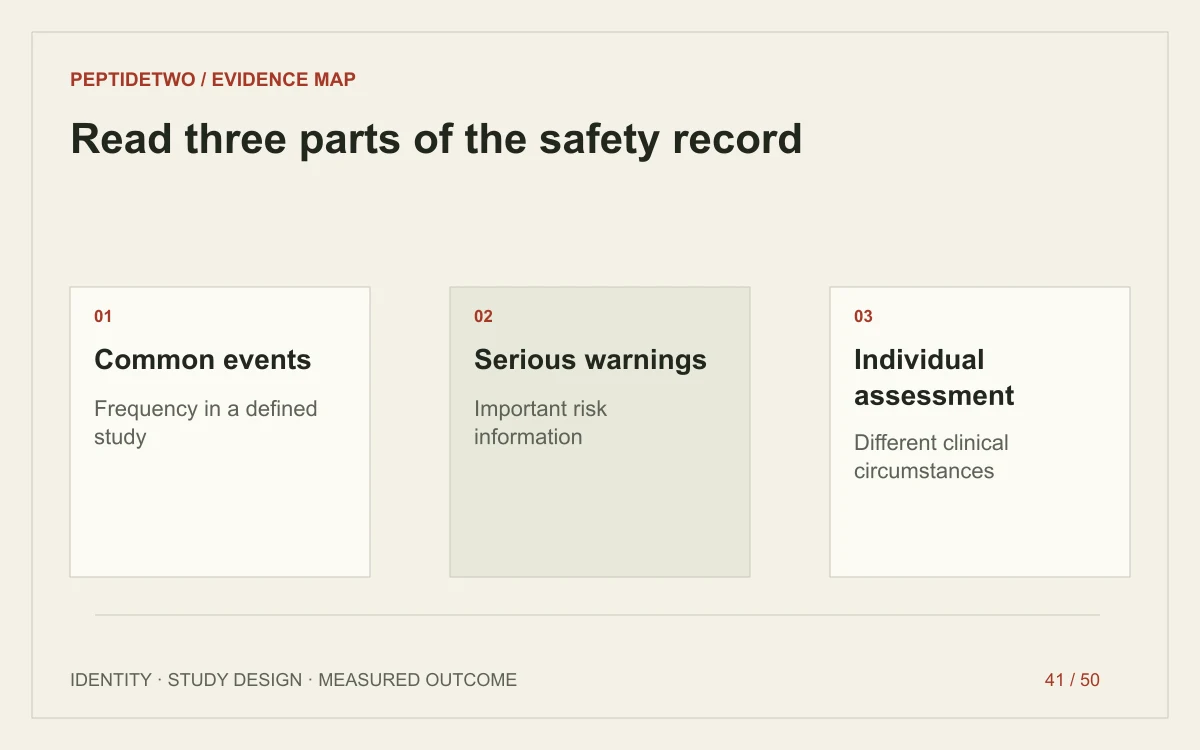 Research Practice
Ozempic Side Effects in Canada: Common Events, Warnings and Study Context
Ozempic side effects should be read from the current Canadian product monograph and the relevant trial, rather than a generic list for every GLP-1 product.
Updated 2026-11-06 ↗