Peptide research, explained.
Detailed guides to peptide identity, biological pathways, analytical methods and clinical evidence. Search the reading room or follow a research topic.
Browse 13 research topics
All guides & articles
 Peptide Fundamentals
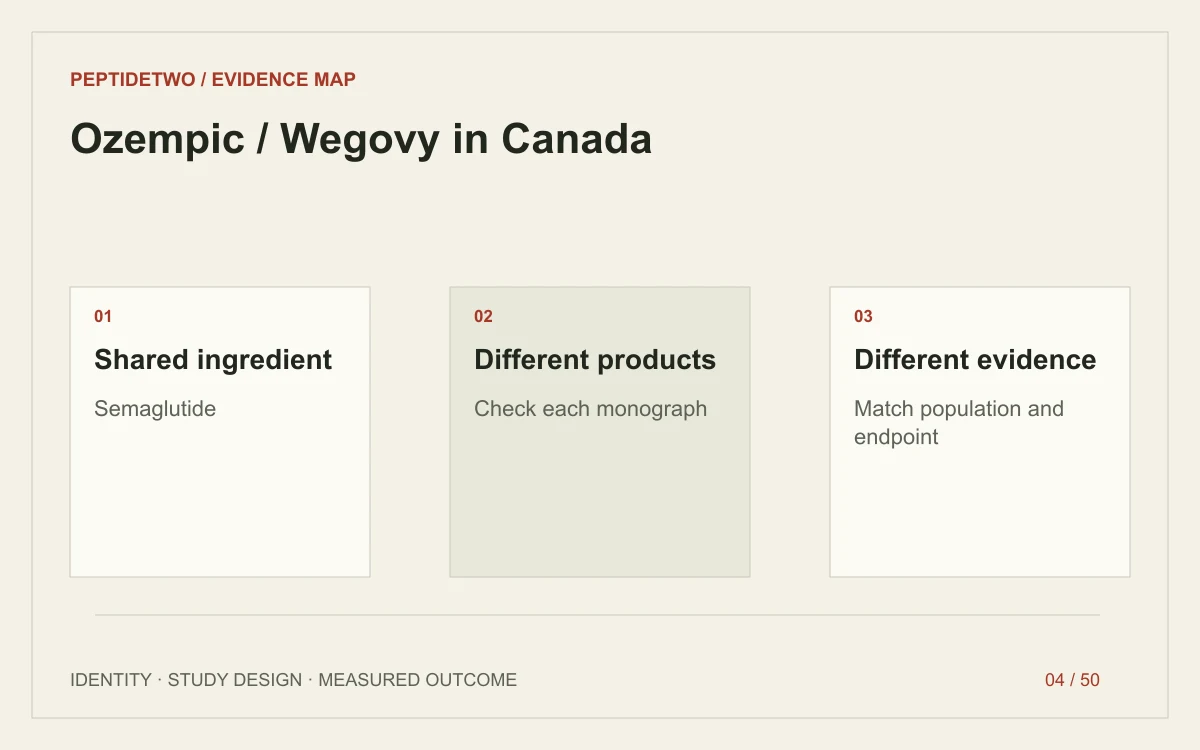
Ozempic vs Wegovy in Canada: Same Ingredient, Different Product Records
Ozempic vs Wegovy is a comparison of finished medicines that share semaglutide. In Canada, the ingredient name is only the beginning of the record check.
Updated 2026-11-06 ↗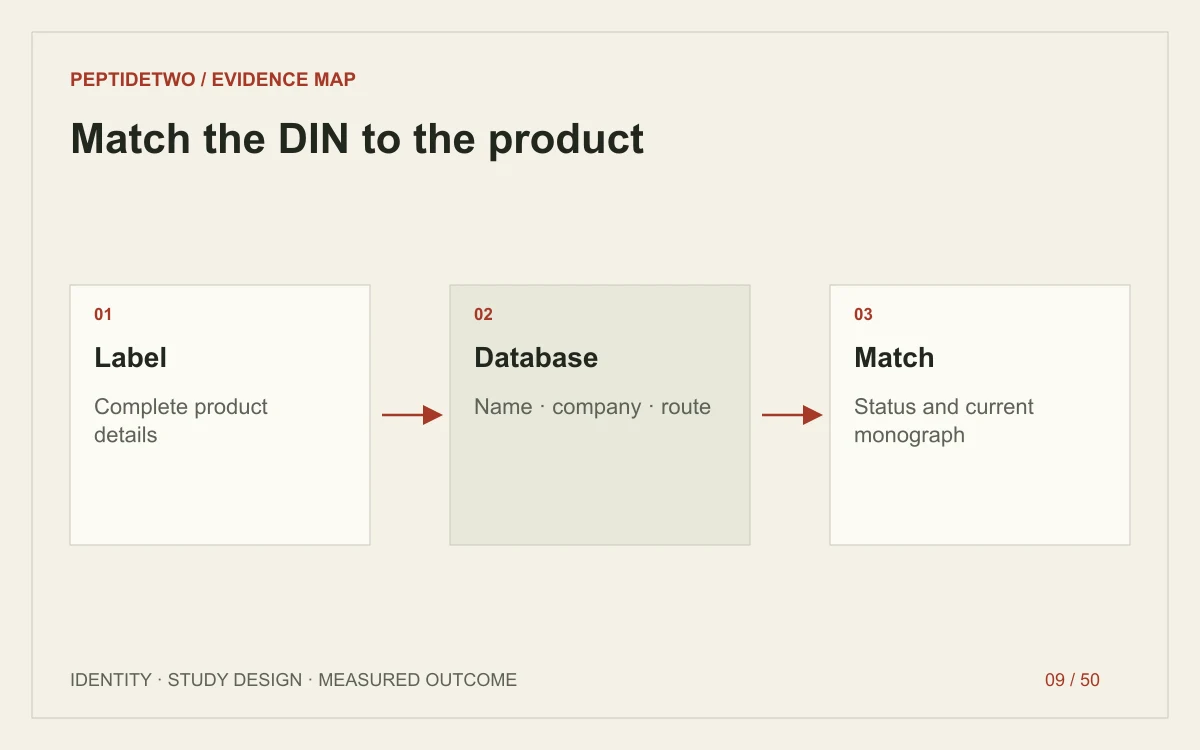 Documentation & Traceability
How to Check a Peptide Drug’s DIN in Canada
A peptide drug DIN check starts with an eight-digit Drug Identification Number and the exact product label. The number is a route into a Canadian product record.
Updated 2026-11-06 ↗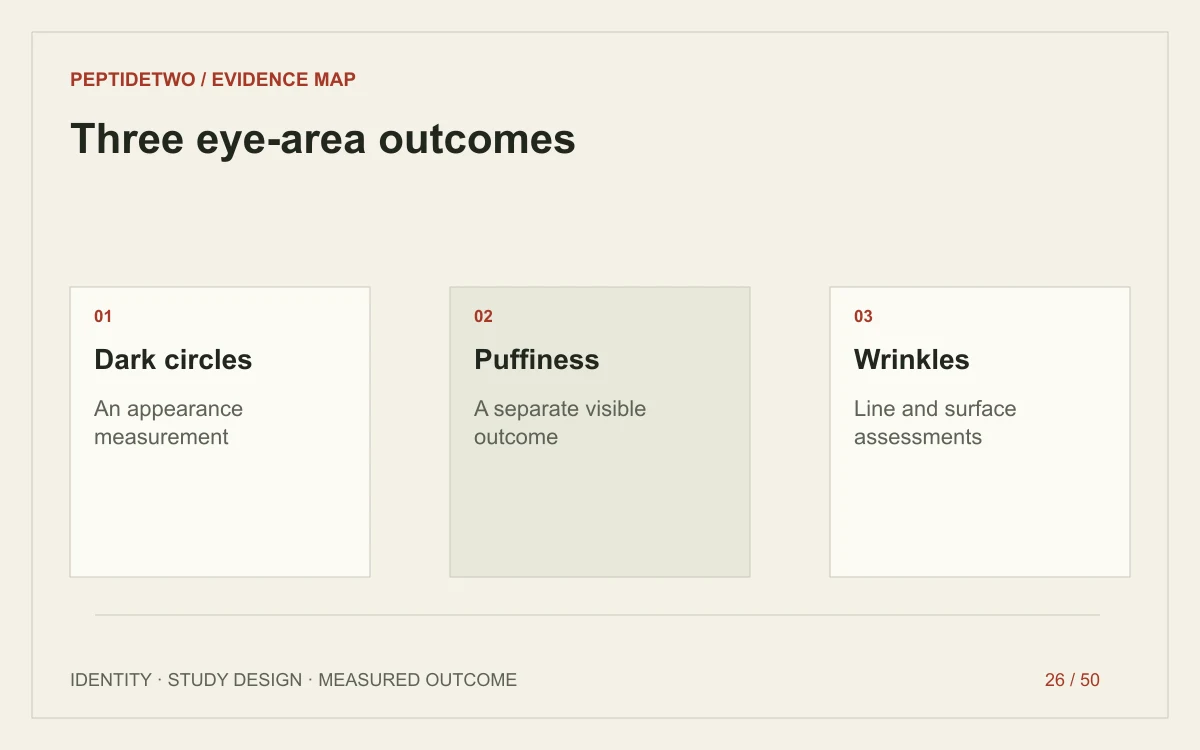 Research Practice
Peptide Eye Serums: Dark Circles, Puffiness and Wrinkles Are Different Claims
Peptide eye serums can be marketed for several different visible concerns. Dark circles, puffiness and wrinkles are not interchangeable endpoints.
Updated 2026-11-06 ↗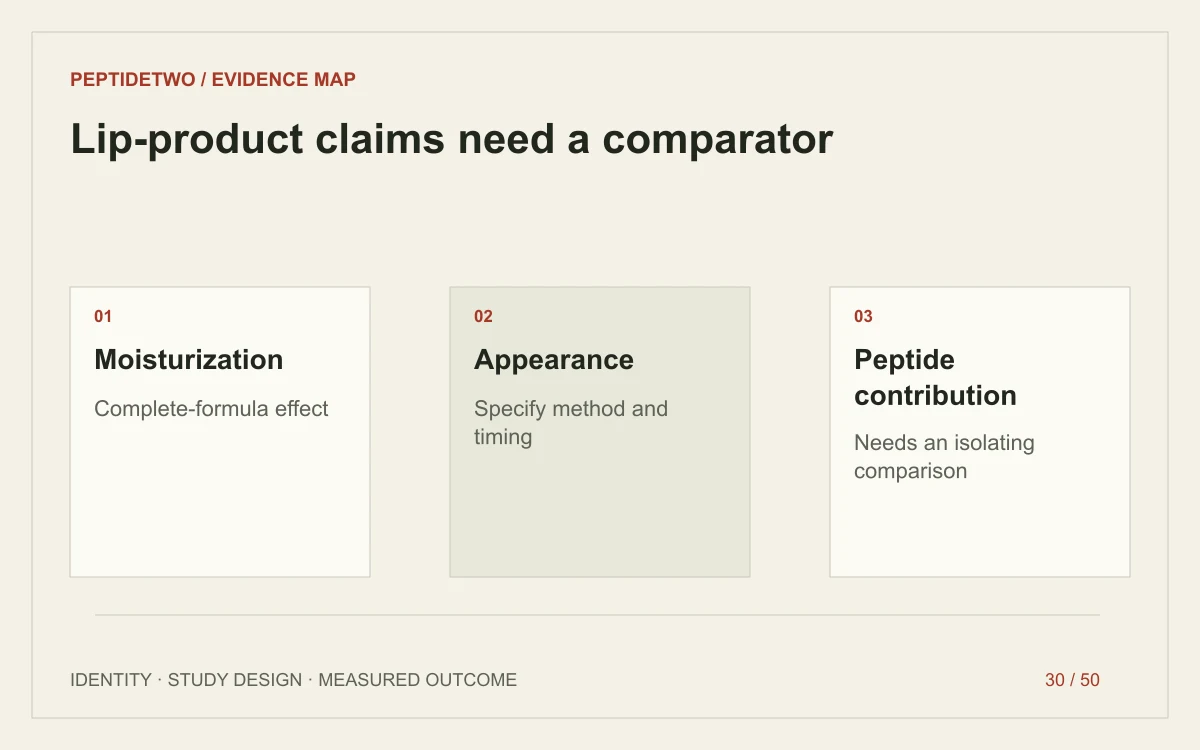 Research Practice
Peptide Lip Treatments: Hydration, Appearance and the Missing Comparator
Peptide lip treatments are finished cosmetic formulas, not isolated peptide experiments. Softer-looking lips after using a balm may reflect the complete moisturizer or its surface film.
Updated 2026-11-06 ↗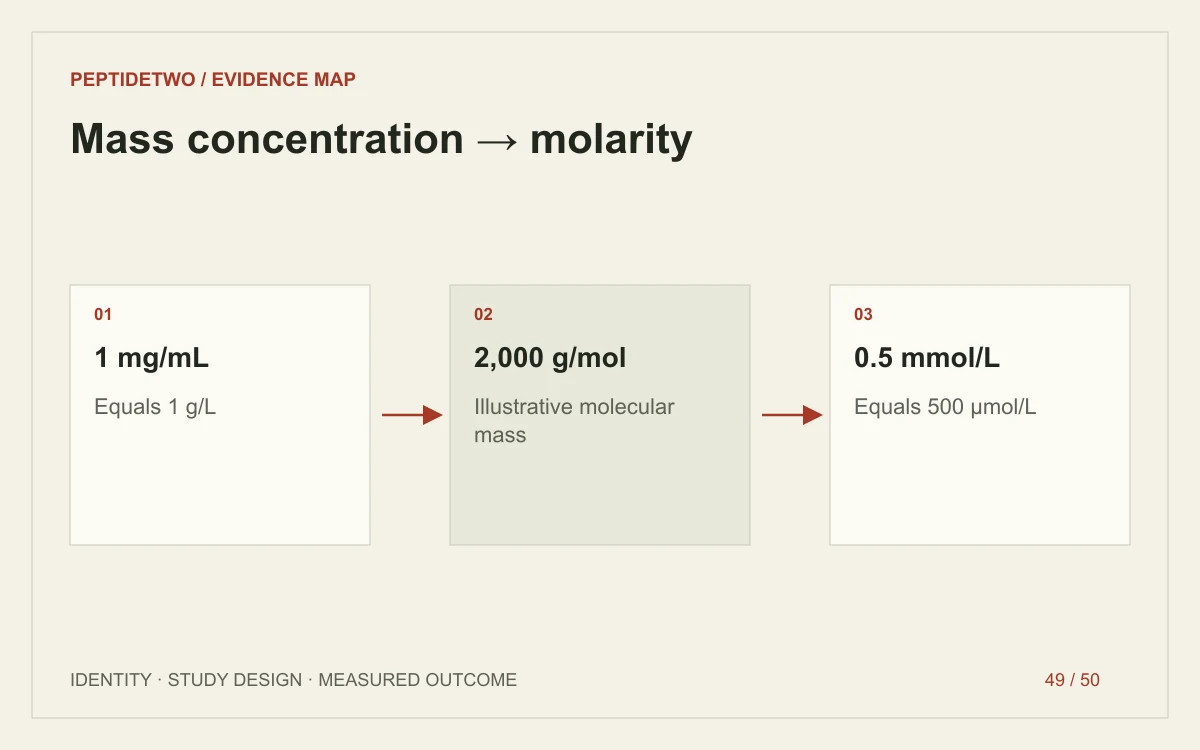 Analytical Methods
Peptide Molarity vs Mass Concentration: Converting mg/mL to µM Correctly
Peptide molarity counts amount of substance per volume, while mg/mL expresses mass per volume. To convert between them, you need the molecular mass of the exact entity being counted and a meaningful mass-concentration input.
Updated 2026-11-06 ↗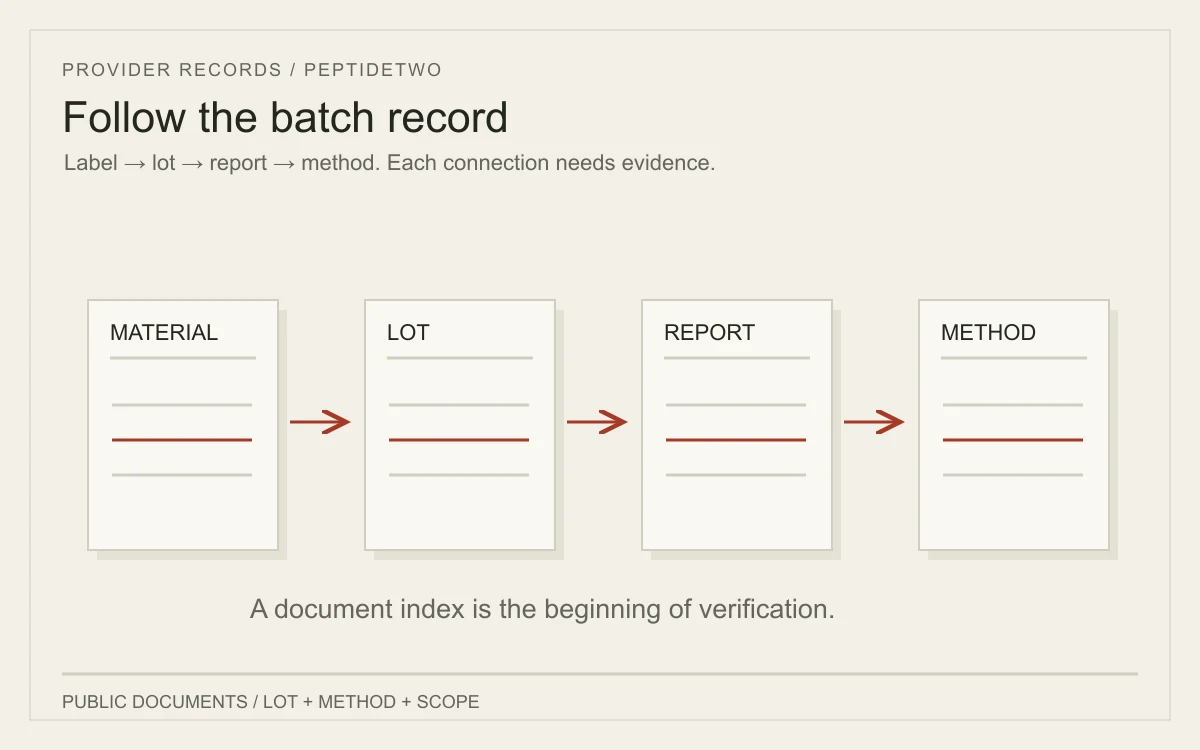 Research Practice
Peptide Provider COA Comparison: From Website Claim to Matched Batch Record
A cross-provider workflow for comparing actual batch evidence rather than counting certificates or ranking purity headlines.
Updated 2026-11-09T09:06:28.317Z ↗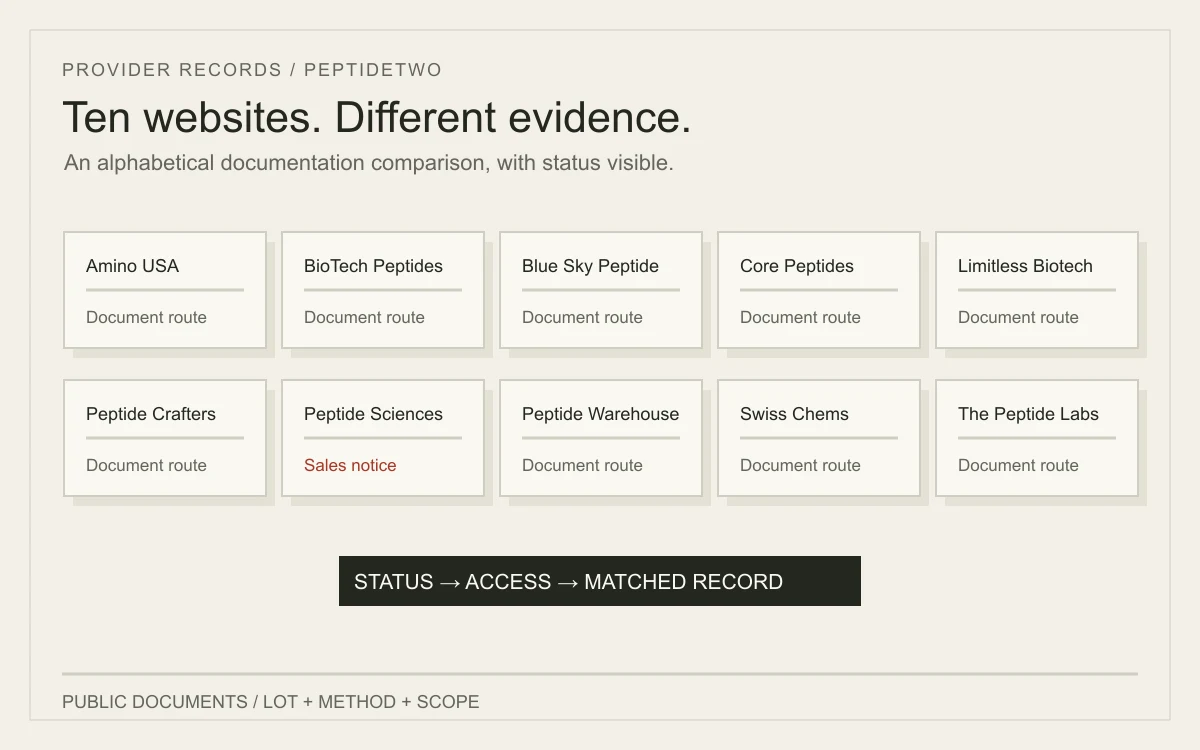 Research Practice
10 Peptide Provider Websites in the USA and Canada: A Neutral Comparison
An alphabetical review of ten retail-provider websites, with current-status notes, documentation routes and clear limits on what public information establishes.
Updated 2026-11-09T09:06:28.317Z ↗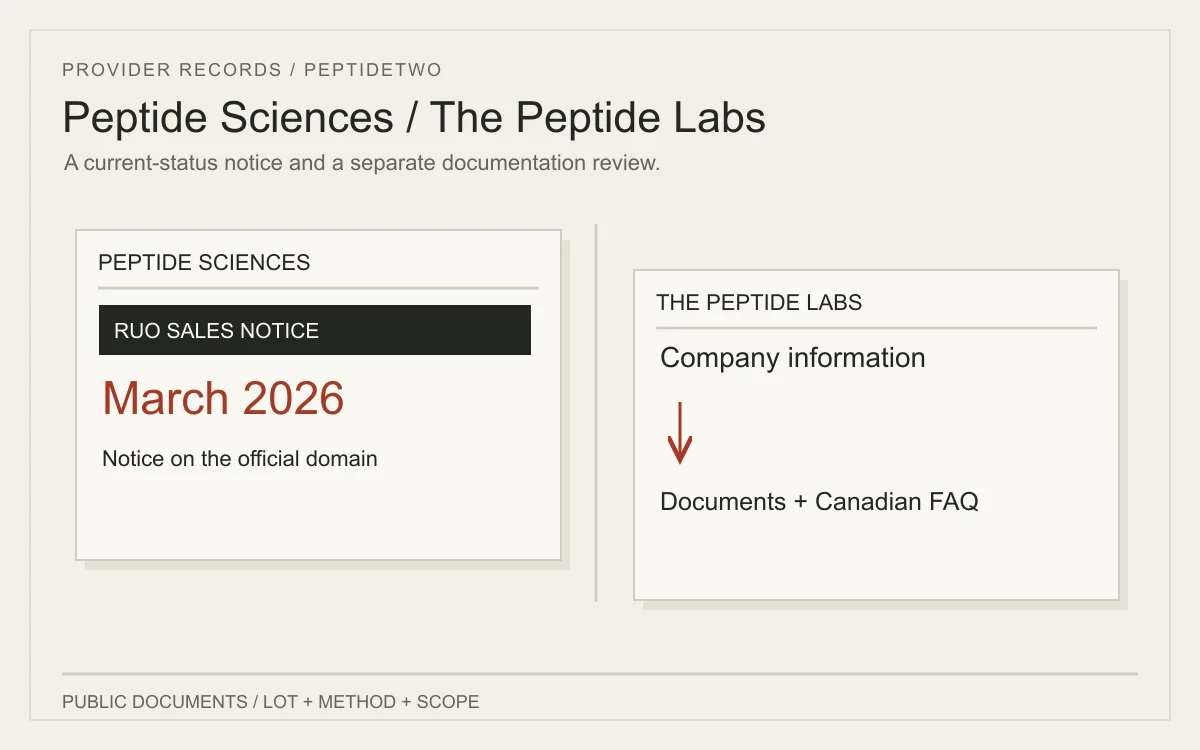 Research Practice
Peptide Sciences vs The Peptide Labs: Current Status and Documentation
The current comparison begins with Peptide Sciences’ own RUO sales notice, then examines The Peptide Labs’ published information without implying succession or endorsement.
Updated 2026-11-09T09:06:28.317Z ↗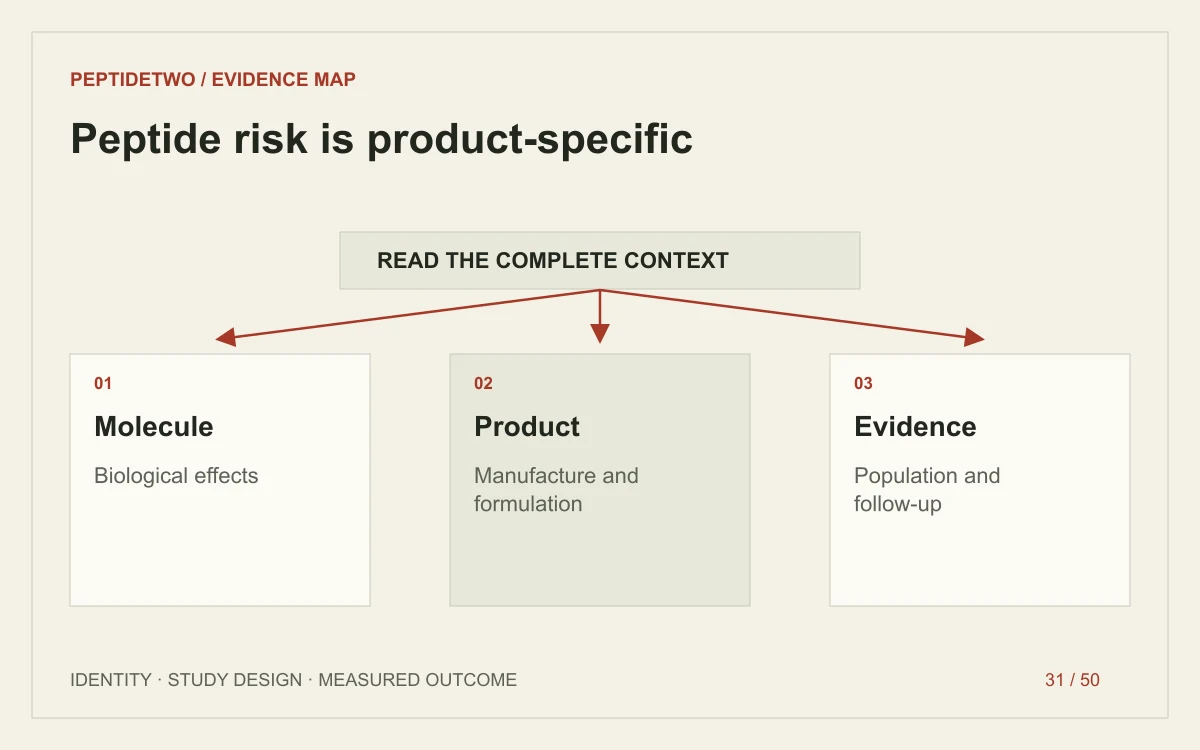 Research Practice
Peptide Side Effects: Why the Exact Molecule, Product and Evidence Matter
Peptide side effects depend on the exact molecule, finished product, route and person studied. The word peptide covers a broad chemical category.
Updated 2026-11-06 ↗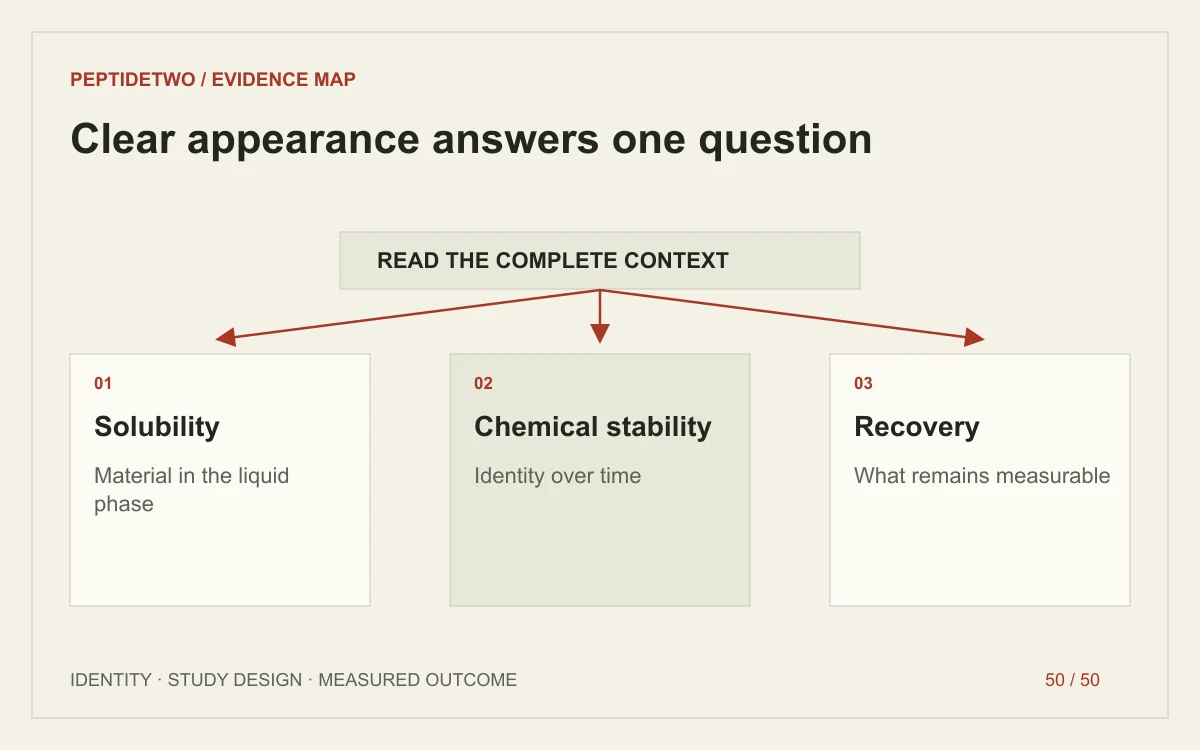 Analytical Methods
Peptide Solubility vs Stability: A Clear Solution Can Still Leave Questions
Peptide solubility vs stability separates whether material dissolves from whether the intended molecule remains unchanged and recoverable over time.
Updated 2026-11-06 ↗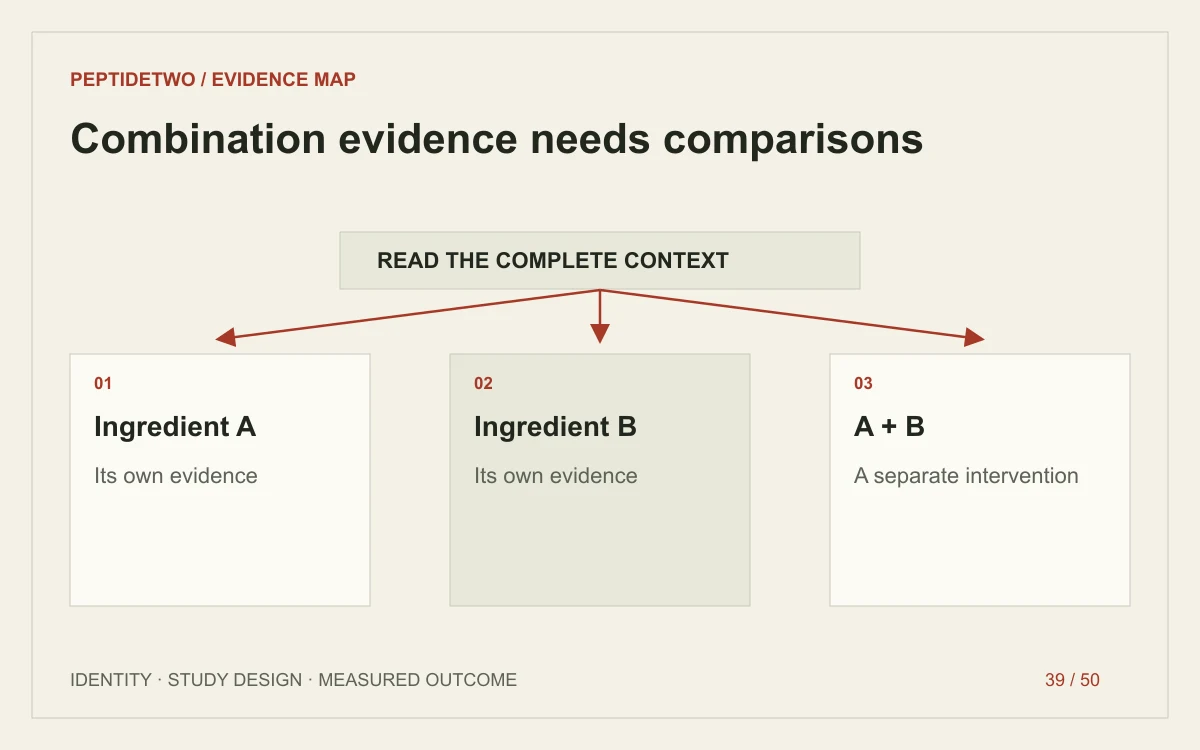 Research Practice
Peptide Stacks: Why Evidence for Two Ingredients Does Not Prove a Combination
Peptide stacks are combinations, and a combination is a new evidence question. Two ingredients with separate studies do not automatically produce demonstrated synergy, a known safety profile or a predictable clinical outcome when combined.
Updated 2026-11-06 ↗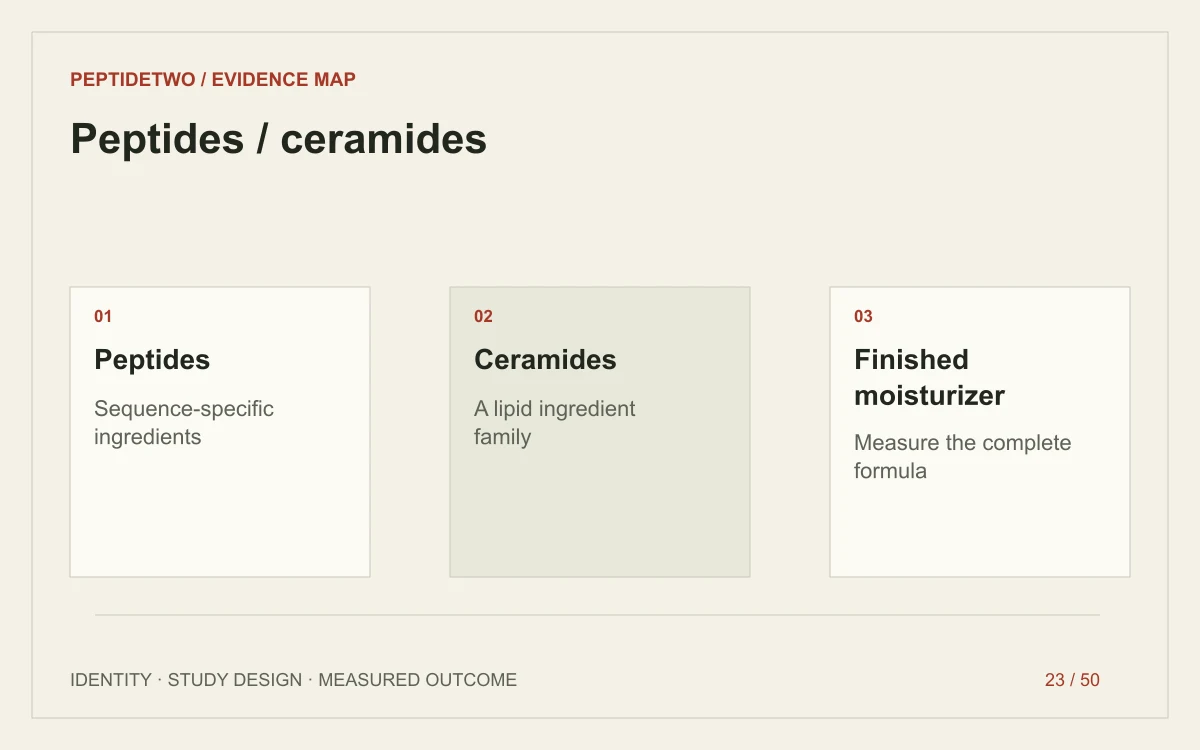 Peptide Fundamentals
Peptides vs Ceramides: Different Ingredients, Different Skin Measurements
Peptides vs ceramides compares different ingredient families, not two names for the same skin-care function. Peptides are amino-acid sequences; ceramides are lipids.
Updated 2026-11-06 ↗