Peptide research, explained.
Detailed guides to peptide identity, biological pathways, analytical methods and clinical evidence. Search the reading room or follow a research topic.
Browse 13 research topics
All guides & articles
 Research Practice
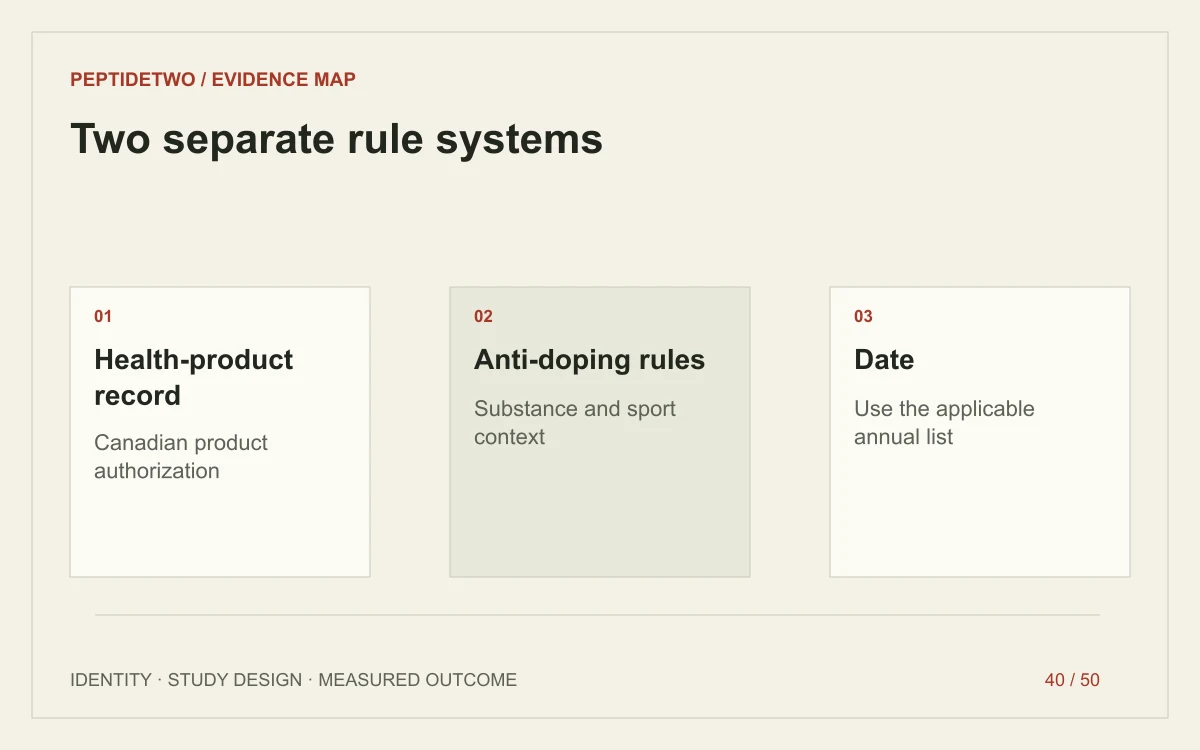
Peptides and WADA in Canada: Product Approval Is Not Anti-Doping Permission
Peptides and WADA require a separate check from Canadian medicine authorization. A product can have a medical use while still being subject to sport restrictions, and a research-use label does not provide anti-doping permission.
Updated 2026-11-06 ↗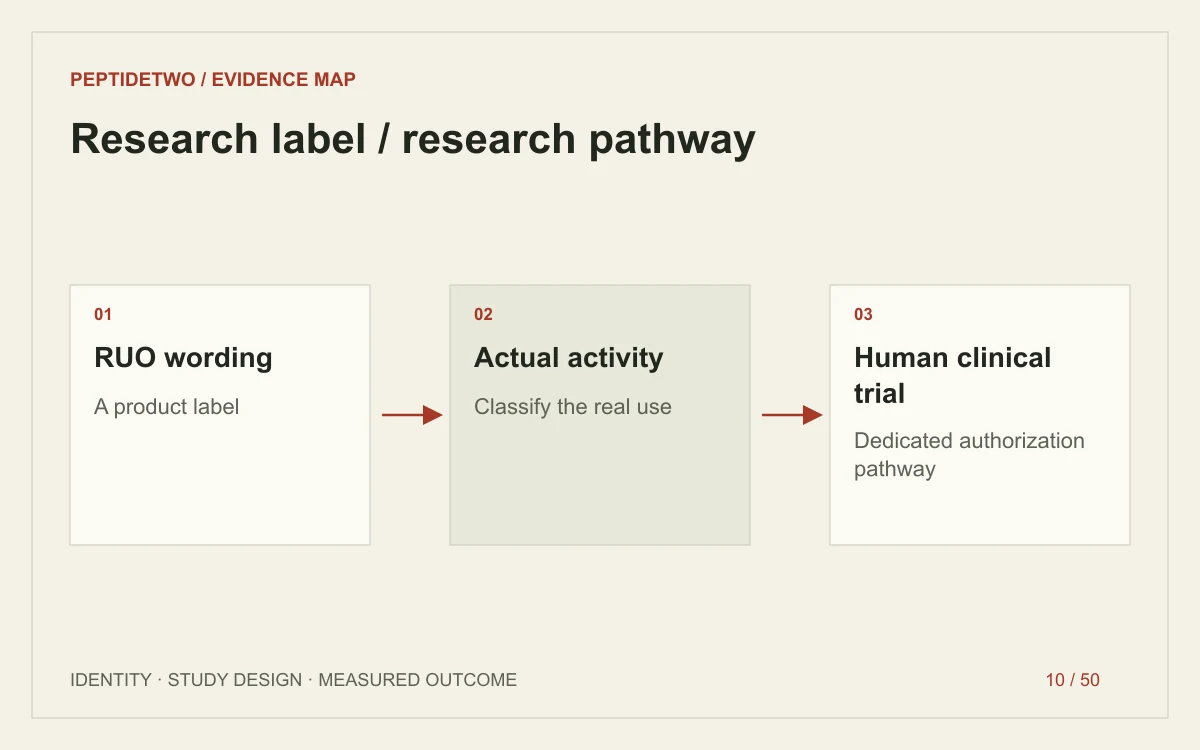 Research Practice
“Research Use Only” Peptides in Canada: What the Label Does Not Establish
Research use only peptides do not gain Canadian authorization simply from the words on a label. Health Canada’s current research guidance explicitly says that a research-use label does not make a product legal to import or sell.
Updated 2026-11-06 ↗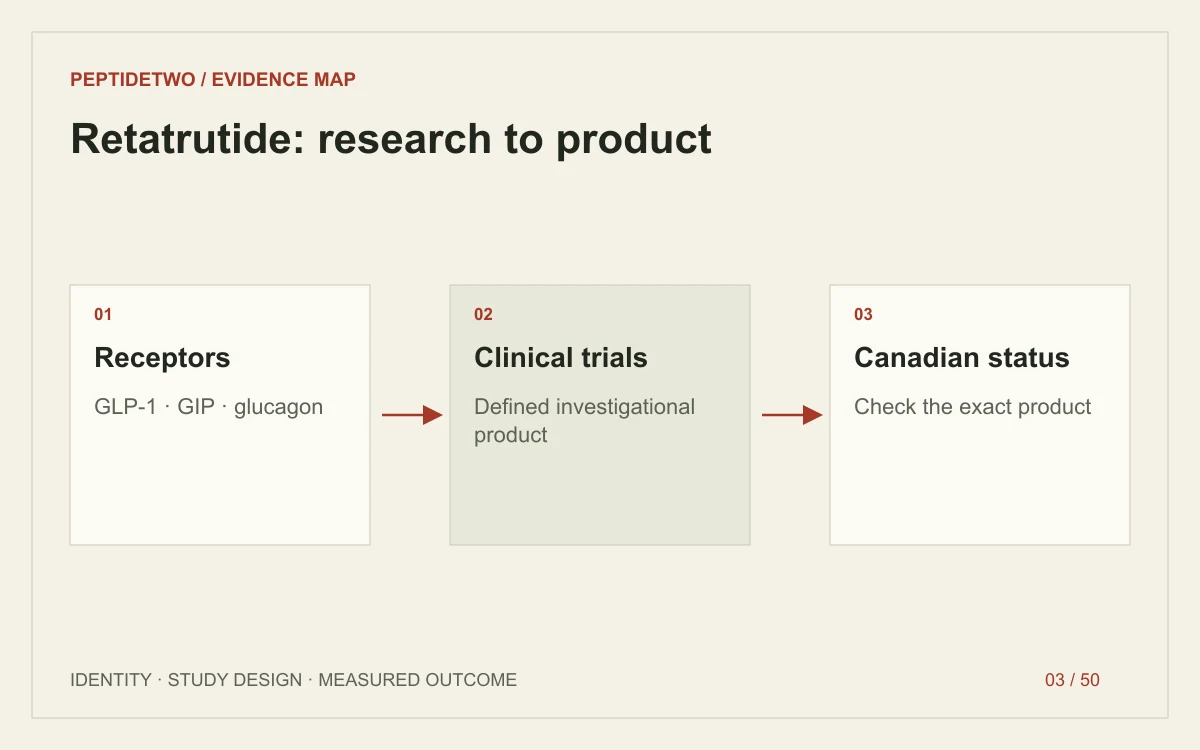 Research Practice
Retatrutide in Canada: Clinical Trials, Product Status and “GLP-3”
Retatrutide in Canada should be checked through both clinical-trial records and Canadian product information. These are separate records.
Updated 2026-11-06 ↗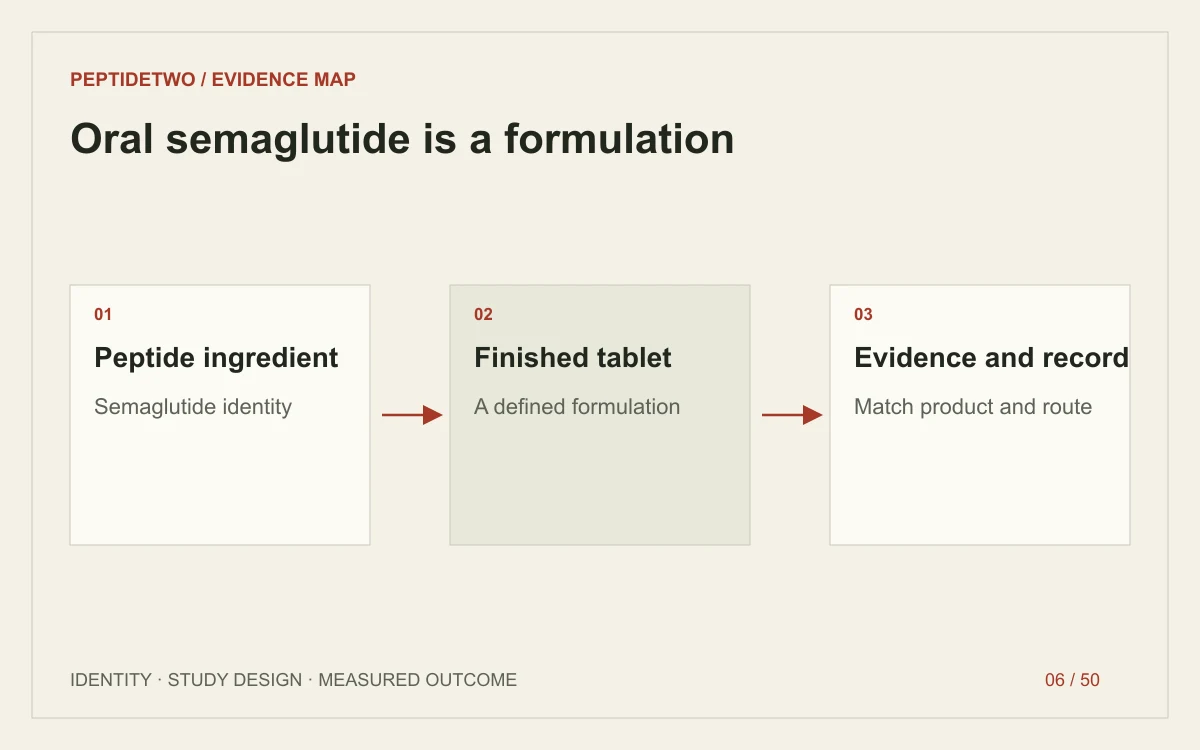 Peptide Fundamentals
Rybelsus in Canada: How Oral Semaglutide Differs from a Research Peptide
Rybelsus in Canada is an oral semaglutide medicine, not a generic label for any peptide taken by mouth. Its Health Canada product record identifies a prescription tablet with oral administration.
Updated 2026-11-06 ↗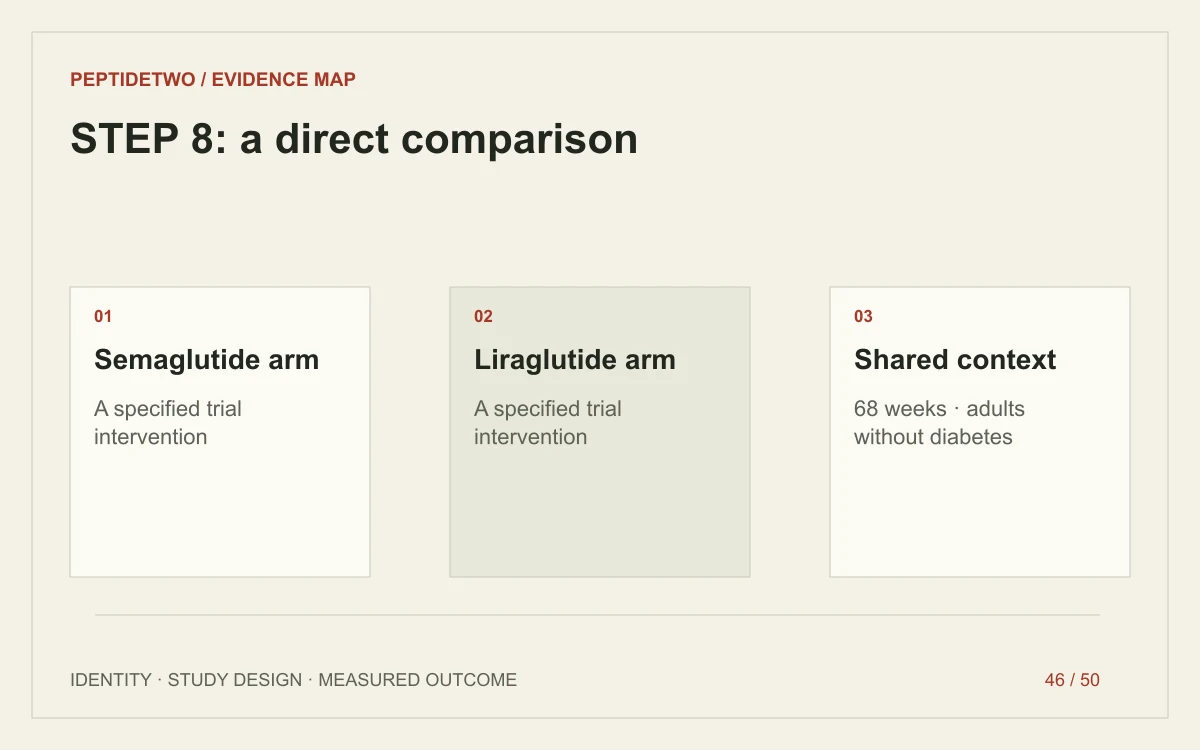 Research Practice
Semaglutide vs Liraglutide: What the STEP 8 Head-to-Head Trial Shows
Semaglutide vs liraglutide has direct randomized evidence from STEP 8. That is more informative for its particular question than comparing unrelated trials.
Updated 2026-11-06 ↗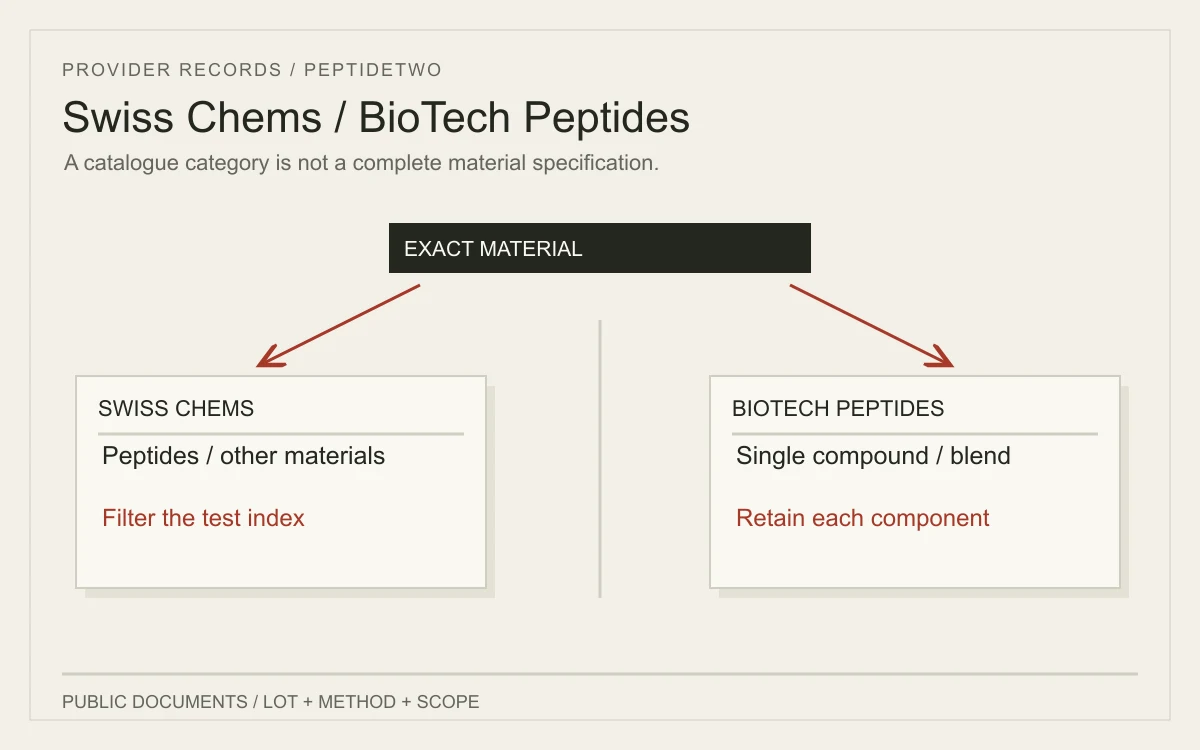 Research Practice
Swiss Chems vs BioTech Peptides: Product Forms and Testing Records
A form- and method-focused comparison that separates product categories, public reports and complaint policies from claims of demonstrated quality.
Updated 2026-11-06 ↗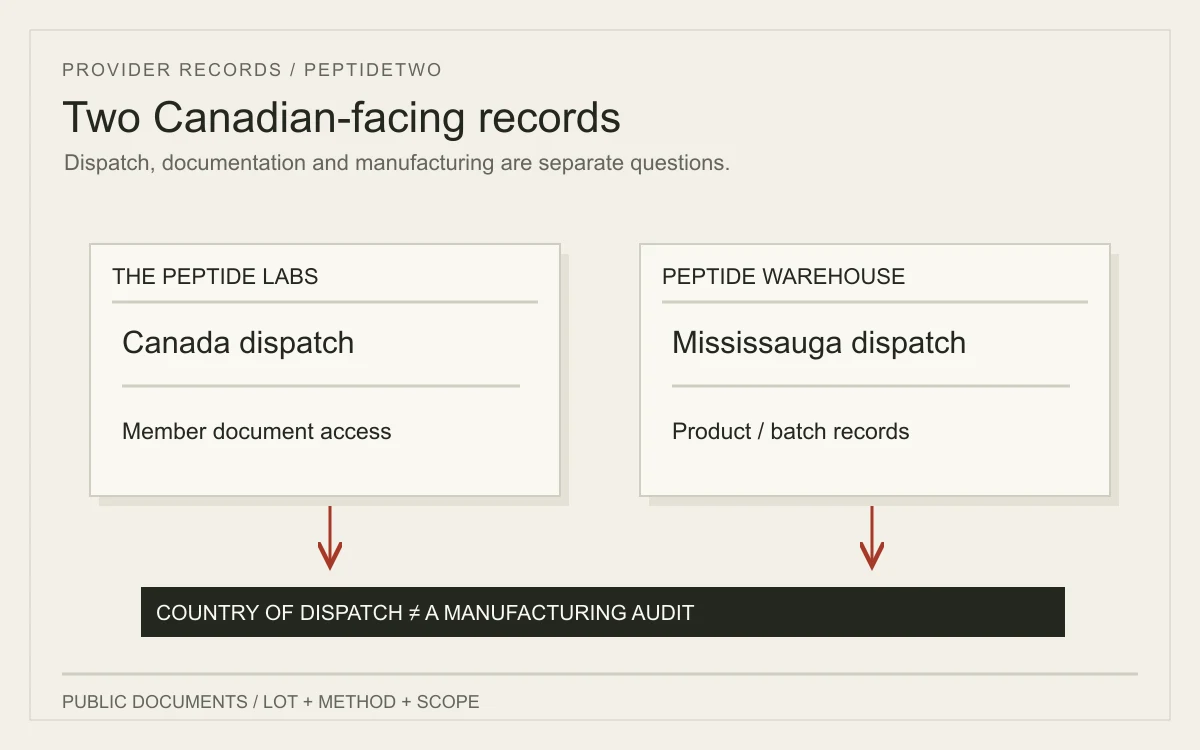 Research Practice
The Peptide Labs vs Peptide Warehouse: Canadian Supplier Records Compared
A Canadian-facing comparison of documentation access, dispatch information and product records, with seller claims kept separate from independent verification.
Updated 2026-11-09T09:06:28.317Z ↗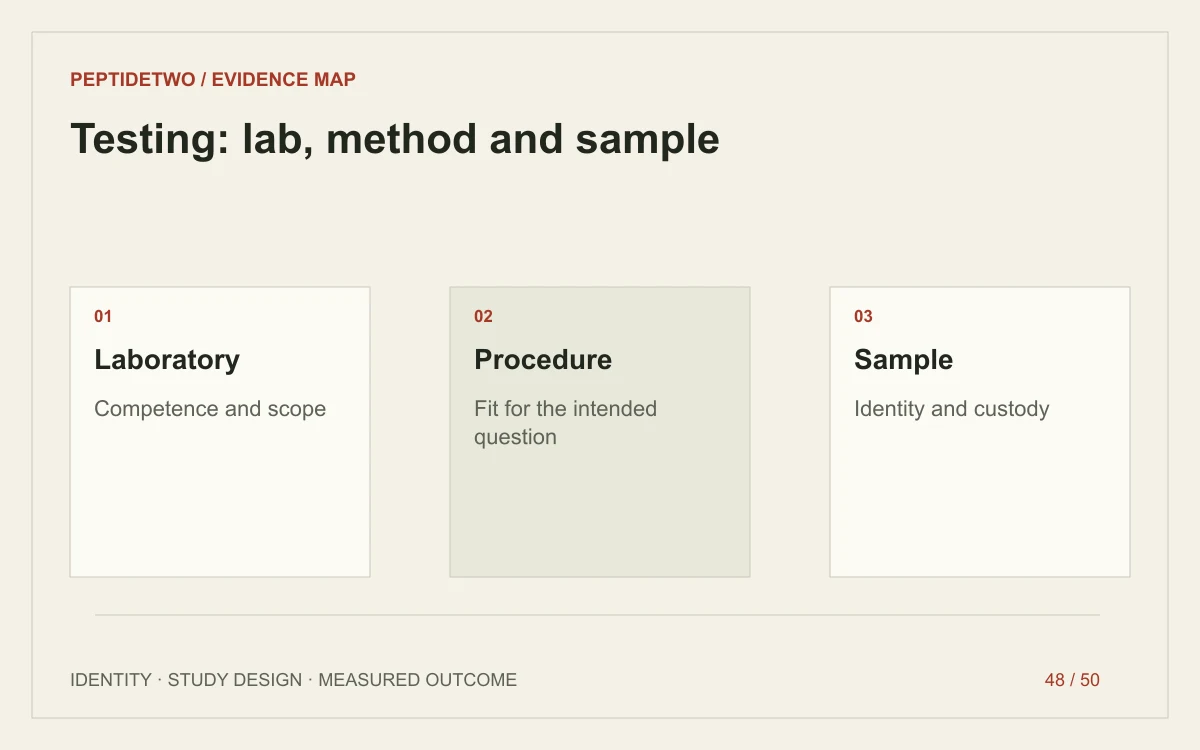 Analytical Methods
Third-Party Peptide Testing: ISO 17025, Scope and What “Independent” Means
Third-party peptide testing is useful only when the laboratory, sample and method match the question being asked. Independence from a seller is one consideration.
Updated 2026-11-06 ↗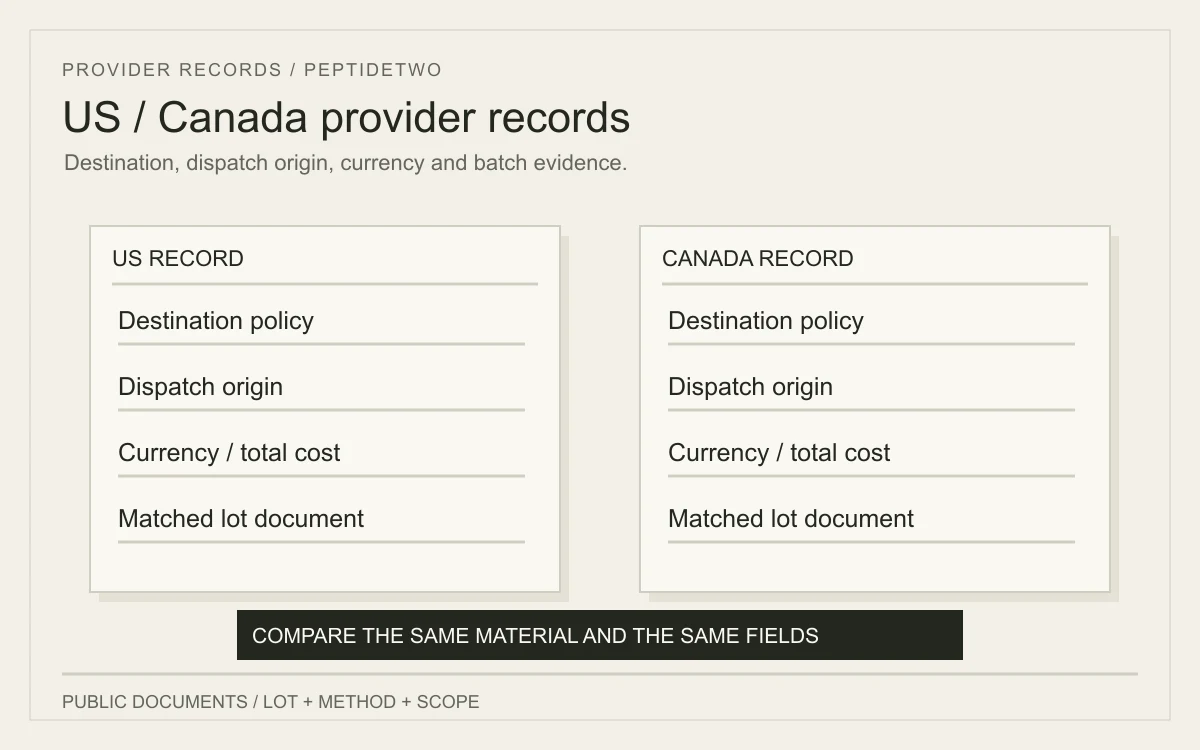 Research Practice
US vs Canada Peptide Providers: Destination, Documents and Cost Compared
A destination-first comparison that separates a supplier’s shipping policy, manufacturing claims, documentation and quoted cost.
Updated 2026-11-09T09:06:28.317Z ↗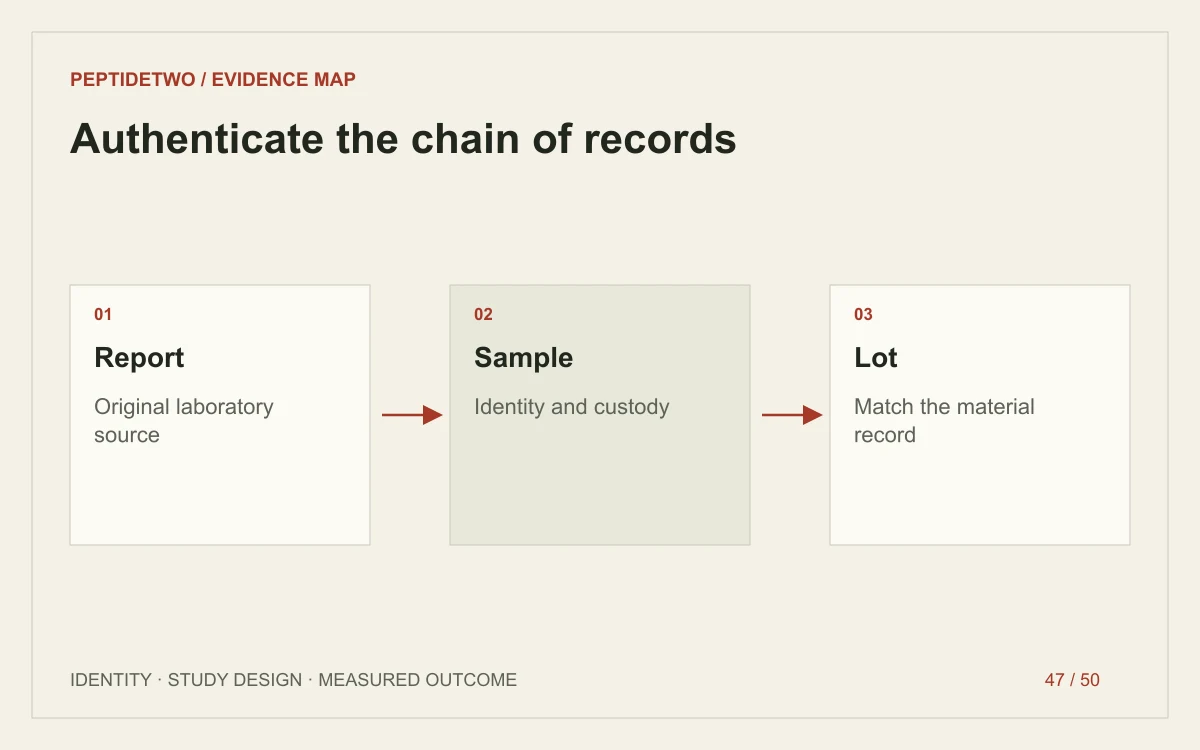 Documentation & Traceability
How to Verify a Peptide COA: Document Authenticity and the Sample-Custody Gap
To verify a peptide COA, separate document authenticity from sample identity. An authentic laboratory report can still concern a sample that has not been independently connected to the material in a particular container.
Updated 2026-11-06 ↗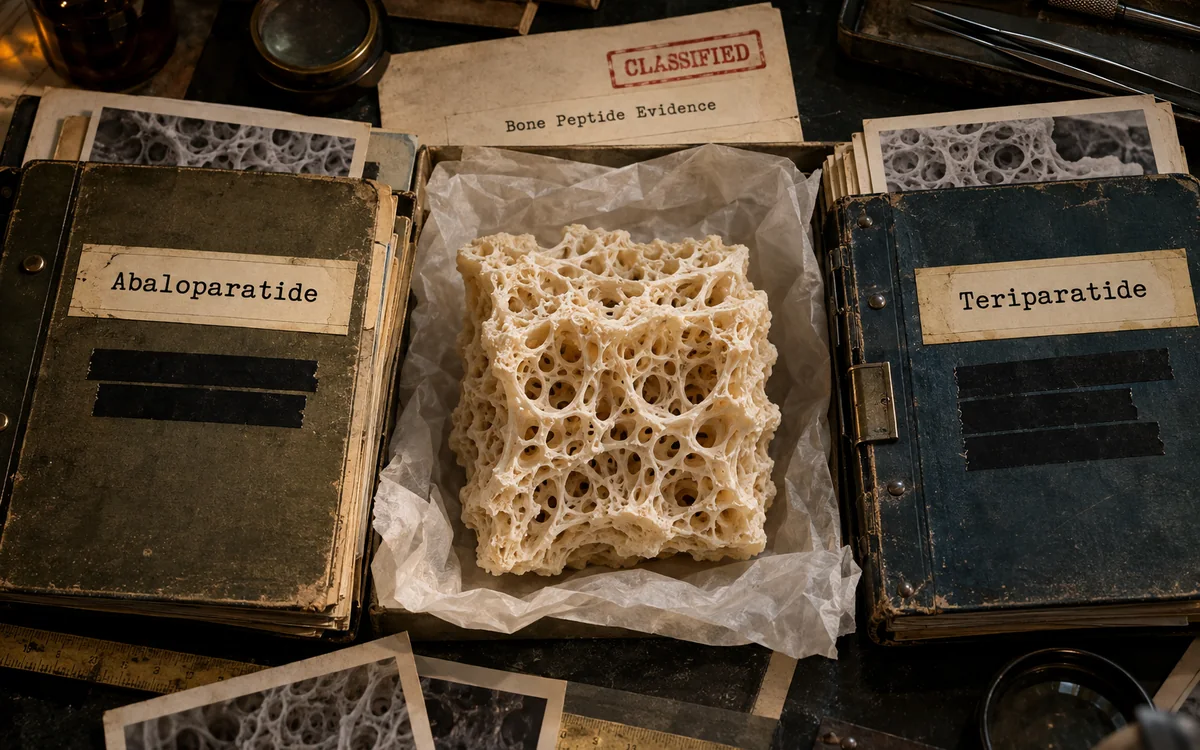 Peptide Fundamentals
Abaloparatide vs Teriparatide: Bone Peptide Evidence
Abaloparatide and teriparatide are related to PTH-family biology and have product-specific osteoporosis evidence.
Updated 2026-10-29 ↗ Peptide Fundamentals
Afamelanotide vs Melanotan II: Why the Difference Matters
Afamelanotide’s regulated implant record concerns pain-free light exposure in adults with erythropoietic protoporphyria.
Updated 2026-10-29 ↗